Park Ji Eun, Jo Jaemin, Youk Jeonghwan, Kim Miso, Yoon Soon Ho, Keam Bhumsuk, Kim Tae Min, Kim Dong-Wan
Department of Internal Medicine, Jeju National University Hospital, Jeju, South Korea.
Cancer Research Institute, Seoul National University, Seoul, South Korea.
Insights Imaging. 2023 Oct 26;14(1):182. doi: 10.1186/s13244-023-01532-4.
The purpose of this study was to evaluate the prognostic impact of body composition parameters based on computed tomography (CT) in patients with non-small cell lung cancer (NSCLC) who received ICI treatment.
This retrospective study analyzed the data from advanced NSCLC patients treated with ICI therapy between 2013 and 2019. We included patients with NSCLC who underwent baseline CT scans. The exclusion criteria included patients who received three or more lines of chemotherapy, those with insufficient clinical information, or those without treatment response evaluation.
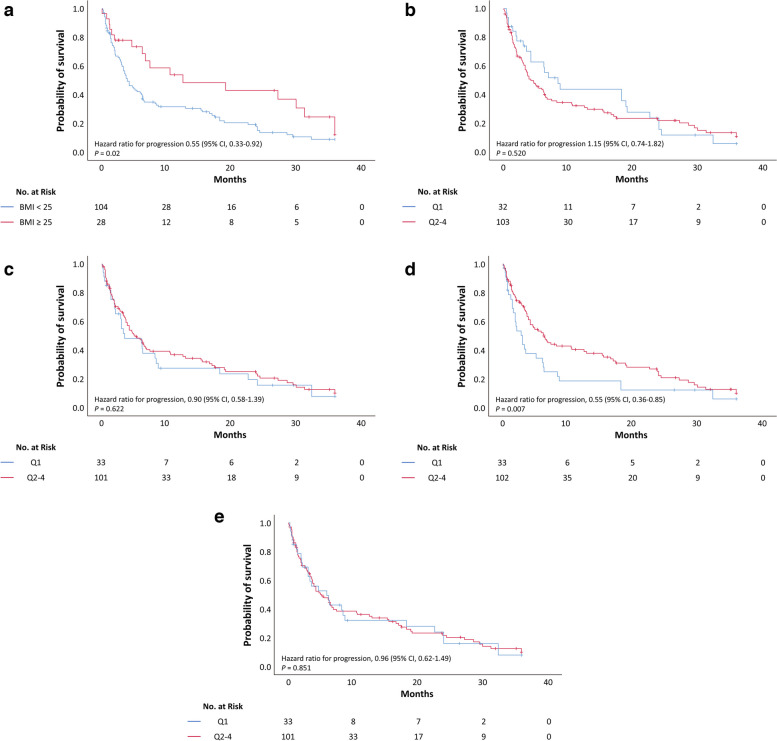
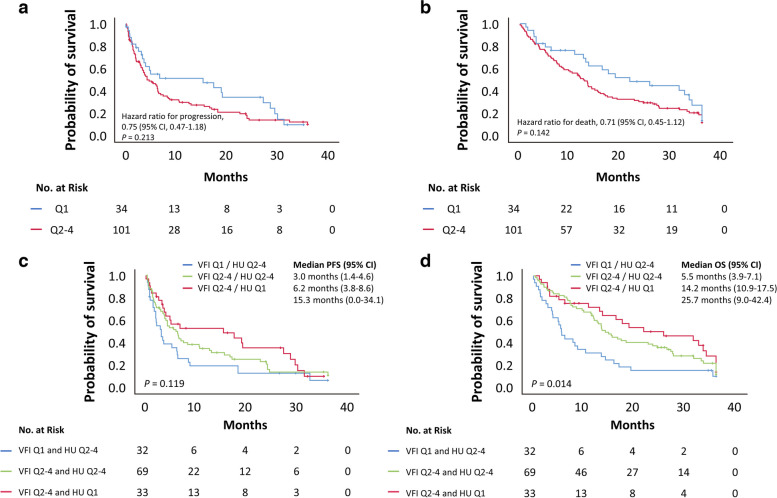
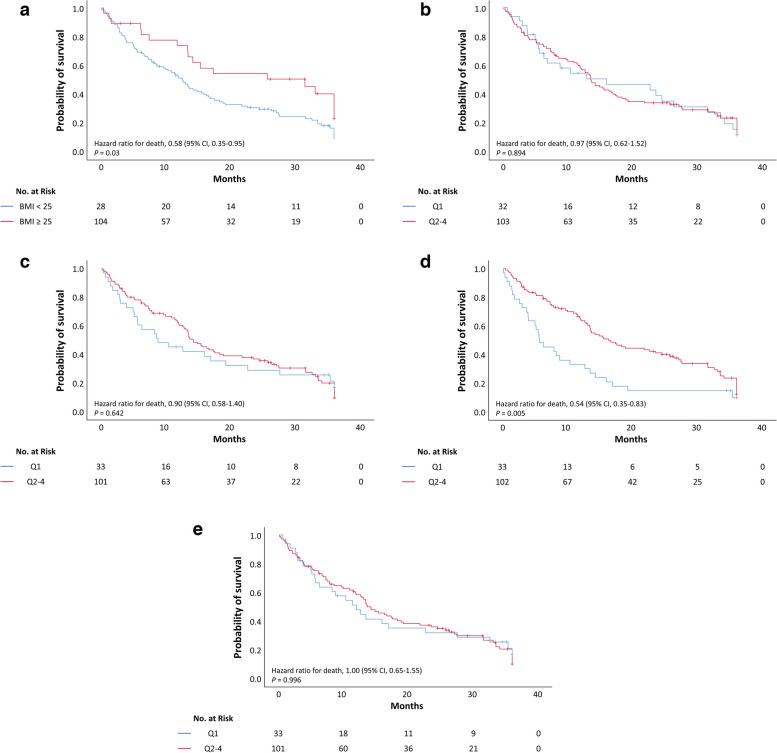
A total of 136 patients were enrolled. Among the volumetric body composition parameters, patients in the highest quartiles (Q2-4) of the visceral fat index (VFI) exhibited a higher response rate to ICI therapy than those in the lowest quartile (Q1) of VFI (Q1 vs. Q2-4: 18.2% vs. 43.1%, p = 0.012). Patients with a VFI in Q2-4 had significantly prolonged progression-free survival (PFS) and overall survival (OS) (PFS, Q1 vs. Q2-4: 3.0 months vs. 6.4 months, p = 0.043; OS, Q1 vs. Q2-4: 5.6 months vs. 16.3 months, p = 0.004). Kaplan-Meier analysis based on the VFI and visceral fat Hounsfield unit (HU) revealed that patients with VFI in Q1 and HU in Q2-4 had the worst prognosis.
Visceral fat volume is significantly associated with treatment outcomes in ICI-treated patients with NSCLC. Moreover, fat quality may impact the treatment outcomes. This finding underscores the potential significance of both fat compartments and fat quality as prognostic indicators.
Visceral fat volume is significantly associated with treatment outcomes in ICI-treated patients with non-small cell lung cancer. Moreover, fat quality may impact the treatment outcomes. This finding underscores the potential significance of both fat compartments and fat quality as prognostic indicators.
• We found that visceral fat volume positively correlated with treatment response and survival in patients with non-small cell lung cancer receiving immune checkpoint inhibitors. • Additionally, a trend toward a negative correlation between visceral fat attenuation and survival was observed. • The findings highlight the prognostic utility of fat compartments and fat quality.
本研究旨在评估基于计算机断层扫描(CT)的身体成分参数对接受免疫检查点抑制剂(ICI)治疗的非小细胞肺癌(NSCLC)患者预后的影响。
这项回顾性研究分析了2013年至2019年间接受ICI治疗的晚期NSCLC患者的数据。我们纳入了接受基线CT扫描的NSCLC患者。排除标准包括接受三线或更多线化疗的患者、临床信息不足的患者或未进行治疗反应评估的患者。
共纳入136例患者。在体积身体成分参数中,内脏脂肪指数(VFI)处于最高四分位数(Q2 - 4)的患者对ICI治疗的反应率高于VFI处于最低四分位数(Q1)的患者(Q1 vs. Q2 - 4:18.2% vs. 43.1%,p = 0.012)。VFI处于Q2 - 4的患者无进展生存期(PFS)和总生存期(OS)显著延长(PFS,Q1 vs. Q2 - 4:3.0个月 vs. 6.4个月,p = 0.043;OS,Q1 vs. Q2 - 4:5.6个月 vs. 16.3个月,p = 0.004)。基于VFI和内脏脂肪Hounsfield单位(HU)的Kaplan - Meier分析显示,VFI处于Q1且HU处于Q2 - 4的患者预后最差。
内脏脂肪体积与接受ICI治疗的NSCLC患者的治疗结果显著相关。此外,脂肪质量可能影响治疗结果。这一发现强调了脂肪组织和脂肪质量作为预后指标的潜在重要性。
内脏脂肪体积与接受ICI治疗的非小细胞肺癌患者的治疗结果显著相关。此外,脂肪质量可能影响治疗结果。这一发现强调了脂肪组织和脂肪质量作为预后指标的潜在重要性。
• 我们发现,接受免疫检查点抑制剂治疗的非小细胞肺癌患者的内脏脂肪体积与治疗反应和生存呈正相关。• 此外,观察到内脏脂肪衰减与生存之间存在负相关趋势。• 这些发现突出了脂肪组织和脂肪质量的预后效用。