College of Veterinary Medicine, Jeonbuk National University, Iksan, Jeollabuk-Do, 54596, Republic of Korea.
BMC Vet Res. 2023 Oct 25;19(1):223. doi: 10.1186/s12917-023-03782-2.
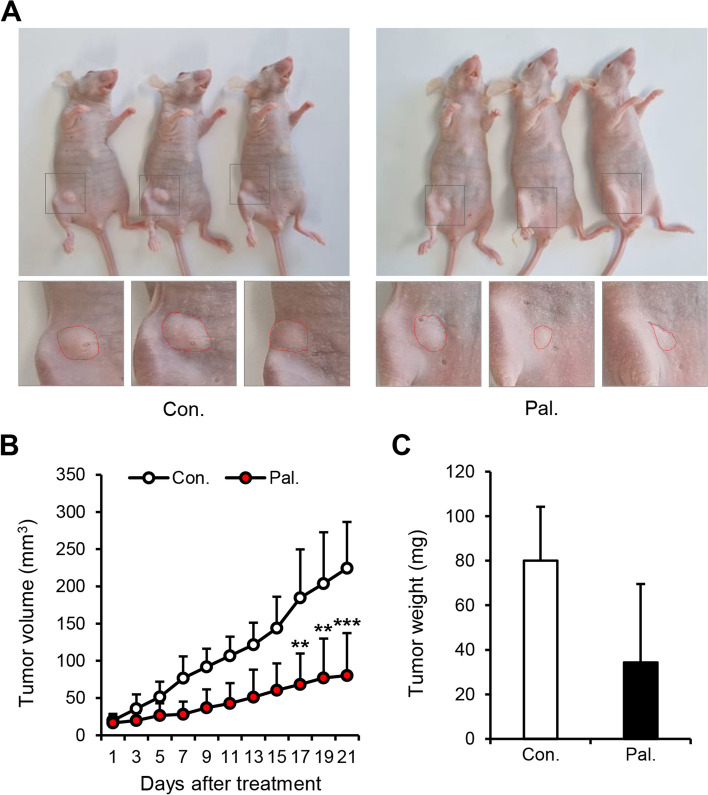
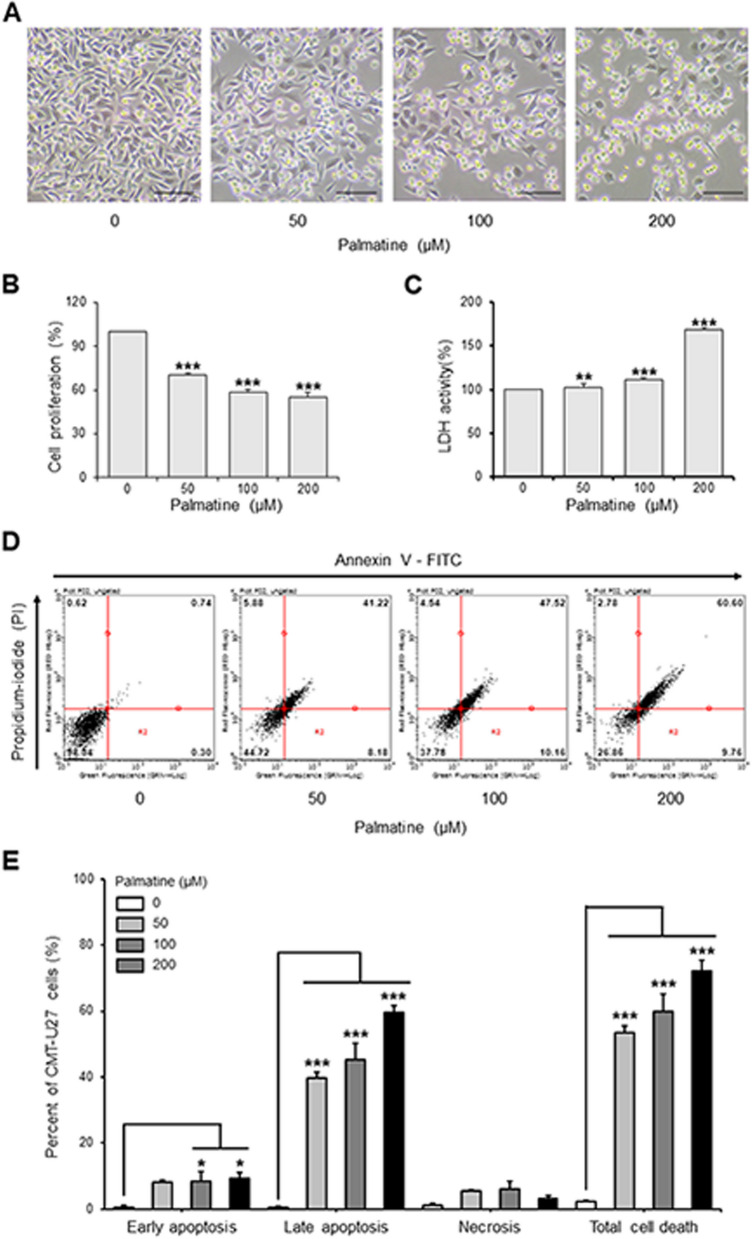
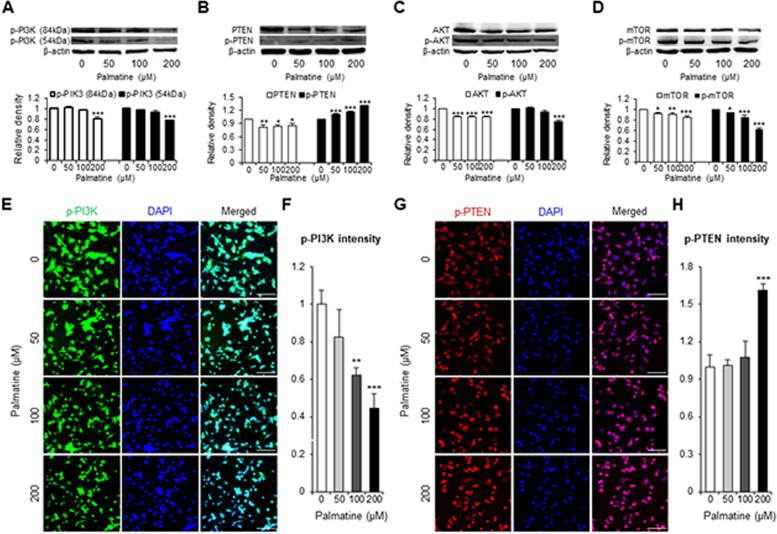
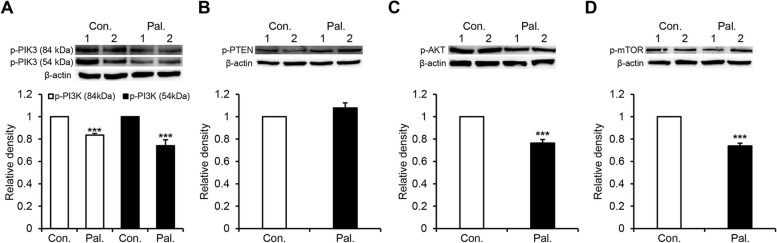
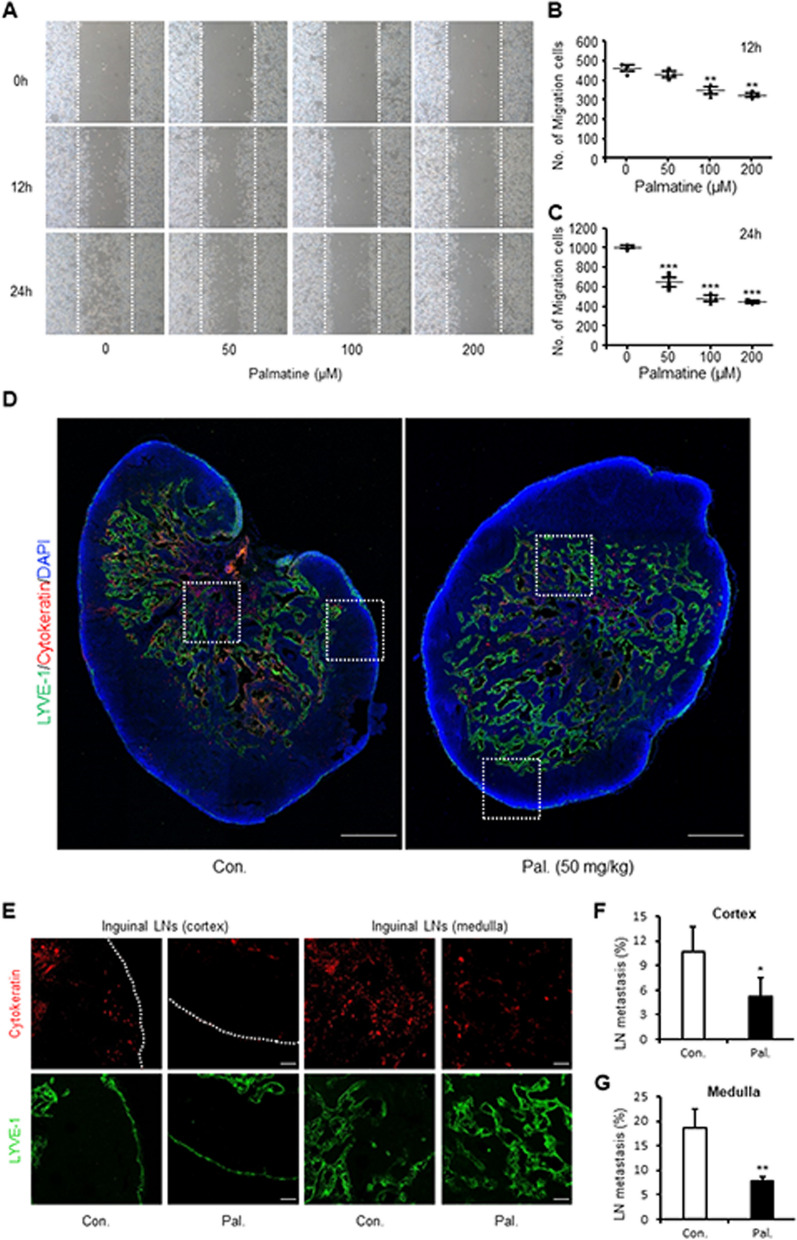
Canine mammary gland tumors (CMTs) are the most common and lethal cancers in female dogs. Dysregulated phosphoinositide 3-kinases (PI3K)/AKT pathway reportedly was involved in the growth and metastasis of CMTs. However, there are few studies on therapeutic strategies for targeting the PI3K pathway in CMTs. In this study, we aimed to determine whether palmatine, a natural isoquinoline alkaloid with anti-cancer properties, could inhibit the growth of CMTs and whether the inhibitory effect was mediated through the PI3K/AKT pathway. Our in vitro experiments on CMT-U27, a CMT cell line, showed that palmatine reduced cell proliferation and induced cell death. Western blotting results revealed that palmatine decreased the protein expression of PI3K, PTEN, AKT, and mechanistic target of rapamycin in the PI3K/AKT pathway, which was supported by the results of immunocytochemistry. Additionally, palmatine suppressed the migration and tube formation of canine aortic endothelial cells as well as the migration of CMT U27 cells. Our in vivo results showed that palmatine inhibited tumor growth in a CMT-U27 mouse xenograft model. We observed a decreased expression of proteins in the PI3K/AKT pathway in tumor tissues, similar to the in vitro results. Furthermore, palmatine significantly disrupted the tumor vasculature and inhibited metastasis to adjacent lymph nodes. In conclusion, our findings demonstrate that palmatine exerts anti-cancer effects against CMTs by inhibiting PI3K/AKT signaling pathway, suggesting that palmatine has potential as a canine-specific PI3K inhibitor for the treatment of CMTs.
犬乳腺肿瘤(CMTs)是女性犬最常见和最致命的癌症。据报道,失调的磷酸肌醇 3-激酶(PI3K)/AKT 通路参与了 CMTs 的生长和转移。然而,针对 CMTs 中 PI3K 通路的治疗策略研究较少。在这项研究中,我们旨在确定具有抗癌特性的天然异喹啉生物碱黄连碱是否可以抑制 CMTs 的生长,以及这种抑制作用是否通过 PI3K/AKT 通路介导。我们对 CMT-U27(一种 CMT 细胞系)进行的体外实验表明,黄连碱可减少细胞增殖并诱导细胞死亡。Western blot 结果显示,黄连碱降低了 PI3K/AKT 通路中 PI3K、PTEN、AKT 和雷帕霉素的靶蛋白(mTOR)的蛋白表达,免疫细胞化学结果支持了这一结果。此外,黄连碱抑制了犬主动脉内皮细胞的迁移和管形成以及 CMT U27 细胞的迁移。我们的体内结果表明,黄连碱抑制了 CMT-U27 小鼠异种移植模型中的肿瘤生长。我们观察到肿瘤组织中 PI3K/AKT 通路中蛋白表达减少,与体外结果相似。此外,黄连碱显著破坏了肿瘤血管并抑制了对相邻淋巴结的转移。总之,我们的研究结果表明,黄连碱通过抑制 PI3K/AKT 信号通路对 CMTs 发挥抗癌作用,这表明黄连碱作为犬特异性 PI3K 抑制剂在治疗 CMTs 方面具有潜力。