Jang Hyuk, Choi Jawun, Park Jeong-Ki, Won Gayeon, Seol Jae-Won
College of Veterinary Medicine, Jeonbuk National University, Iksan 54596, Jeollabuk-do, Korea.
Animals (Basel). 2021 May 23;11(6):1512. doi: 10.3390/ani11061512.
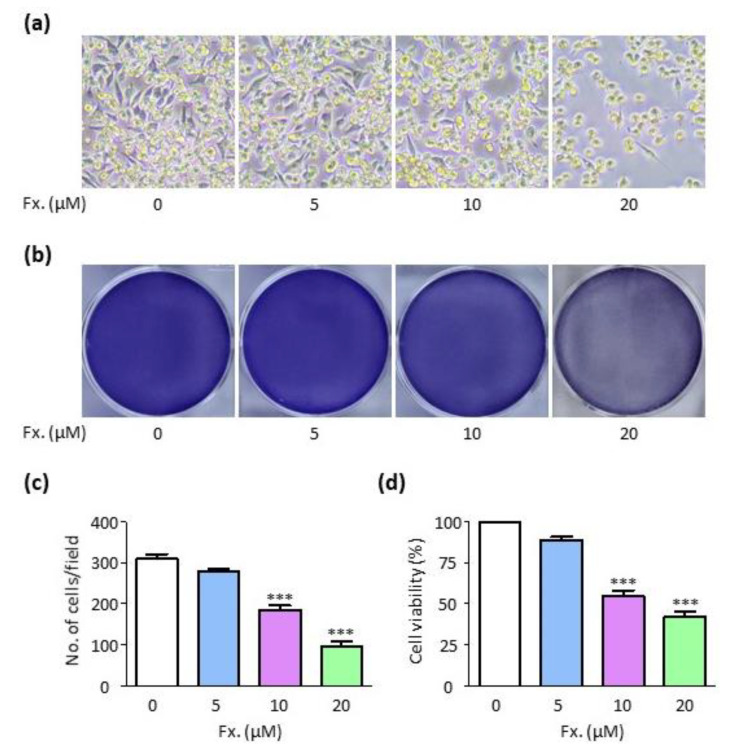
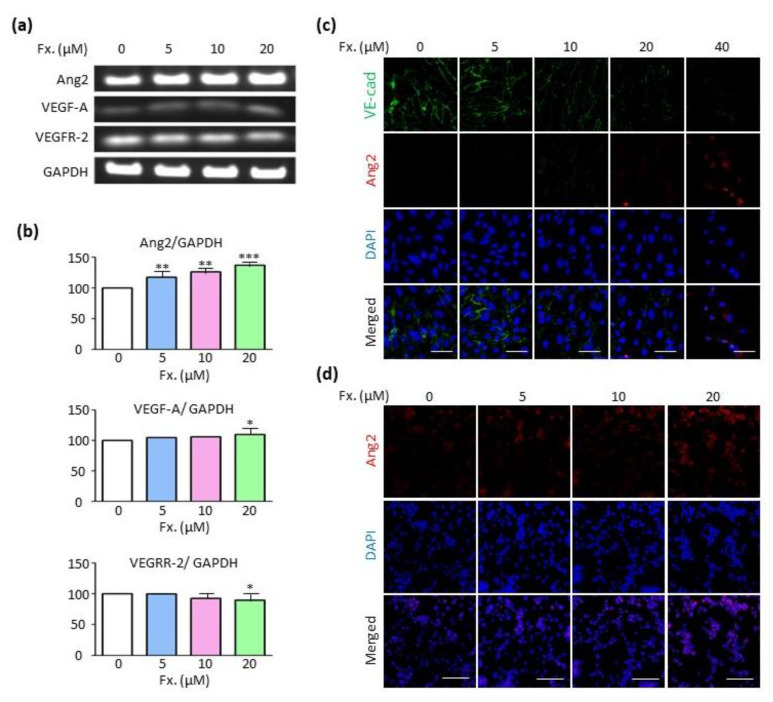
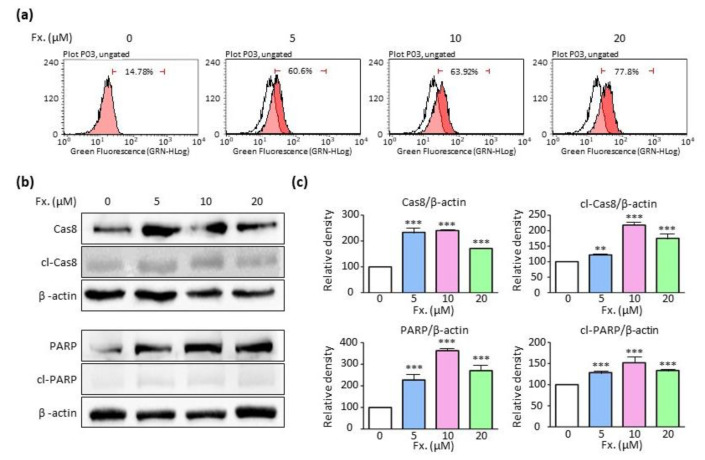
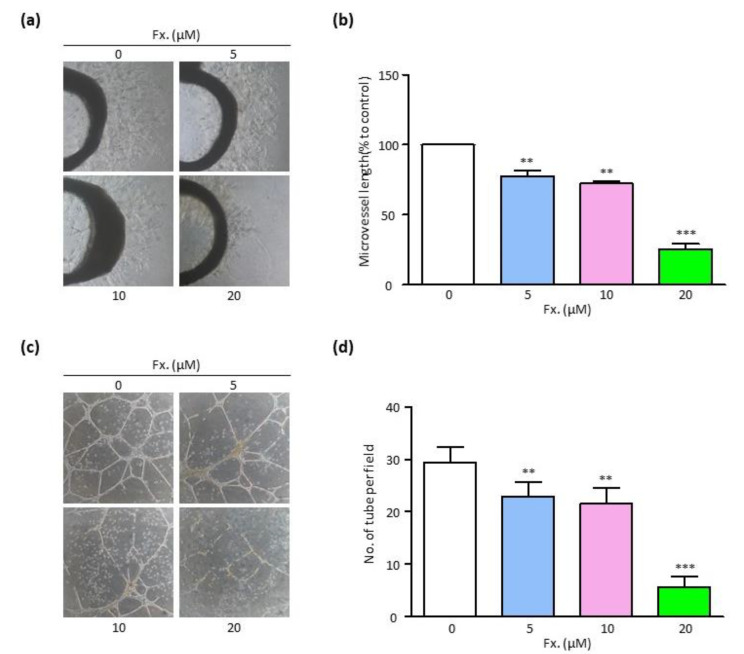
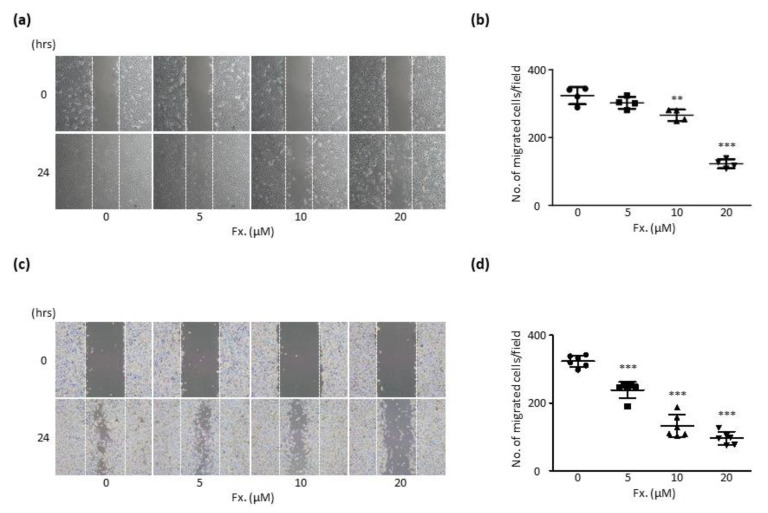
Fucoxanthin is a carotenoid derived from brown algae. It is known to exhibit anticancer activity, including the promotion of apoptosis and cell cycle arrest in several tumors. However, it remains unclear whether fucoxanthin exhibits anticancer activity against mammary gland tumors. In this study, we evaluated fucoxanthin activity against canine mammary tumor cells (CMT-U27) and human umbilical vein endothelial cells (HUVECs) to investigate its effect on cell viability, migration, tube formation, and angiopoietin 2 (Ang2) expression. Our results showed that fucoxanthin induced apoptosis via caspase activation in CMT-U27 cells. In rat aortic ring assay, fucoxanthin suppressed endothelial cell sprouting. Furthermore, fucoxanthin inhibited tube formation and migration in HUVECs. The number of migrated cells was assessed using CMT-U27 cells. The results demonstrated that fucoxanthin exerted anti-angiogenic activity on HUVECs and CMT-U27 cells by promoting Ang2 expression. In conclusion, our results demonstrated that fucoxanthin induced tumor cell death and inhibited angiogenesis, suggesting that fucoxanthin could be considered as a promising therapeutic agent for canine mammary gland tumors.
岩藻黄质是一种源自褐藻的类胡萝卜素。已知它具有抗癌活性,包括在多种肿瘤中促进细胞凋亡和细胞周期停滞。然而,岩藻黄质是否对乳腺肿瘤具有抗癌活性仍不清楚。在本研究中,我们评估了岩藻黄质对犬乳腺肿瘤细胞(CMT-U27)和人脐静脉内皮细胞(HUVECs)的活性,以研究其对细胞活力、迁移、管腔形成和血管生成素2(Ang2)表达的影响。我们的结果表明,岩藻黄质通过激活半胱天冬酶在CMT-U27细胞中诱导细胞凋亡。在大鼠主动脉环试验中,岩藻黄质抑制内皮细胞发芽。此外,岩藻黄质抑制HUVECs中的管腔形成和迁移。使用CMT-U27细胞评估迁移细胞的数量。结果表明,岩藻黄质通过促进Ang2表达对HUVECs和CMT-U27细胞发挥抗血管生成活性。总之,我们的结果表明,岩藻黄质诱导肿瘤细胞死亡并抑制血管生成,这表明岩藻黄质可被视为犬乳腺肿瘤的一种有前景的治疗药物。