Department of Microbiology, Molecular Genetics and Immunology, University of Kansas Medical Center, Kansas City, KS, USA.
Department of Pathology and Laboratory Medicine, The University of Kansas Medical Center, 3901 Rainbow Boulevard, MS 3040, Kansas City, KS, 66160, USA.
Sci Rep. 2023 Oct 26;13(1):18341. doi: 10.1038/s41598-023-44050-5.
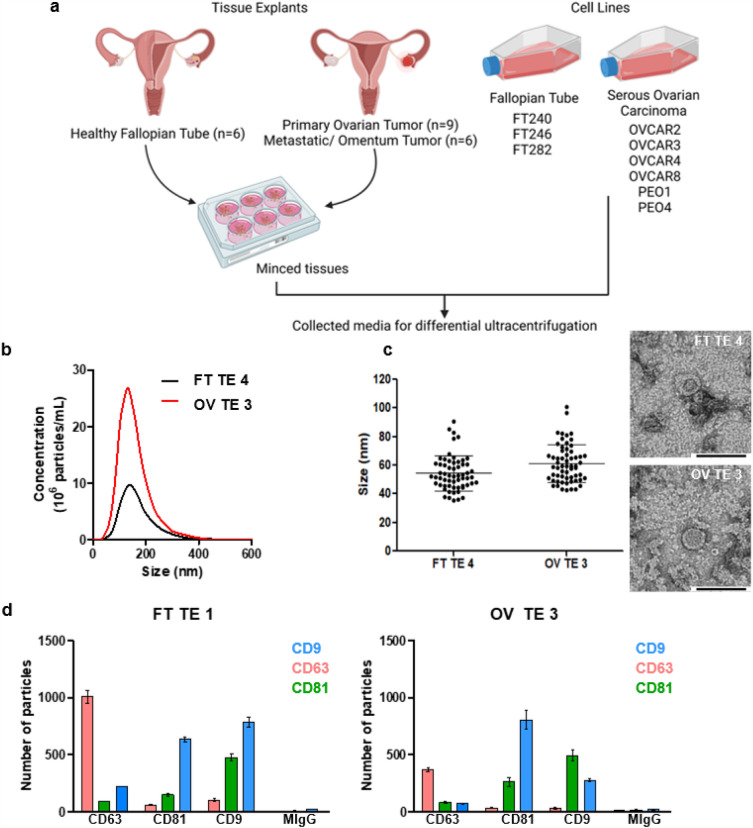
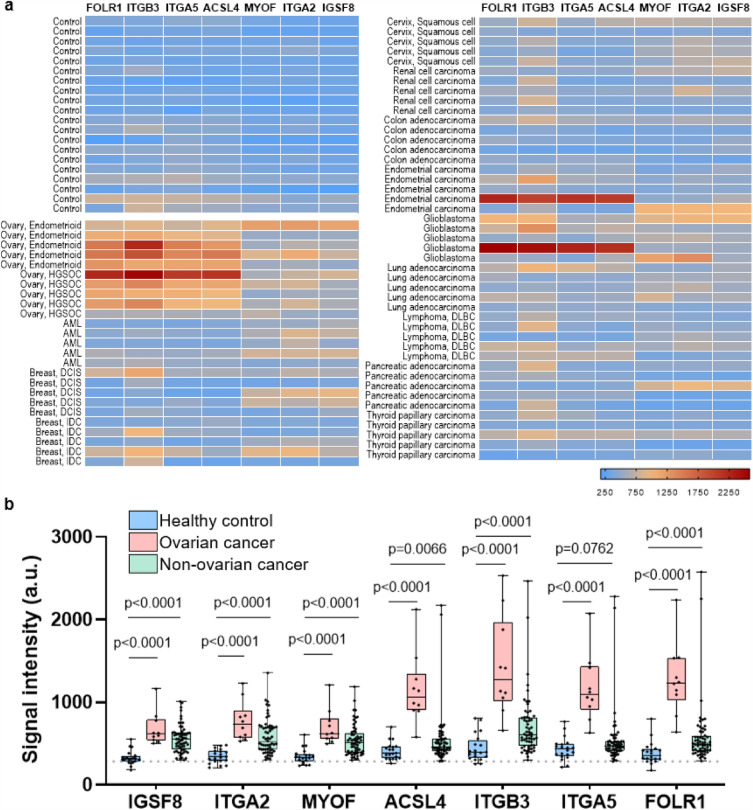
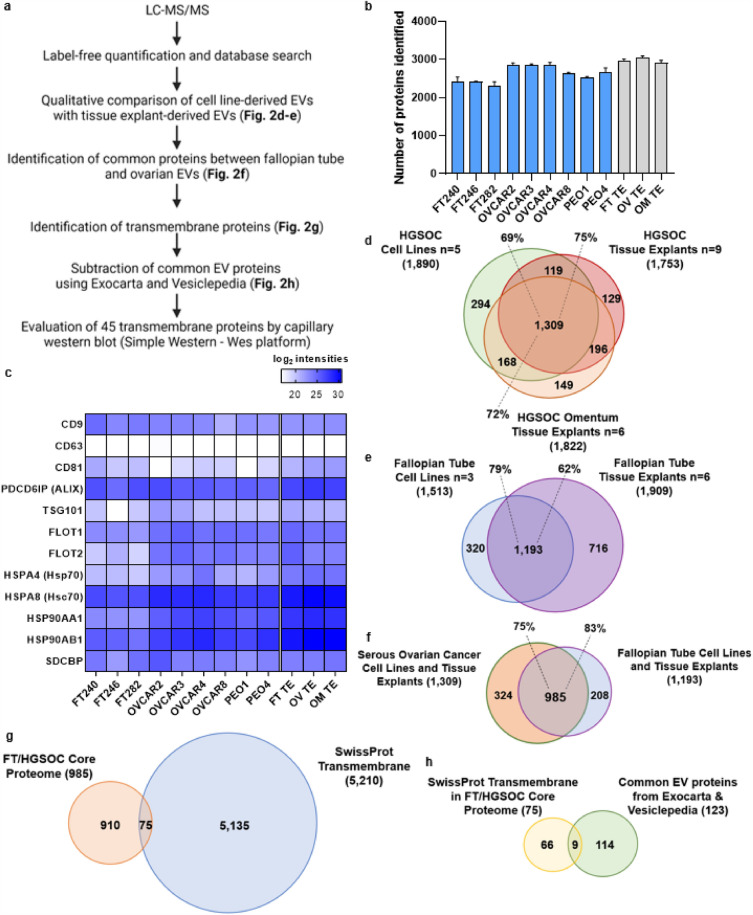
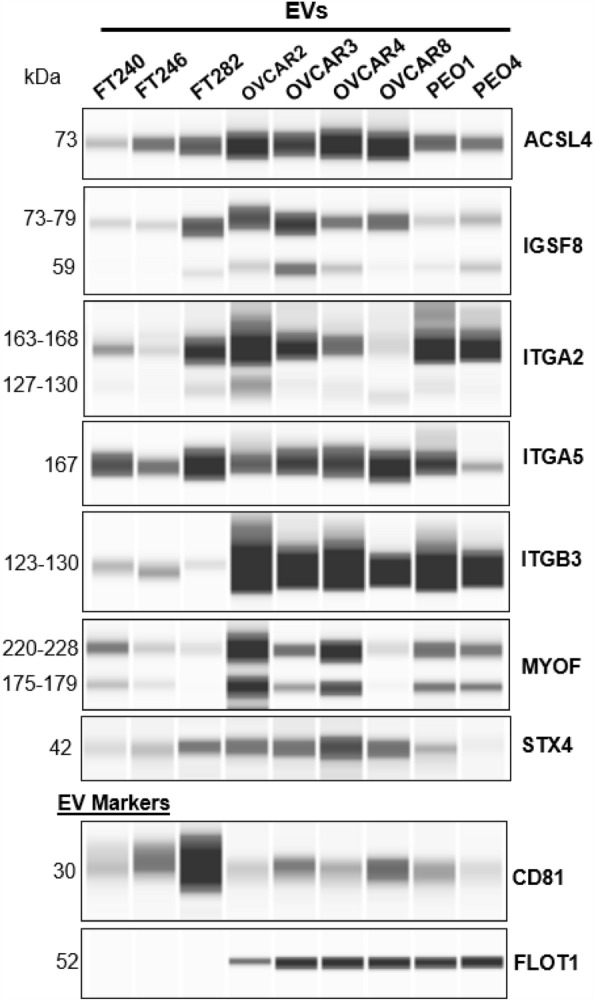
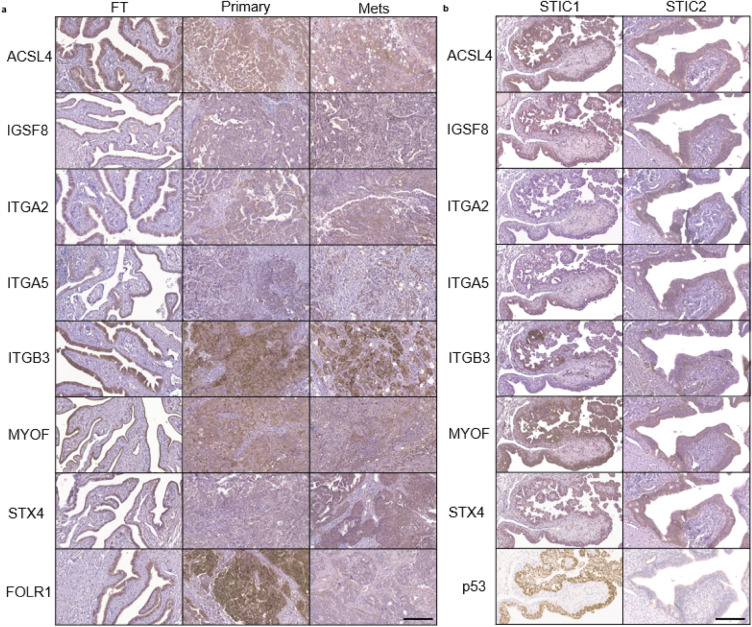
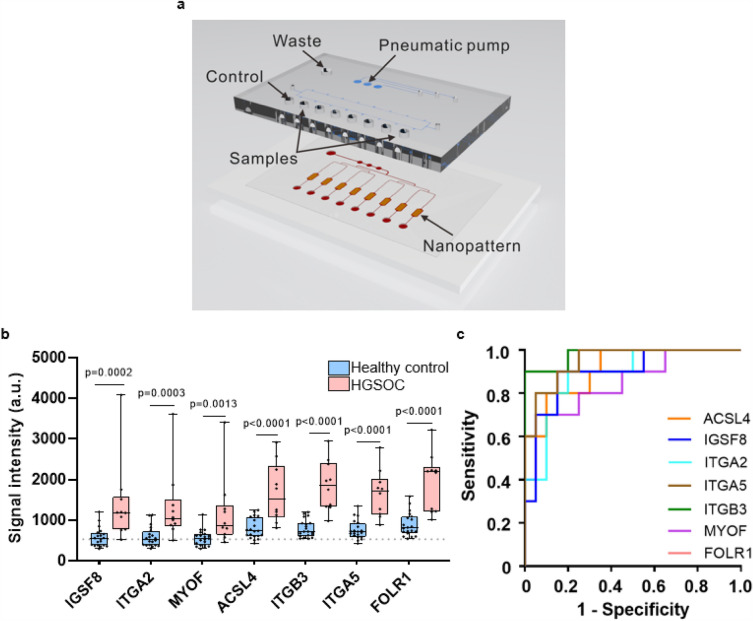
High grade serous ovarian carcinoma (HGSOC) accounts for ~ 70% of ovarian cancer cases. Non-invasive, highly specific blood-based tests for pre-symptomatic screening in women are crucial to reducing the mortality associated with this disease. Since most HGSOCs typically arise from the fallopian tubes (FT), our biomarker search focused on proteins found on the surface of extracellular vesicles (EVs) released by both FT and HGSOC tissue explants and representative cell lines. Using mass spectrometry, 985 EV proteins (exo-proteins) were identified that comprised the FT/HGSOC EV core proteome. Transmembrane exo-proteins were prioritized because these could serve as antigens for capture and/or detection. With a nano-engineered microfluidic platform, six newly discovered exo-proteins (ACSL4, IGSF8, ITGA2, ITGA5, ITGB3, MYOF) plus a known HGSOC associated protein, FOLR1 exhibited classification performance ranging from 85 to 98% in a case-control study using plasma samples representative of early (including stage IA/B) and late stage (stage III) HGSOCs. Furthermore, by a linear combination of IGSF8 and ITGA5 based on logistic regression analysis, we achieved a sensitivity of 80% with 99.8% specificity and a positive predictive value of 13.8%. Importantly, these exo-proteins also can accurately discriminate between ovarian and 12 types of cancers commonly diagnosed in women. Our studies demonstrate that these lineage-associated exo-biomarkers can detect ovarian cancer with high specificity and sensitivity early and potentially while localized to the FT when patient outcomes are more favorable.
高级别浆液性卵巢癌(HGSOC)占卵巢癌病例的约 70%。对于降低与这种疾病相关的死亡率而言,针对无症状女性的非侵入性、高特异性的血液预筛检测方法至关重要。由于大多数 HGSOC 通常起源于输卵管(FT),我们的生物标志物搜索集中在由 FT 和 HGSOC 组织外植体和代表性细胞系释放的细胞外囊泡(EV)表面发现的蛋白质上。使用质谱法,鉴定出了 985 种 EV 蛋白(外蛋白),它们构成了 FT/HGSOC EV 核心蛋白质组。优先考虑跨膜外蛋白,因为它们可以作为捕获和/或检测的抗原。通过纳米工程微流控平台,使用代表早期(包括 IA/IB 期)和晚期(III 期)HGSOC 的血浆样本,在病例对照研究中,六种新发现的外蛋白(ACSL4、IGSF8、ITGA2、ITGA5、ITGB3、MYOF)和一种已知的 HGSOC 相关蛋白 FOLR1 的分类性能范围为 85%至 98%。此外,通过基于逻辑回归分析的 IGSF8 和 ITGA5 的线性组合,我们实现了 80%的敏感性、99.8%的特异性和 13.8%的阳性预测值。重要的是,这些外蛋白还可以准确地区分卵巢癌和女性常见的 12 种癌症。我们的研究表明,这些谱系相关的外生物标志物可以在早期高特异性和敏感性地检测卵巢癌,并且在患者结局更有利时,这些标志物可能局限于 FT。