The State Key Laboratory of Membrane Biology, Tsinghua-Peking Center for Life Sciences, School of Life Sciences, Tsinghua University, Beijing 100084, China.
Guangzhou Institutes of Biomedicine and Health, Chinese Academy of Sciences, Guangzhou 510530, China.
Sci Adv. 2023 Oct 27;9(43):eadi1827. doi: 10.1126/sciadv.adi1827.
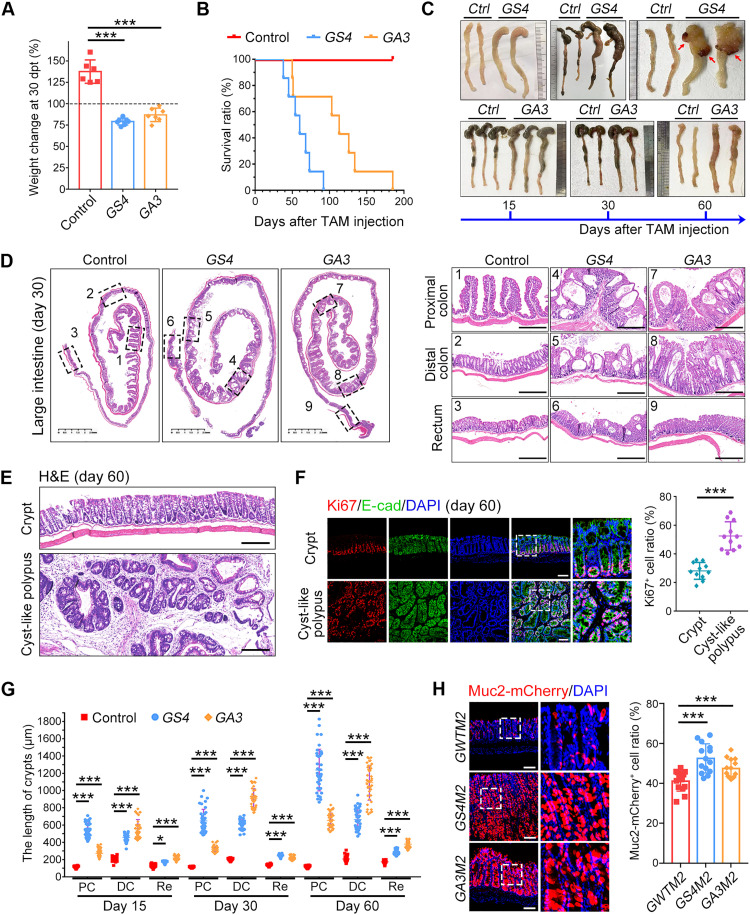
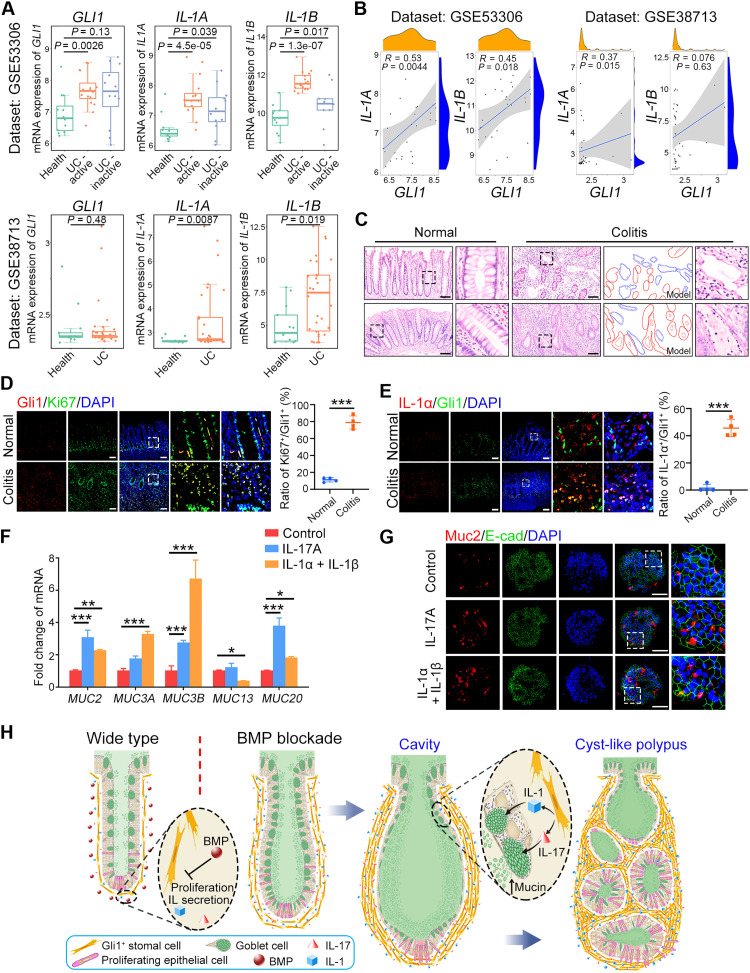
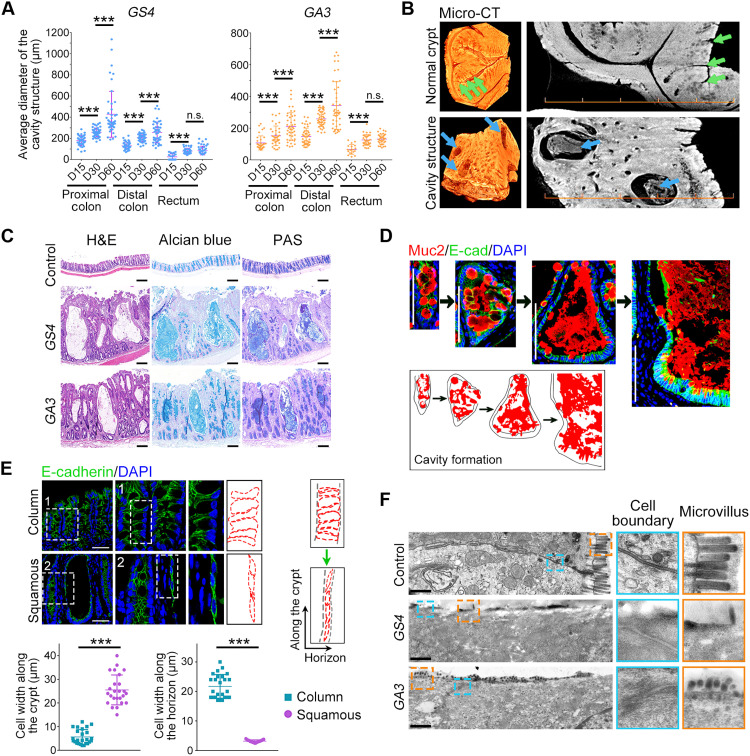
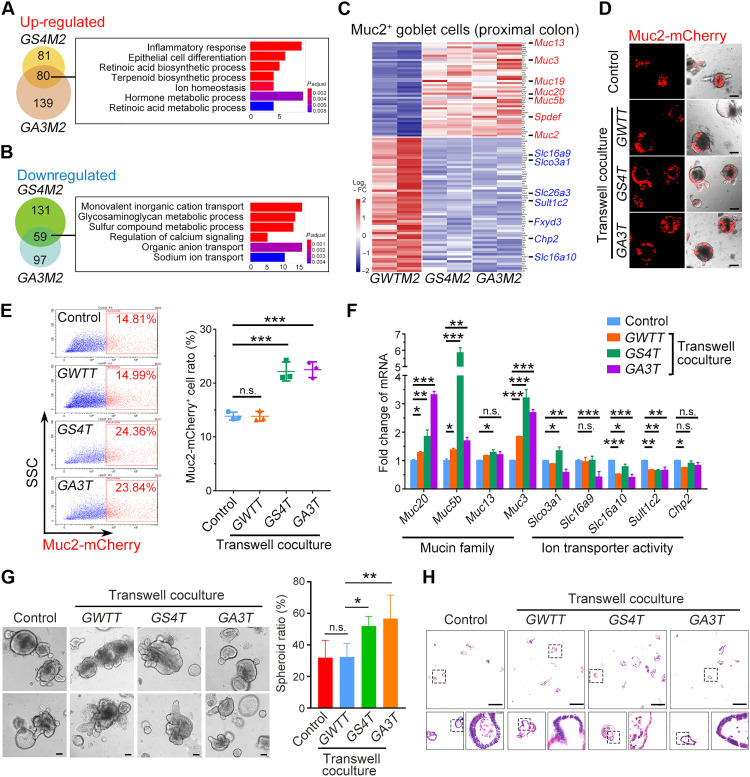
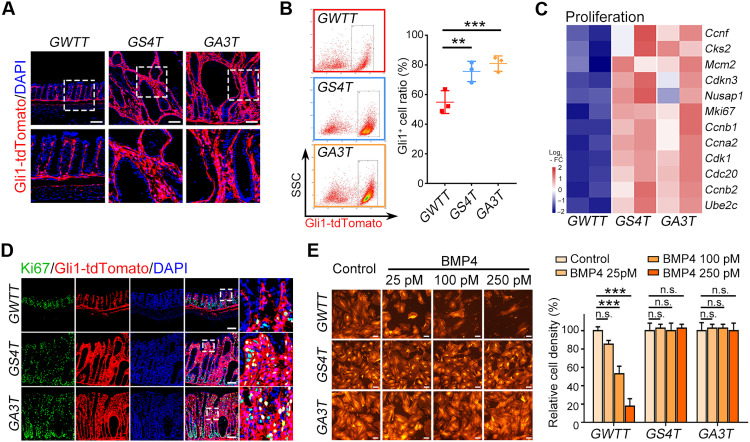
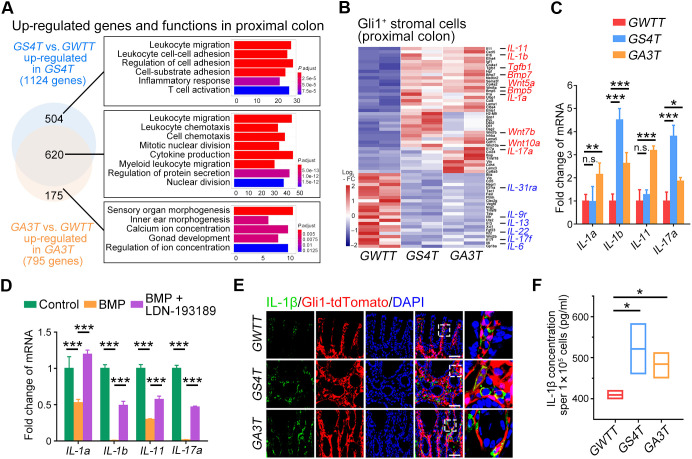
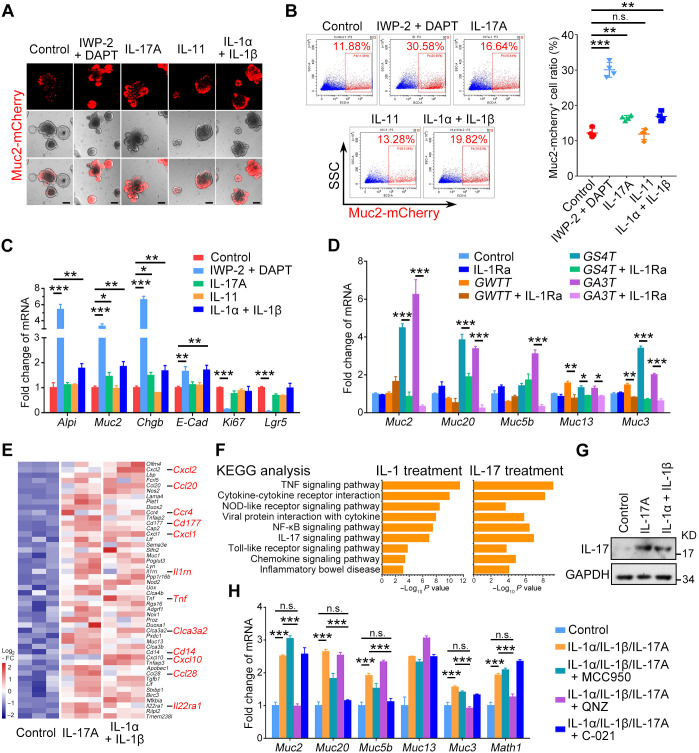
Bone morphogenic protein (BMP) signaling is critical for intestinal development, homeostasis, and function performance. Although the function of BMP signaling in the intestinal epithelium is well appreciated, the direct effect of BMP on intestinal stromal cells is poorly understood. Here, we show that disruption of BMP signaling by genetic ablation of or expands the stromal cell pool, the mucosa tumefaction, and colonic polyposis in the large intestine. Interleukin (IL) secretion by stromal cells is notably increased, including IL-1, IL-11, and IL-17. Specifically, IL-1 and IL-17a hyperactivate the mucin production by goblet cells through nuclear factor κB signaling, and abnormal mucin accumulation results in the morphological changes, epithelial barrier destruction, and polyposis development. Together, our results provide an insight into the role of BMP signaling in intestinal stromal cells to regulate epithelium function. This study further highlights the role of mucin-producing goblet cells in intestinal homeostasis and colitis development.
骨形态发生蛋白(BMP)信号对于肠道发育、稳态和功能表现至关重要。尽管 BMP 信号在肠道上皮中的功能已得到充分认识,但 BMP 对肠道基质细胞的直接影响仍知之甚少。在这里,我们发现通过基因敲除 或 破坏 BMP 信号会扩大基质细胞池、黏膜肿胀和大肠息肉形成。基质细胞中白细胞介素(IL)的分泌明显增加,包括 IL-1、IL-11 和 IL-17。具体而言,IL-1 和 IL-17a 通过核因子 κB 信号通路过度激活杯状细胞的粘蛋白产生,异常粘蛋白积累导致形态变化、上皮屏障破坏和息肉形成。总之,我们的研究结果为 BMP 信号在肠道基质细胞中调节上皮功能的作用提供了新的认识。本研究进一步强调了产生粘蛋白的杯状细胞在肠道稳态和结肠炎发展中的作用。