Topczewska Patrycja M, Savvopoulou Anna, Cosovanu Catalina, Klose Christoph S N
Department of Microbiology, Infectious Diseases and Immunology, Corporate Member of Freie Universität Berlin and Humboldt-Universität Zu Berlin, Charité-Universitätsmedizin Berlin, Berlin, Germany.
Front Cell Dev Biol. 2024 Aug 1;12:1420313. doi: 10.3389/fcell.2024.1420313. eCollection 2024.
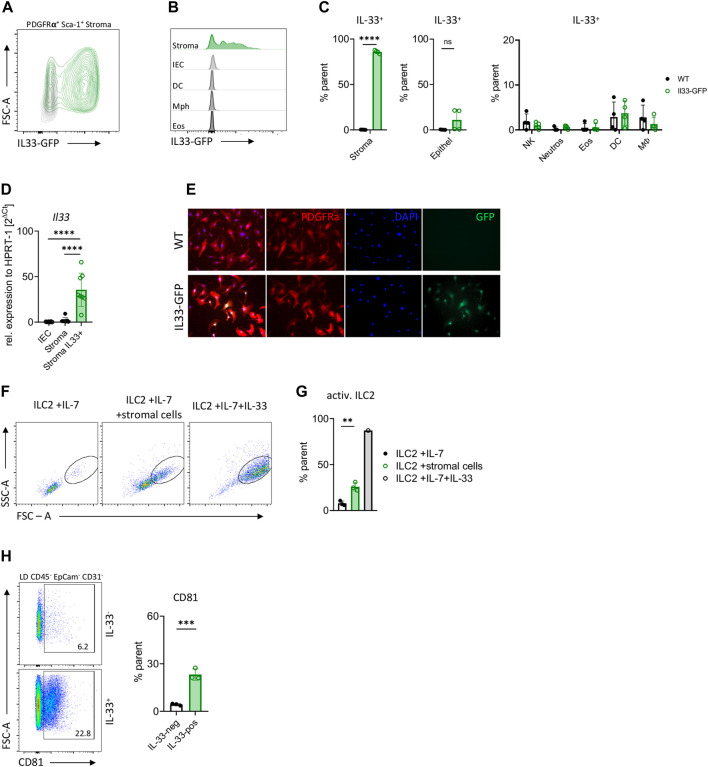
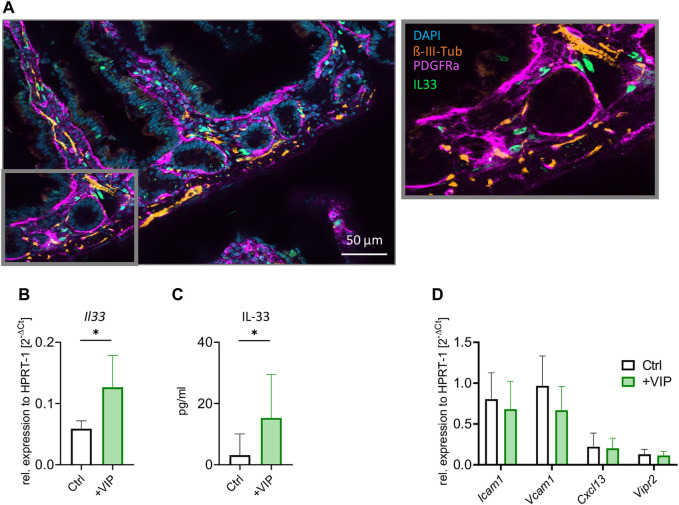
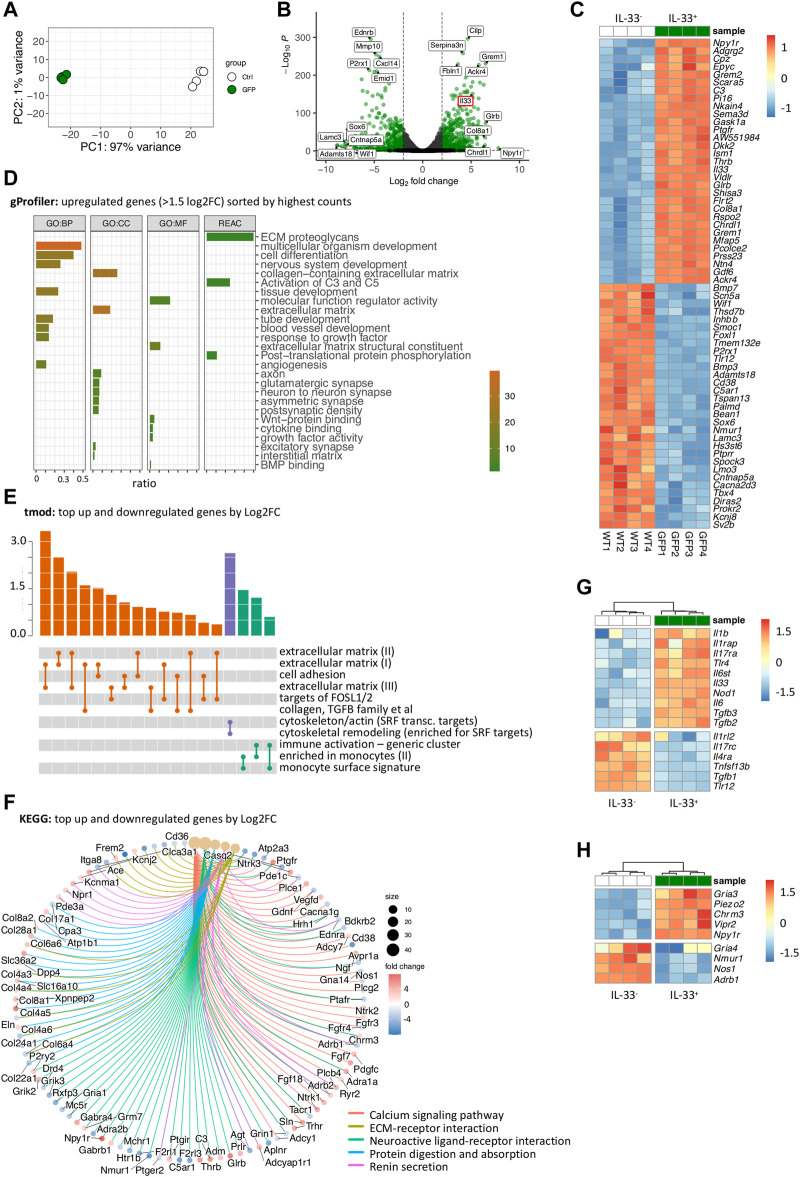
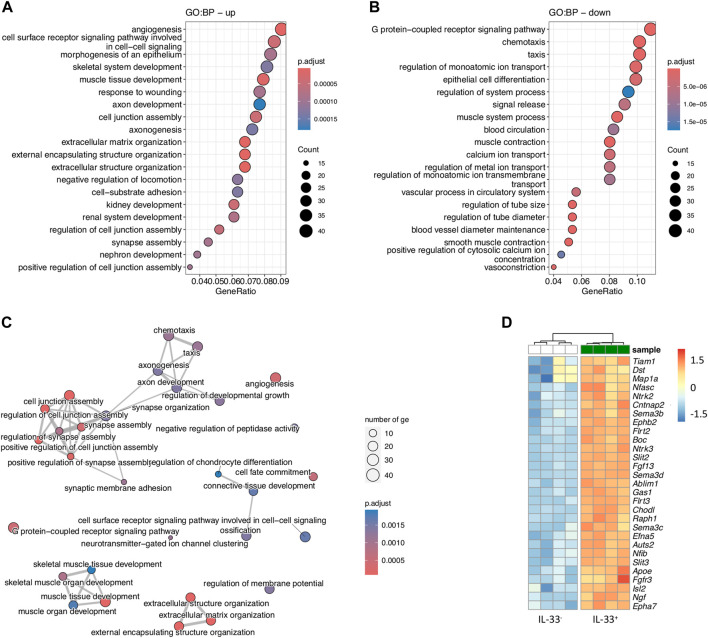
Recent advancements in mucosal immunology have unveiled a complex network of intercellular connections within diverse tissues, shedding light on the unique properties of different cell types. Central to this intricate network is the cytokine IL-33, which has gained significant attention for its critical role in various diseases, from allergy to cancer, triggering type 2 immune responses, among others. Recent research has challenged the prior assumptions attributing IL-33 expression to epithelial cells, highlighting stromal cells as the predominant source in adipose tissue and the lungs. However, in the complex landscape of the intestine, where IL-33 plays a crucial role in mediating immune surveillance and tolerance and is implicated in many gut-related disorders, its primary source, regulation, and main characteristics need more exploration. This study identifies stromal cells as the primary IL-33-expressing cell type in the small intestine. By investigating their transcriptome and intrinsic signaling pathways, we have uncovered a possible role of IL-33 stromal cells in maintaining the stem cell niche and their potential crosstalk with neurons relevant to the regulation of axonogenesis. Importantly, our experiments have demonstrated that vasoactive intestinal peptide stimulation of a primary intestinal stromal cell culture significantly amplifies IL-33 expression on mRNA and protein level. Therefore, our study represents a significant leap forward in understanding the plethora of interactions IL-33 intestinal stromal cells maintain in the intestine, paving the way for future investigations into stromal-neuro crosstalk in the gut. These findings hold great promise for developing targeted therapeutic strategies aimed at harnessing the potential of IL-33 across a spectrum of diseases.
黏膜免疫学的最新进展揭示了不同组织内复杂的细胞间连接网络,为不同细胞类型的独特特性提供了新的认识。这个复杂网络的核心是细胞因子IL-33,它因其在从过敏到癌症等各种疾病中的关键作用而备受关注,可引发2型免疫反应等。最近的研究对之前将IL-33表达归因于上皮细胞的假设提出了挑战,强调基质细胞是脂肪组织和肺中的主要来源。然而,在肠道的复杂环境中,IL-33在介导免疫监视和耐受中起关键作用,并与许多肠道相关疾病有关,其主要来源、调节和主要特征仍需进一步探索。本研究确定基质细胞是小肠中主要表达IL-33的细胞类型。通过研究它们的转录组和内在信号通路,我们发现了IL-33基质细胞在维持干细胞微环境中的可能作用,以及它们与轴突发生调节相关神经元的潜在相互作用。重要的是,我们的实验表明,对原代肠道基质细胞培养物进行血管活性肠肽刺激可显著提高IL-33在mRNA和蛋白质水平上的表达。因此,我们的研究在理解IL-33肠道基质细胞在肠道中维持的大量相互作用方面取得了重大进展,为未来肠道基质-神经相互作用的研究铺平了道路。这些发现为开发旨在利用IL-33在一系列疾病中的潜力的靶向治疗策略带来了巨大希望。