Department of Neurosurgery, Peking University Shenzhen Hospital, Shenzhen, China.
Jiangxi University of Chinese Medicine, Nanchang, China.
J Cell Mol Med. 2024 Jan;28(1):e18007. doi: 10.1111/jcmm.18007. Epub 2023 Oct 27.
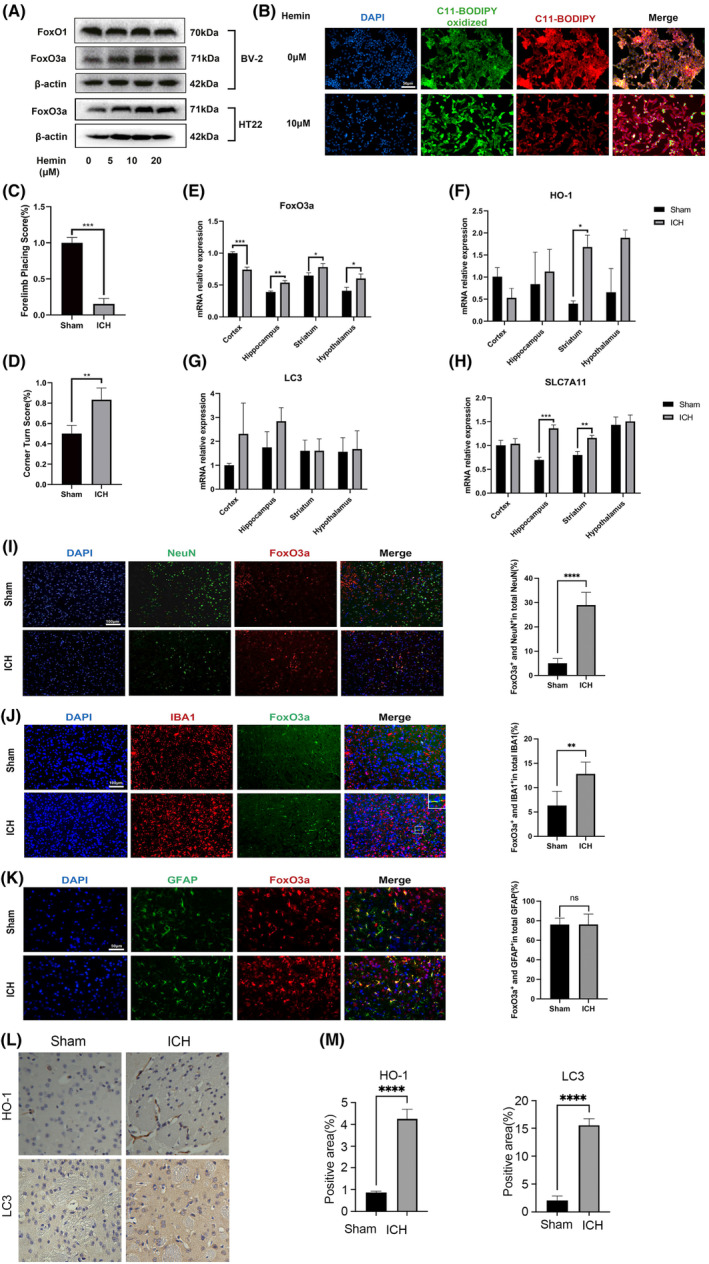
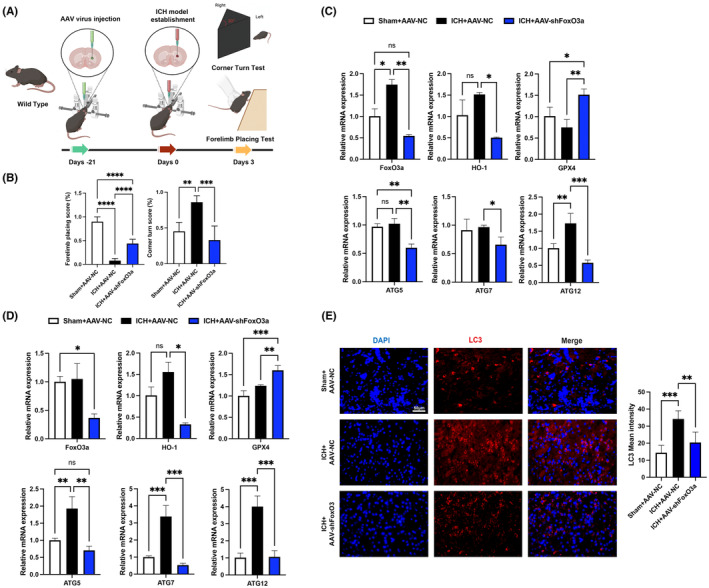
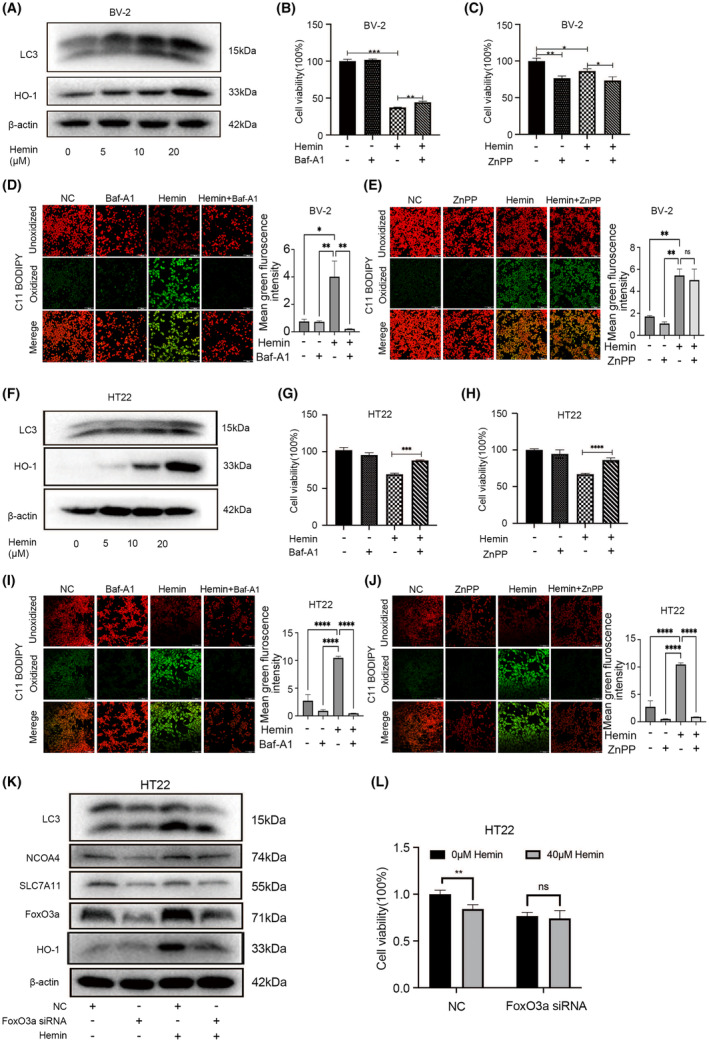
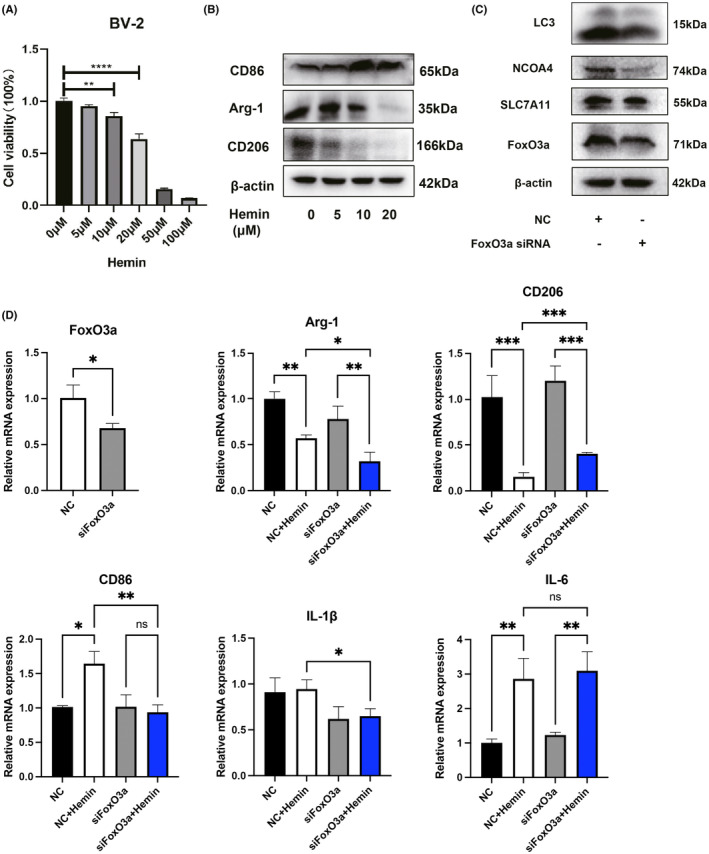
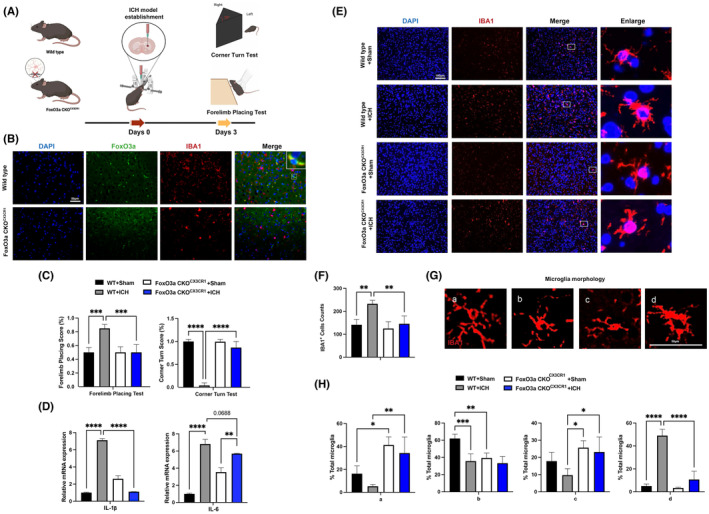
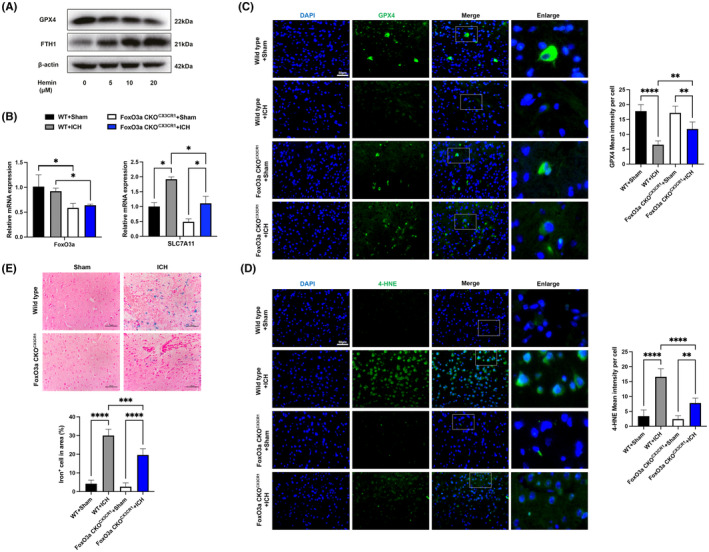
Microglial HO-1 regulates iron metabolism in the brain. Intracerebral haemorrhage (ICH) shares features of ferroptosis and necroptosis; hemin is an oxidized product of haemoglobin from lysed red blood cells, leading to secondary injury. However, little is known about the underlying molecular mechanisms attributable to secondary injury by hemin or ICH. In this study, we first show that FoxO3a was highly co-located with neurons and microglia but not astrocytes area of ICH model mice. Hemin activated FoxO3a/ATG-mediated autophagy and HO-1 signalling resulting in ferroptosis in vitro and in a mice model of brain haemorrhage. Accordingly, autophagy inhibitor Baf-A1 or HO-1 inhibitor ZnPP protected against hemin-induced ferroptosis. Hemin promoted ferroptosis of neuronal cells via FoxO3a/ATG-mediated autophagy and HO-1 signalling pathway. Knock-down of FoxO3a inhibited autophagy and prevented hemin-induced ferroptosis dependent of HO-1 signalling. We first showed that hemin stimulated microglial FoxO3a/HO-1 expression and enhanced the microglial polarisation towards the M1 phenotype, while knockdown of microglial FoxO3a inhibited pro-inflammatory cytokine production in microglia. Furthermore, the microglia activation in the striatum showed significant along with a high expression level of FoxO3a in the ICH mice. We found that conditional knockout of FoxO3a in microglia in mice alleviated neurological deficits and microglia activation as well as ferroptosis-induced striatum injury in the autologous blood-induced ICH model. We demonstrate, for the first time, that FoxO3a/ATG-mediated autophagy and HO-1 play an important role in microglial activation and ferroptosis-induced striatum injury of ICH, identifying a new therapeutic avenue for the treatment of ICH.
小胶质细胞 HO-1 调节大脑中的铁代谢。脑出血(ICH)具有铁死亡和坏死性细胞死亡的特征;血红素是裂解红细胞中的血红蛋白的氧化产物,导致继发性损伤。然而,血红素或 ICH 引起的继发性损伤的潜在分子机制知之甚少。在这项研究中,我们首先表明 FoxO3a 高度定位于 ICH 模型小鼠的神经元和小胶质细胞区域,但不在星形胶质细胞区域。血红素激活 FoxO3a/ATG 介导的自噬和 HO-1 信号通路,导致体外铁死亡和脑出血小鼠模型中的铁死亡。因此,自噬抑制剂 Baf-A1 或 HO-1 抑制剂 ZnPP 可预防血红素诱导的铁死亡。血红素通过 FoxO3a/ATG 介导的自噬和 HO-1 信号通路促进神经元细胞的铁死亡。FoxO3a 的敲低抑制自噬并防止血红素诱导的铁死亡依赖于 HO-1 信号。我们首先表明,血红素刺激小胶质细胞 FoxO3a/HO-1 表达,并增强小胶质细胞向 M1 表型的极化,而小胶质细胞 FoxO3a 的敲低抑制小胶质细胞中促炎细胞因子的产生。此外,在 ICH 小鼠中,纹状体中的小胶质细胞激活伴随着 FoxO3a 的高表达水平。我们发现,在小鼠中小胶质细胞中条件性敲除 FoxO3a 可减轻神经功能缺损以及小胶质细胞激活和自源性血液诱导的 ICH 模型中铁死亡诱导的纹状体损伤。我们首次证明,FoxO3a/ATG 介导的自噬和 HO-1 在小胶质细胞激活和 ICH 中铁死亡诱导的纹状体损伤中起重要作用,为 ICH 的治疗开辟了新的治疗途径。