Rivas Victor N, Kaplan Joanna L, Kennedy Susan A, Fitzgerald Stuart, Crofton Amanda E, Farrell Aisling, Grubb Louise, Jauregui Carina E, Grigorean Gabriela, Choi Eunju, Harris Samantha P, Stern Joshua A
Department of Medicine and Epidemiology, School of Veterinary Medicine, University of California-Davis, Davis, CA 95616, USA.
Department of Clinical Sciences, College of Veterinary Medicine, North Carolina State University, Raleigh, NC 27607, USA.
Animals (Basel). 2023 Oct 12;13(20):3184. doi: 10.3390/ani13203184.
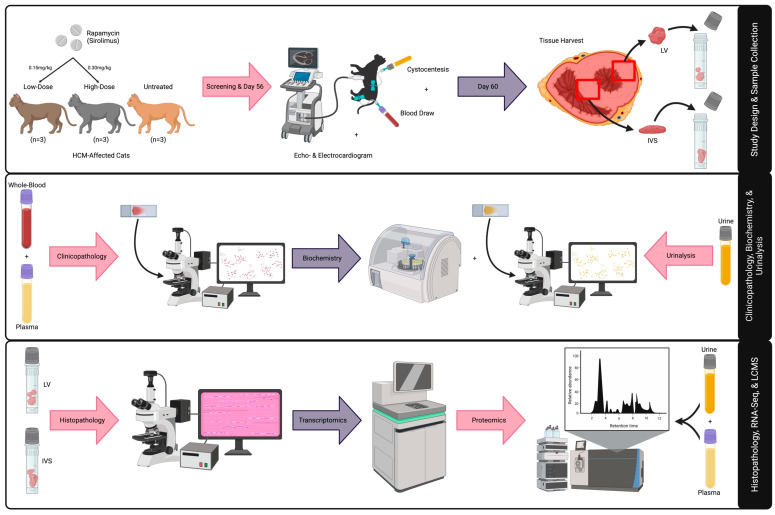
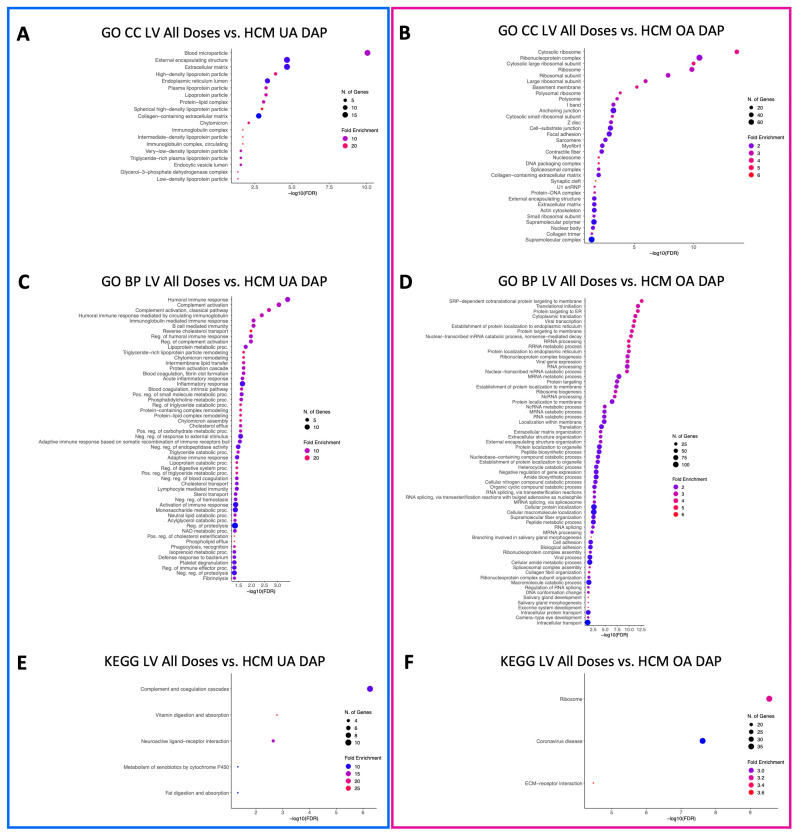
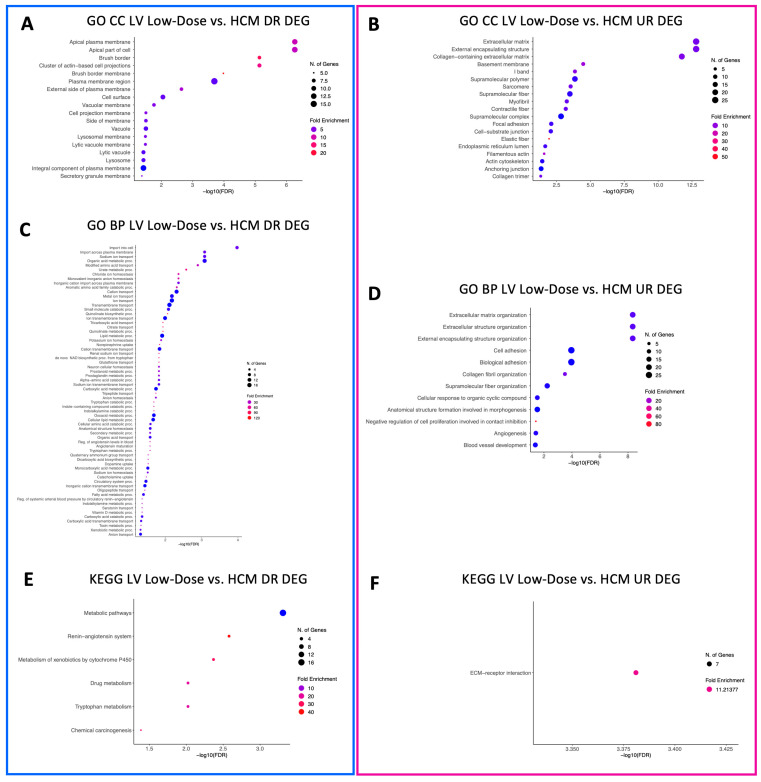
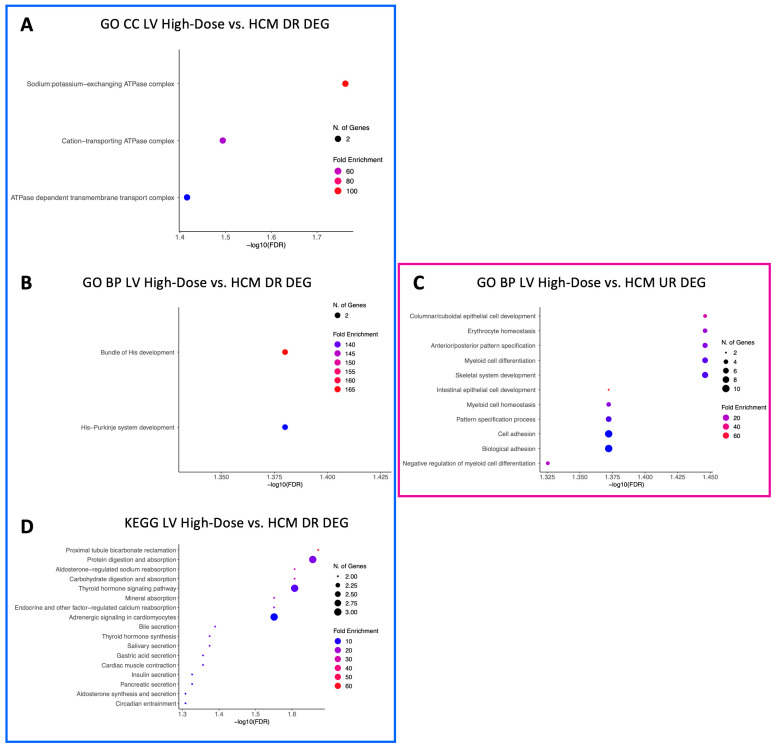
Hypertrophic cardiomyopathy (HCM) remains the single most common cardiomyopathy in cats, with a staggering prevalence as high as 15%. To date, little to no direct therapeutical intervention for HCM exists for veterinary patients. A previous study aimed to evaluate the effects of delayed-release (DR) rapamycin dosing in a client-owned population of subclinical, non-obstructive, HCM-affected cats and reported that the drug was well tolerated and resulted in beneficial LV remodeling. However, the precise effects of rapamycin in the hypertrophied myocardium remain unknown. Using a feline research colony with naturally occurring hereditary HCM (n = 9), we embarked on the first-ever pilot study to examine the tissue-, urine-, and plasma-level proteomic and tissue-level transcriptomic effects of an intermittent low dose (0.15 mg/kg) and high dose (0.30 mg/kg) of DR oral rapamycin once weekly. Rapamycin remained safe and well tolerated in cats receiving both doses for eight weeks. Following repeated weekly dosing, transcriptomic differences between the low- and high-dose groups support dose-responsive suppressive effects on myocardial hypertrophy and stimulatory effects on autophagy. Differences in the myocardial proteome between treated and control cats suggest potential anti-coagulant/-thrombotic, cellular remodeling, and metabolic effects of the drug. The results of this study closely recapitulate what is observed in the human literature, and the use of rapamycin in the clinical setting as the first therapeutic agent with disease-modifying effects on HCM remains promising. The results of this study establish the need for future validation efforts that investigate the fine-scale relationship between rapamycin treatment and the most compelling gene expression and protein abundance differences reported here.
肥厚型心肌病(HCM)仍是猫科动物中最常见的单一心肌病,其患病率高达15%,令人震惊。迄今为止,兽医患者几乎没有针对HCM的直接治疗干预措施。先前的一项研究旨在评估缓释(DR)雷帕霉素给药对一群临床症状不明显、非梗阻性、受HCM影响的家养猫的作用,并报告该药物耐受性良好,可带来有益的左心室重塑。然而,雷帕霉素在肥厚心肌中的精确作用仍不清楚。我们利用一个患有自然发生的遗传性HCM的猫研究群体(n = 9),开展了有史以来第一项试点研究,以检查每周一次间歇性低剂量(0.15 mg/kg)和高剂量(0.30 mg/kg)的DR口服雷帕霉素对组织、尿液和血浆水平的蛋白质组以及组织水平转录组的影响。在接受这两种剂量治疗八周的猫中,雷帕霉素仍然安全且耐受性良好。在每周重复给药后,低剂量组和高剂量组之间的转录组差异支持了对心肌肥厚的剂量反应性抑制作用以及对自噬的刺激作用。治疗猫和对照猫之间心肌蛋白质组的差异表明该药物具有潜在的抗凝血/抗血栓形成、细胞重塑和代谢作用。这项研究的结果与人类文献中的观察结果非常相似,在临床环境中使用雷帕霉素作为对HCM具有疾病修饰作用的第一种治疗药物仍然很有前景。这项研究的结果表明,未来需要进行验证工作,以研究雷帕霉素治疗与本文报道的最引人注目的基因表达和蛋白质丰度差异之间的精细关系。