Department of Administrative and Pharmaceutical Sciences, University of Health Science and Pharmacy in St. Louis, St. Louis, MO 63110, USA.
Department of Pharmaceutical Technology, Faculty of Pharmacy, Trakya University, 22030 Edirne, Turkey.
Molecules. 2023 Oct 16;28(20):7115. doi: 10.3390/molecules28207115.
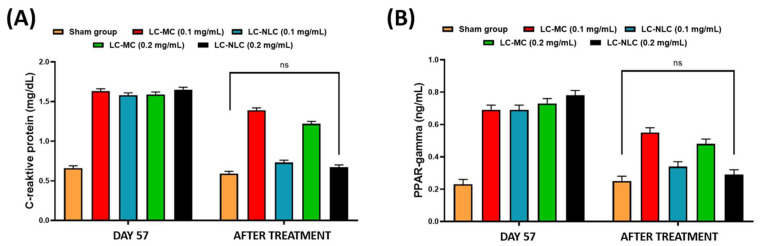
Addressing obesity is a critical health concern of the century, necessitating urgent attention. L-carnitine (LC), an essential water-soluble compound, plays a pivotal role in lipid breakdown via β-oxidation and facilitates the transport of long-chain fatty acids across mitochondrial membranes. However, LC's high hydrophilicity poses challenges to its diffusion through bilayers, resulting in limited bioavailability, a short half-life, and a lack of storage within the body, mandating frequent dosing. In our research, we developed LC-loaded nanoparticle lipid carriers (LC-NLCs) using economically viable and tissue-localized nanostructured lipid carriers (NLCs) to address these limitations. Employing the central composite design model, we optimized the formulation, employing the high-pressure homogenization (HPH) method and incorporating Poloxamer 407 (surfactant), Compritol 888 ATO (solid lipid), and oleic acid (liquid oil). A comprehensive assessment of nanoparticle physical attributes was performed, and an open-field test (OFT) was conducted on rats. We employed immunofluorescence assays targeting CRP and PPAR-γ, along with an in vivo rat study utilizing an isolated fat cell line to assess adipogenesis. The optimal formulation, with an average size of 76.4 ± 3.4 nm, was selected due to its significant efficacy in activating the PPAR-γ pathway. Our findings from the OFT revealed noteworthy impacts of LC-NLC formulations (0.1 mg/mL and 0.2 mg/mL) on adipocyte cells, surpassing regular L-carnitine formulations' effects (0.1 mg/mL and 0.2 mg/mL) by 169.26% and 156.63%, respectively ( < 0.05).
解决肥胖问题是本世纪至关重要的健康关注点,需要紧急关注。左旋肉碱(LC)是一种必需的水溶性化合物,在β-氧化过程中分解脂肪发挥关键作用,并促进长链脂肪酸穿过线粒体膜的转运。然而,LC 的高亲水性使其在双层膜中扩散受到挑战,导致其生物利用度有限、半衰期短且体内储存不足,需要频繁给药。在我们的研究中,我们使用经济可行且组织定位的纳米结构化脂质载体(NLC)开发了负载 LC 的纳米颗粒脂质载体(LC-NLC),以解决这些限制。我们采用中心复合设计模型,使用高压匀质(HPH)方法并加入泊洛沙姆 407(表面活性剂)、Compritol 888 ATO(固体脂质)和油酸(液体油)来优化配方。我们对纳米颗粒的物理特性进行了全面评估,并在大鼠上进行了开放场测试(OFT)。我们使用靶向 CRP 和 PPAR-γ 的免疫荧光测定法,以及体内大鼠研究中使用分离的脂肪细胞系来评估脂肪生成。由于其在激活 PPAR-γ 途径方面的显著功效,选择了平均粒径为 76.4 ± 3.4nm 的最佳配方。OFT 的结果表明,LC-NLC 制剂(0.1mg/mL 和 0.2mg/mL)对脂肪细胞具有显著影响,分别比常规 LC 制剂(0.1mg/mL 和 0.2mg/mL)的效果高出 169.26%和 156.63%( < 0.05)。