School of Biomedical Sciences, Faculty of Medicine, The Chinese University of Hong Kong, Hong Kong SAR, China.
Institute for Tissue Engineering and Regenerative Medicine, The Chinese University of Hong Kong, Hong Kong SAR, China.
Int J Mol Sci. 2023 Oct 14;24(20):15183. doi: 10.3390/ijms242015183.
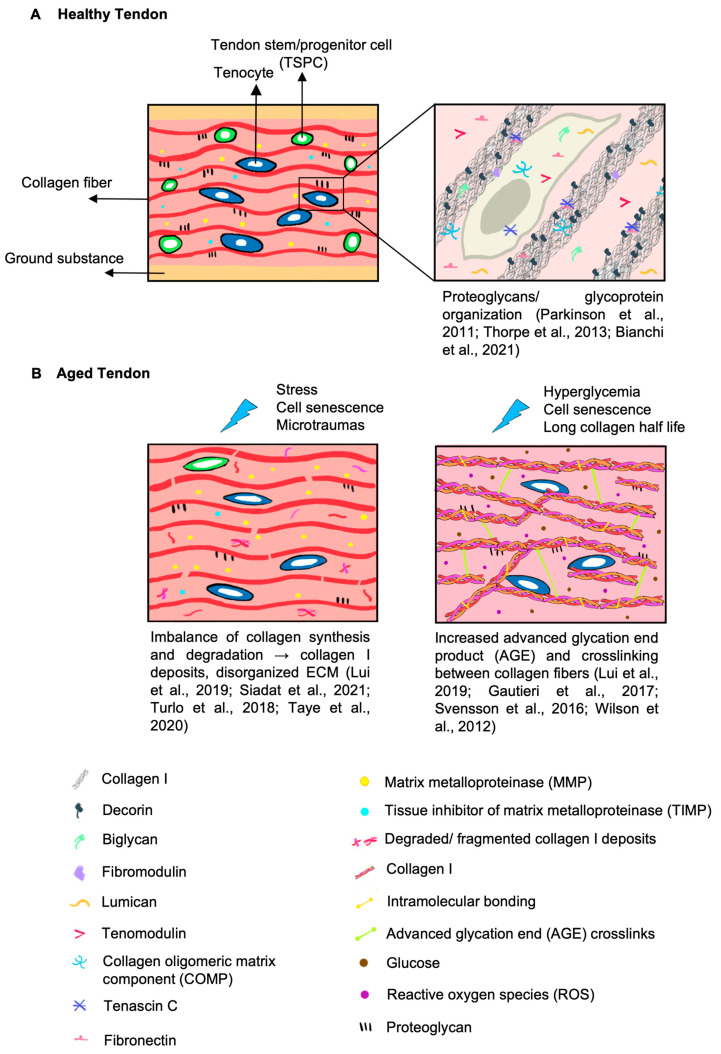
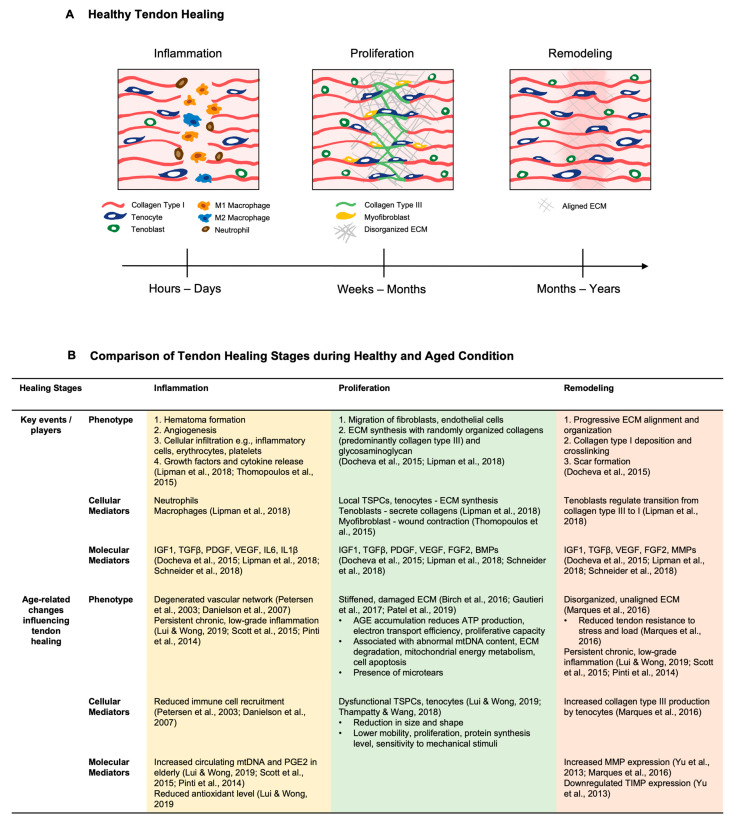
Tendon aging is associated with an increasing prevalence of tendon injuries and/or chronic tendon diseases, such as tendinopathy, which affects approximately 25% of the adult population. Aged tendons are often characterized by a reduction in the number and functionality of tendon stem/progenitor cells (TSPCs), fragmented or disorganized collagen bundles, and an increased deposition of glycosaminoglycans (GAGs), leading to pain, inflammation, and impaired mobility. Although the exact pathology is unknown, overuse and microtrauma from aging are thought to be major causative factors. Due to the hypovascular and hypocellular nature of the tendon microenvironment, healing of aged tendons and related injuries is difficult using current pain/inflammation and surgical management techniques. Therefore, there is a need for novel therapies, specifically cellular therapy such as cell rejuvenation, due to the decreased regenerative capacity during aging. To augment the therapeutic strategies for treating tendon-aging-associated diseases and injuries, a comprehensive understanding of tendon aging pathology is needed. This review summarizes age-related tendon changes, including cell behaviors, extracellular matrix (ECM) composition, biomechanical properties and healing capacity. Additionally, the impact of conventional treatments (diet, exercise, and surgery) is discussed, and recent advanced strategies (cell rejuvenation) are highlighted to address aged tendon healing. This review underscores the molecular and cellular linkages between aged tendon biomechanical properties and the healing response, and provides an overview of current and novel strategies for treating aged tendons. Understanding the underlying rationale for future basic and translational studies of tendon aging is crucial to the development of advanced therapeutics for tendon regeneration.
肌腱老化与肌腱损伤和/或慢性肌腱疾病(如肌腱病)的患病率增加有关,后者影响约 25%的成年人口。老年肌腱的特征通常是肌腱干/祖细胞(TSPC)数量和功能减少、胶原纤维束碎片化或紊乱,以及糖胺聚糖(GAG)的沉积增加,导致疼痛、炎症和运动能力受损。尽管确切的病理机制尚不清楚,但过度使用和衰老引起的微创伤被认为是主要的致病因素。由于肌腱微环境的低血管和低细胞特性,使用当前的疼痛/炎症和手术管理技术来治疗老年肌腱和相关损伤是困难的。因此,由于衰老过程中再生能力下降,需要新的治疗方法,特别是细胞疗法,如细胞再生。为了增强治疗与肌腱老化相关的疾病和损伤的治疗策略,需要全面了解肌腱老化的病理。本综述总结了与年龄相关的肌腱变化,包括细胞行为、细胞外基质(ECM)组成、生物力学特性和愈合能力。此外,还讨论了常规治疗(饮食、运动和手术)的影响,并强调了最近的先进策略(细胞再生),以解决老年肌腱愈合的问题。本综述强调了老年肌腱生物力学特性与愈合反应之间的分子和细胞联系,并概述了治疗老年肌腱的现有和新策略。了解未来肌腱老化的基础和转化研究的基本原理对于开发肌腱再生的先进治疗方法至关重要。