Wadsworth Center, New York State Department of Health, Albany, NY 12201, USA.
Department of Biomedical Sciences, School of Public Health, University at Albany, State University of New York, Albany, NY 12222, USA.
Genes (Basel). 2023 Sep 29;14(10):1892. doi: 10.3390/genes14101892.
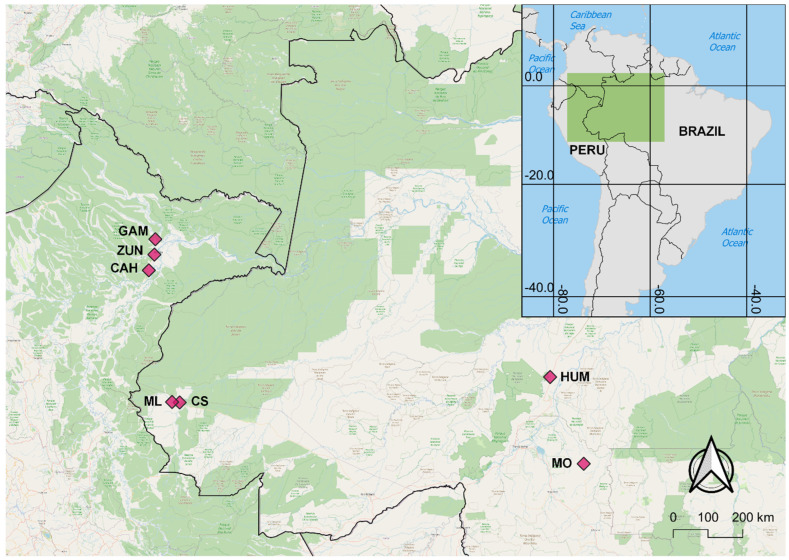
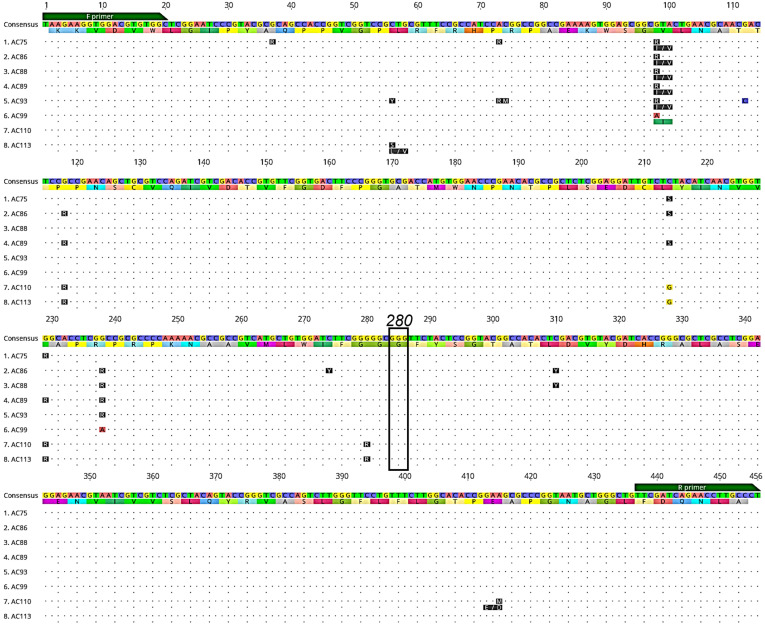
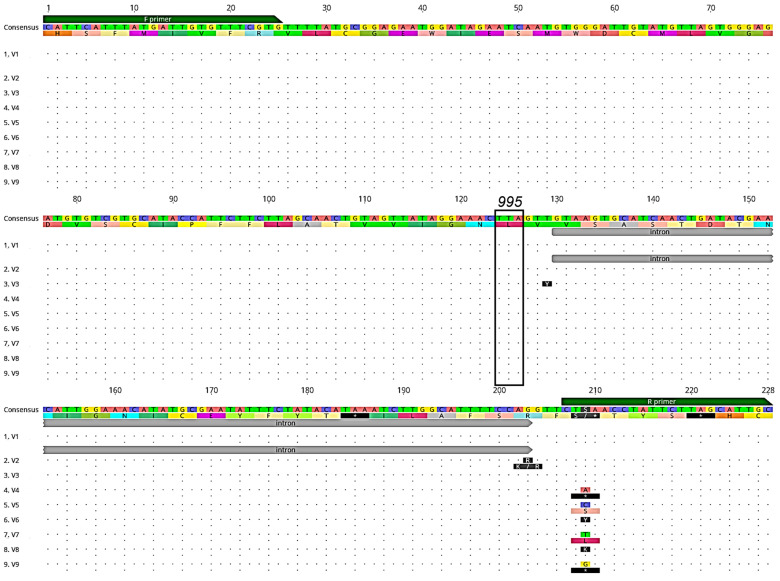
Indoor residual spray (IRS), mainly employing pyrethroid insecticides, is the most common intervention for preventing malaria transmission in many regions of Latin America; the use of long-lasting insecticidal nets (LLINs) has been more limited. Knockdown resistance () is a well-characterized target-site resistance mechanism associated with pyrethroid and DDT resistance. Most mutations detected in acetylcholinesterase-1 () and voltage-gated sodium channel () genes are non-synonymous, resulting in a change in amino acid, leading to the non-binding of the insecticide. In the present study, we analyzed target-site resistance in , the primary malaria vector in the Amazon, in multiple malaria endemic localities. We screened 988 wild-caught specimens of from three localities in Amazonian Peru and four in Amazonian Brazil. Collections were conducted between 2014 and 2021. The criteria were Amazonian localities with a recent history as malaria hotspots, primary transmission by , and the use of both IRS and LLINs as interventions. Fragments of (456 bp) and (228 bp) were amplified, sequenced, and aligned with sequences available in GenBank. We detected only synonymous mutations in the frequently reported codon 280 known to confer resistance to organophosphates and carbamates, but detected three non-synonymous mutations in other regions of the gene. Similarly, no mutations linked to insecticide resistance were detected in the frequently reported codon (995) at the S6 segment of domain II of . The lack of genotypic detection of insecticide resistance mutations by sequencing the and genes from multiple populations in Brazil and Peru could be associated with low-intensity resistance, or possibly the main resistance mechanism is metabolic.
室内滞留喷洒(IRS)主要使用拟除虫菊酯类杀虫剂,是拉丁美洲许多地区预防疟疾传播的最常见干预措施;而长效杀虫剂蚊帐(LLINs)的使用则较为有限。击倒抗性()是一种与拟除虫菊酯和滴滴涕抗性密切相关的典型靶标抗性机制。在乙酰胆碱酯酶-1()和电压门控钠通道()基因中检测到的大多数突变是非同义的,导致氨基酸发生变化,从而导致杀虫剂无法结合。在本研究中,我们分析了亚马逊地区主要疟疾病媒的靶标抗性。我们在亚马逊地区的秘鲁的三个地点和巴西的四个地点筛选了 988 只野生捕获的。采集工作于 2014 年至 2021 年进行。标准是亚马逊地区有疟疾热点的近期历史,主要通过传播,并且使用 IRS 和 LLINs 作为干预措施。扩增、测序并与 GenBank 中可用的序列进行比对的片段为 (456 bp)和 (228 bp)。我们仅在经常报道的已知对有机磷和氨基甲酸酯类药物具有抗性的 280 号密码子中检测到同义突变,该突变与经常报道的 II 域 S6 片段的 995 号密码子()没有检测到与杀虫剂抗性相关的突变。在巴西和秘鲁的多个 种群中,通过测序和 基因未检测到杀虫剂抗性突变的基因型,这可能与低强度抗性有关,或者主要的抗性机制可能是代谢。