Setor de Pós-Graduação, Pesquisa e Inovação, Centro Universitário Saúde ABC (FMABC), Fundação ABC, Santo André, SP, Brazil.
Superintendência de Controle de Endemias (SUCEN), Secretaria de Estado da Saúde de São Paulo, Araraquara, SP, Brazil.
Sci Rep. 2021 Mar 19;11(1):6477. doi: 10.1038/s41598-021-85890-3.
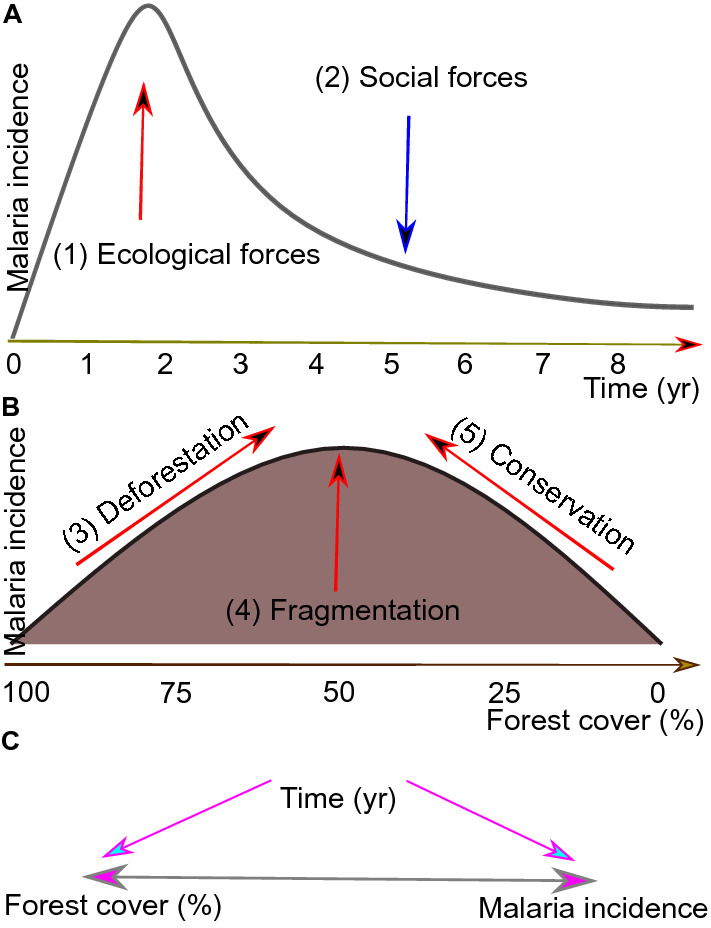
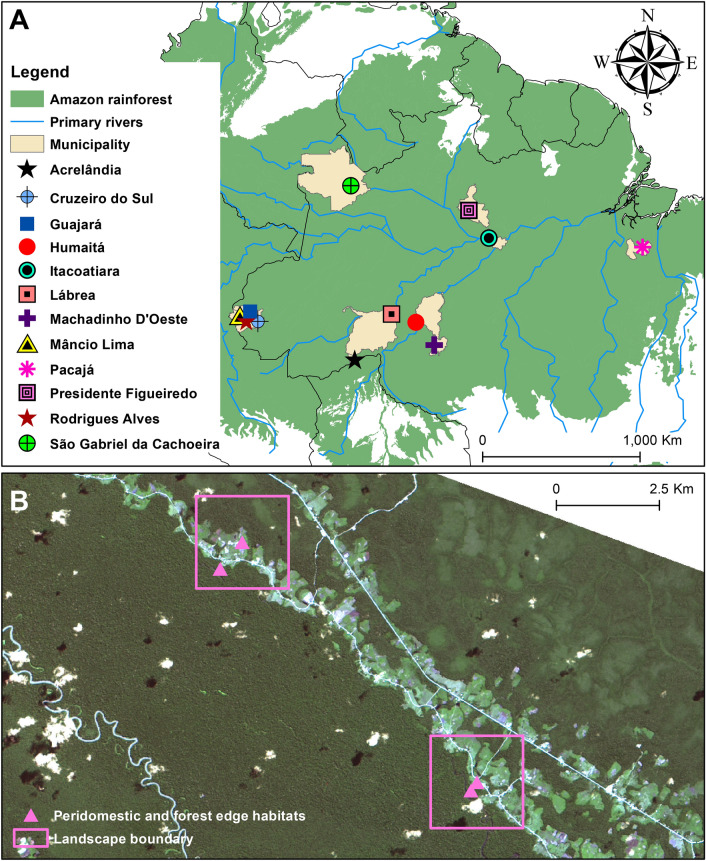
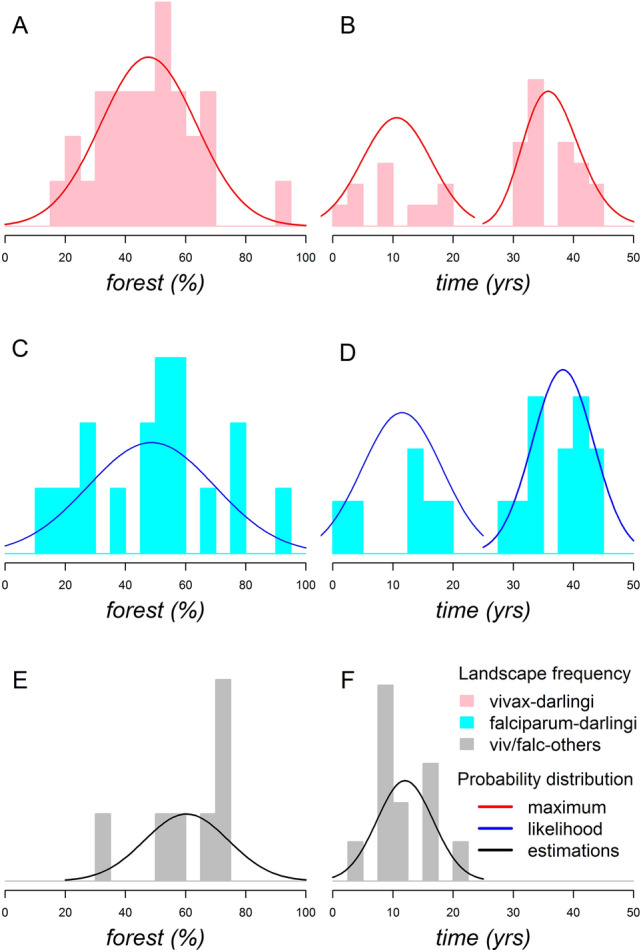
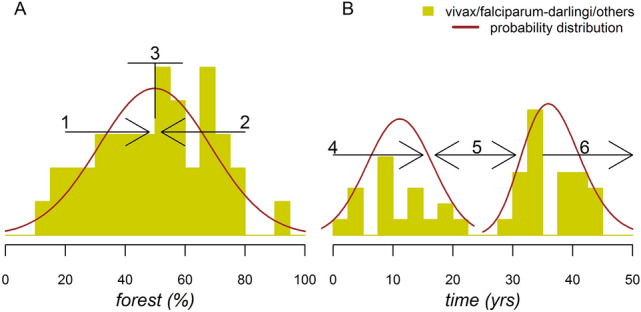
The relationship between deforestation and malaria is a spatiotemporal process of variation in Plasmodium incidence in human-dominated Amazonian rural environments. The present study aimed to assess the underlying mechanisms of malarial exposure risk at a fine scale in 5-km sites across the Brazilian Amazon, using field-collected data with a longitudinal spatiotemporally structured approach. Anopheline mosquitoes were sampled from 80 sites to investigate the Plasmodium infection rate in mosquito communities and to estimate the malaria exposure risk in rural landscapes. The remaining amount of forest cover (accumulated deforestation) and the deforestation timeline were estimated in each site to represent the main parameters of both the frontier malaria hypothesis and an alternate scenario, the deforestation-malaria hypothesis, proposed herein. The maximum frequency of pathogenic sites occurred at the intermediate forest cover level (50% of accumulated deforestation) at two temporal deforestation peaks, e.g., 10 and 35 years after the beginning of the organization of a settlement. The incidence density of infected anophelines in sites where the original forest cover decreased by more than 50% in the first 25 years of settlement development was at least twice as high as the incidence density calculated for the other sites studied (adjusted incidence density ratio = 2.25; 95% CI, 1.38-3.68; p = 0.001). The results of this study support the frontier malaria as a unifying hypothesis for explaining malaria emergence and for designing specific control interventions in the Brazilian Amazon.
森林砍伐与疟疾之间的关系是人类主导的亚马孙农村环境中疟疾病例发生率的时空变化过程。本研究旨在利用具有纵向时空结构方法的实地采集数据,在巴西亚马孙地区的 5 公里范围内评估疟疾暴露风险的潜在机制。从 80 个地点采集按蚊样本,以调查蚊群中的疟原虫感染率,并估计农村景观中的疟疾暴露风险。在每个地点估算剩余的森林覆盖率(累计森林砍伐量)和森林砍伐时间线,以代表前沿疟疾假说和本文提出的替代方案(砍伐-疟疾假说)的主要参数。在两个时间上的森林砍伐高峰期(定居开始后 10 年和 35 年),致病地点的最大频率出现在中间森林覆盖水平(累计森林砍伐量的 50%)。在定居点发展的前 25 年,原始森林覆盖率减少超过 50%的地点中感染按蚊的发病率密度至少是其他研究地点的两倍(调整发病率密度比=2.25;95%CI,1.38-3.68;p=0.001)。本研究结果支持前沿疟疾作为一种统一假说,用于解释疟疾的出现,并为巴西亚马孙地区的特定控制干预措施设计提供依据。