Collareta Alberto, Casati Simone, Di Cencio Andrea, Bianucci Giovanni
Dipartimento di Scienze della Terra, Università di Pisa, Via S. Maria 53, 56126 Pisa, PI, Italy.
Museo di Storia Naturale, Università di Pisa, Via Roma 79, 56011 Calci, PI, Italy.
Life (Basel). 2023 Oct 20;13(10):2085. doi: 10.3390/life13102085.
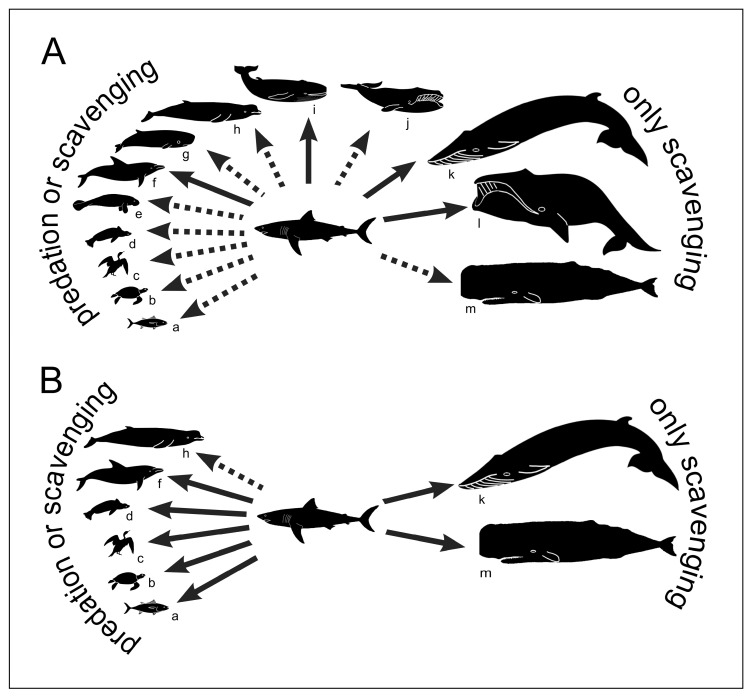
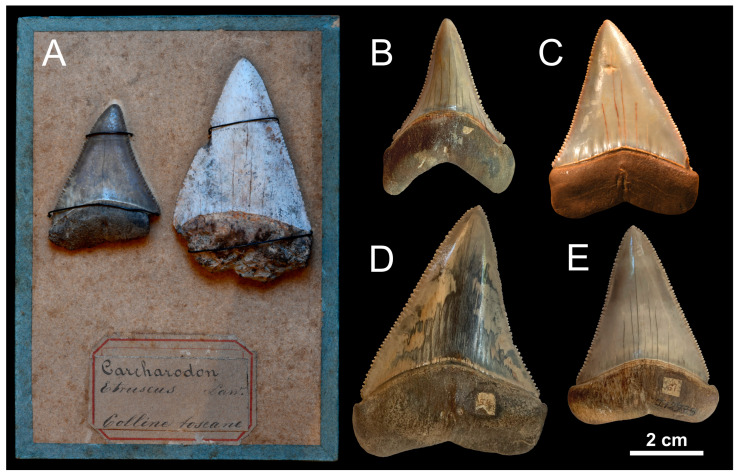
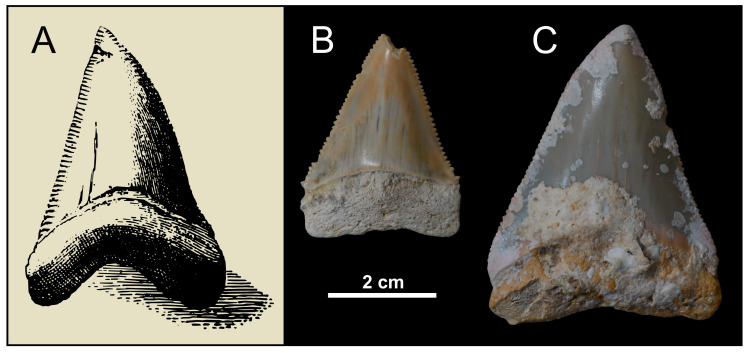
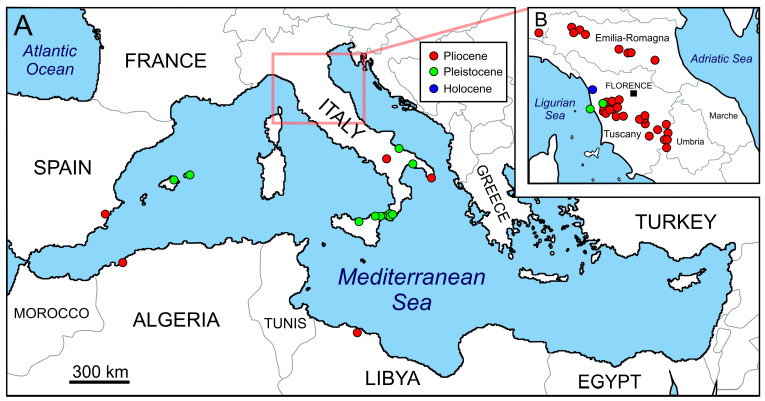
The white shark, , is the main top predator of the present-day Mediterranean Sea. The deep past of in the Mediterranean is witnessed by a rather conspicuous, mostly Pliocene fossil record. Here, we provide a synthesis of the palaeobiology and palaeoecology of the Mediterranean white sharks. Phenetically modern white shark teeth first appeared around the Miocene-Pliocene transition in the Pacific, and soon after in the Mediterranean. Molecular phylogenetic analyses support an origin of the Mediterranean white shark population from the dispersal of Australian/Pacific palaeopopulations, which may have occurred through the Central American Seaway. Tooth dimensions suggest that the Mediterranean white sharks could have grown up to about 7 m total length during the Pliocene. A richer-than-today marine mammal fauna was likely pivotal in supporting the Mediterranean white sharks through the Pliocene and most of the Quaternary. White sharks have seemingly become more common as other macropredators declined and disappeared, notwithstanding the concurrent demise of many potential prey items in the context of the latest Pliocene and Quaternary climatic and environmental perturbations of the Mediterranean region. The overall generalist trophic habits of were likely crucial for securing ecological success in the highly variable Mediterranean scenario by allowing the transition to a mostly piscivorous diet as the regional marine mammal fauna shrank.
大白鲨是当今地中海的主要顶级掠食者。地中海大白鲨的遥远过去可以通过一个相当显著的、主要是上新世的化石记录得以见证。在此,我们对地中海大白鲨的古生物学和古生态学进行了综述。形态学上现代的大白鲨牙齿最早出现在太平洋的中新世 - 上新世过渡时期,随后不久在地中海也出现了。分子系统发育分析支持地中海大白鲨种群起源于澳大利亚/太平洋古种群的扩散,这可能是通过中美洲海道发生的。牙齿尺寸表明,上新世时期地中海大白鲨的全长可能达到约7米。在整个上新世和第四纪的大部分时间里,比现今更丰富的海洋哺乳动物群可能对维持地中海大白鲨的生存起到了关键作用。尽管在上新世晚期和第四纪地中海地区气候和环境动荡的背景下,许多潜在猎物同时灭绝,但随着其他大型掠食者数量减少和消失,大白鲨似乎变得更加常见。大白鲨总体上的广食性营养习性,可能通过在区域海洋哺乳动物群萎缩时转向以鱼类为主的饮食,从而在高度变化的地中海环境中确保生态成功方面起到了关键作用。