Rodriguez-Vera Leyanis, Yin Xuefen, Almoslem Mohammed, Romahn Karolin, Cicali Brian, Lukacova Viera, Cristofoletti Rodrigo, Schmidt Stephan
Center for Pharmacometrics and System Pharmacology at Lake Nona (Orlando), Department of Pharmaceutics, College of Pharmacy, University of Florida, Orlando, FL 32827, USA.
Simulations Plus, Lancaster, CA 93534, USA.
Pharmaceutics. 2023 Oct 18;15(10):2486. doi: 10.3390/pharmaceutics15102486.
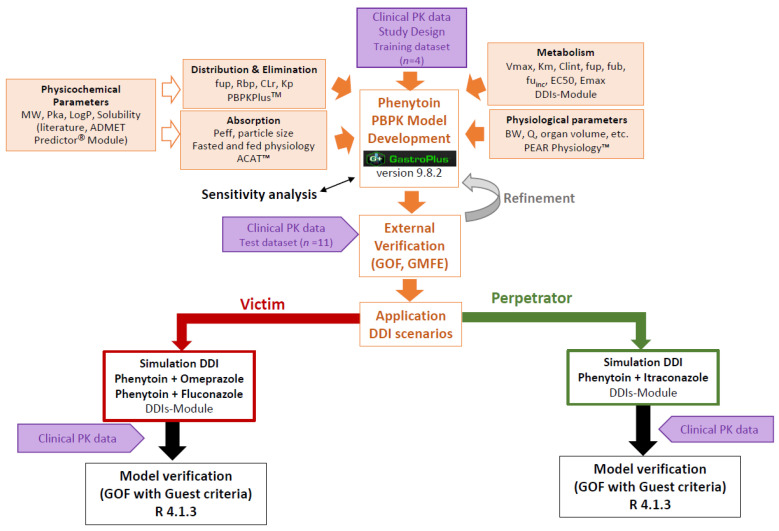
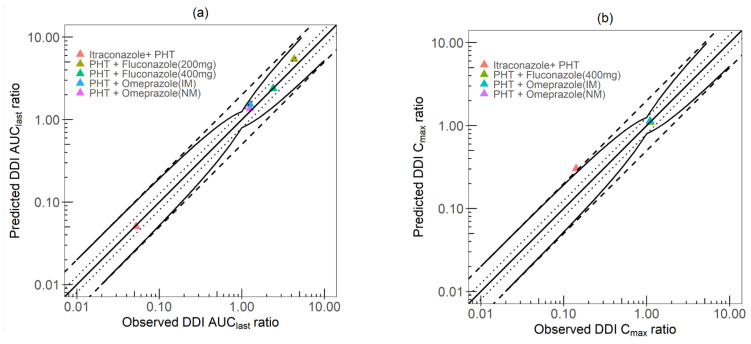
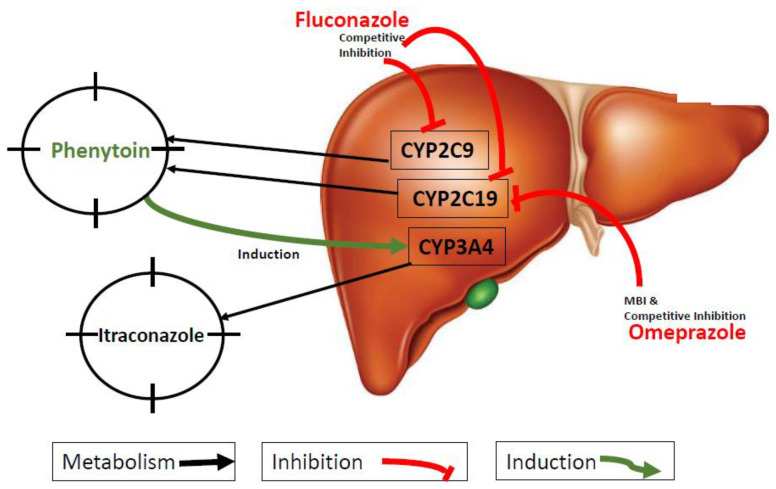
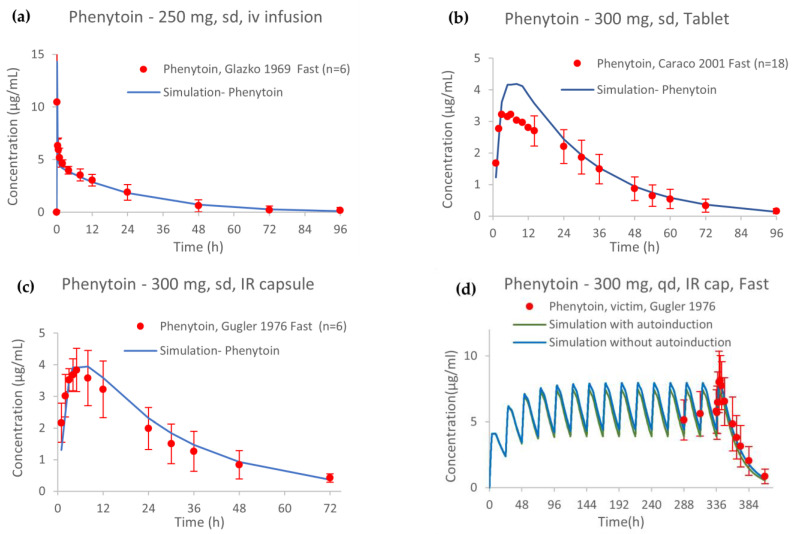
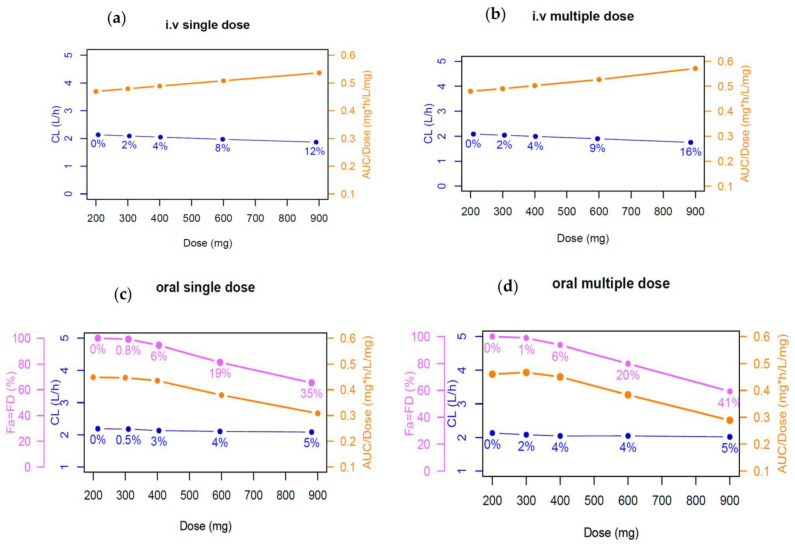
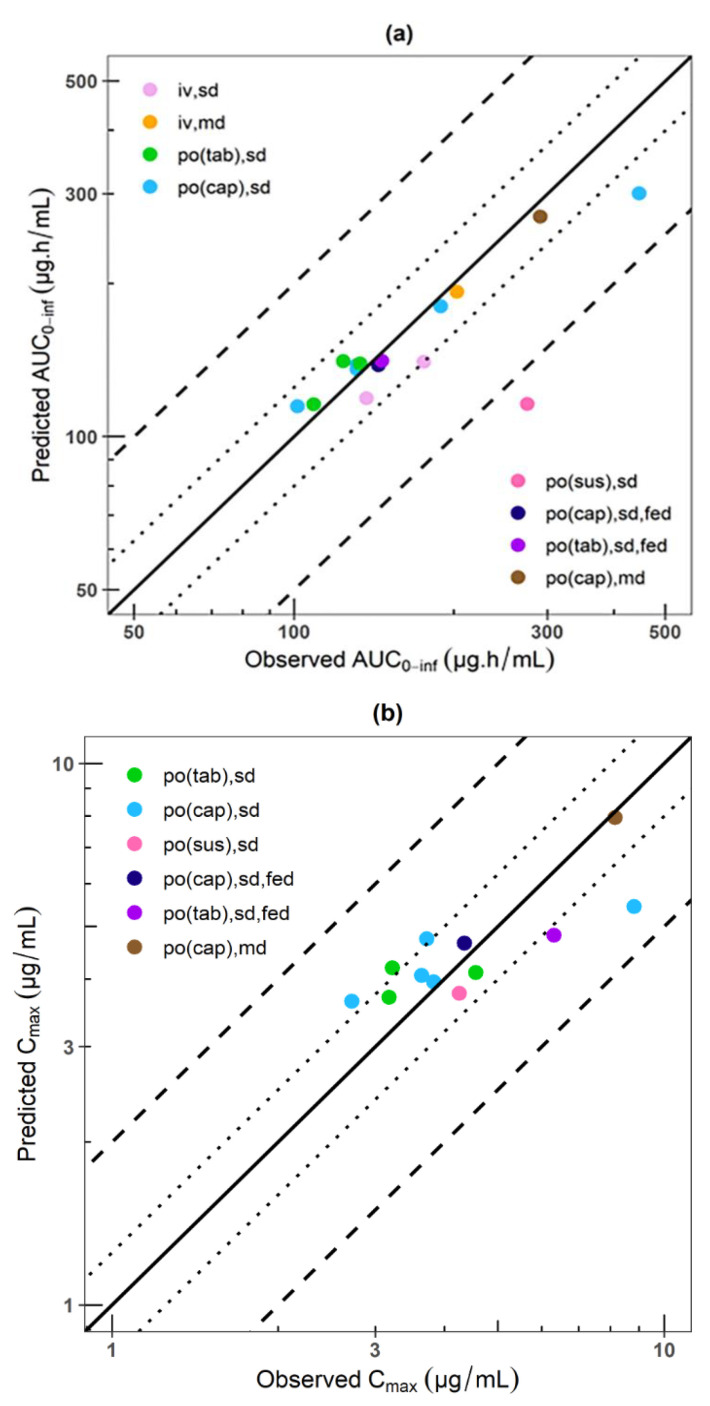
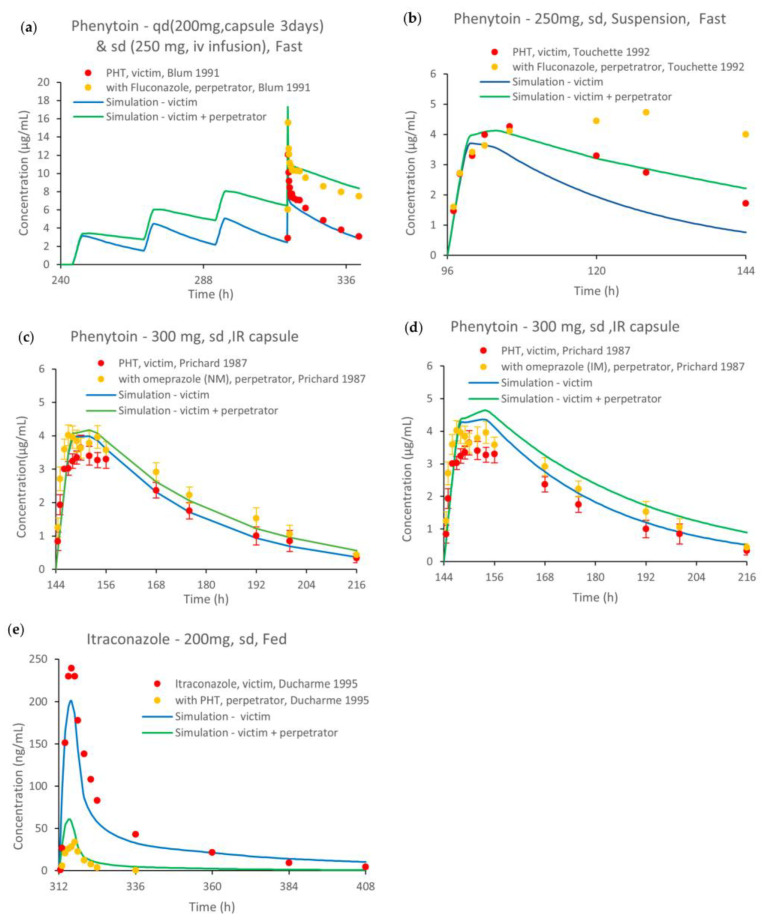
Regulatory agencies worldwide expect that clinical pharmacokinetic drug-drug interactions (DDIs) between an investigational new drug and other drugs should be conducted during drug development as part of an adequate assessment of the drug's safety and efficacy. However, it is neither time nor cost efficient to test all possible DDI scenarios clinically. Phenytoin is classified by the Food and Drug Administration as a strong clinical index inducer of CYP3A4, and a moderate sensitive substrate of CYP2C9. A physiologically based pharmacokinetic (PBPK) platform model was developed using GastroPlus to assess DDIs with phenytoin acting as the victim (CYP2C9, CYP2C19) or perpetrator (CYP3A4). Pharmacokinetic data were obtained from 15 different studies in healthy subjects. The PBPK model of phenytoin explains the contribution of CYP2C9 and CYP2C19 to the formation of 5-(4'-hydroxyphenyl)-5-phenylhydantoin. Furthermore, it accurately recapitulated phenytoin exposure after single and multiple intravenous and oral doses/formulations ranging from 248 to 900 mg, the dose-dependent nonlinearity and the magnitude of the effect of food on phenytoin pharmacokinetics. Once developed and verified, the model was used to characterize and predict phenytoin DDIs with fluconazole, omeprazole and itraconazole, i.e., simulated/observed DDI AUC ratio ranging from 0.89 to 1.25. This study supports the utility of the PBPK approach in informing drug development.
全球监管机构期望,在药物研发过程中,应进行研究性新药与其他药物之间的临床药代动力学药物相互作用(DDIs)研究,作为对药物安全性和有效性进行充分评估的一部分。然而,对所有可能的DDI情况进行临床测试既不节省时间也不节省成本。苯妥英钠被美国食品药品监督管理局归类为CYP3A4的强临床指标诱导剂,以及CYP2C9的中度敏感底物。使用GastroPlus开发了一个基于生理学的药代动力学(PBPK)平台模型,以评估以苯妥英钠作为受影响药物(CYP2C9、CYP2C19)或引发药物(CYP3A4)的DDIs。药代动力学数据来自15项针对健康受试者的不同研究。苯妥英钠的PBPK模型解释了CYP2C9和CYP2C19对5-(4'-羟基苯基)-5-苯基乙内酰脲形成的贡献。此外,它准确地概括了单次和多次静脉注射及口服剂量/制剂(范围为248至900毫克)后苯妥英钠的暴露情况、剂量依赖性非线性以及食物对苯妥英钠药代动力学影响的程度。一旦开发并验证,该模型被用于表征和预测苯妥英钠与氟康唑、奥美拉唑和伊曲康唑的DDIs,即模拟/观察到的DDI AUC比值范围为0.89至1.25。本研究支持PBPK方法在指导药物研发方面的实用性。