Aebischer Kathrin, Tošner Zdeněk, Ernst Matthias
Physical Chemistry, ETH Zürich, Vladimir-Prelog-Weg 2, 8093 Zurich, Switzerland.
Department of Chemistry, Faculty of Science, Charles University, Hlavova 8, 12842 Prague 2, Czech Republic.
Magn Reson (Gott). 2021 Jul 1;2(1):523-543. doi: 10.5194/mr-2-523-2021. eCollection 2021.
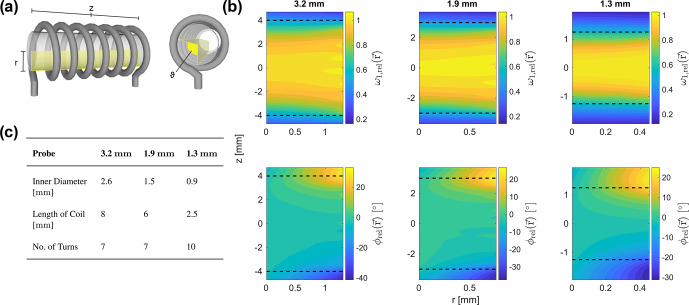
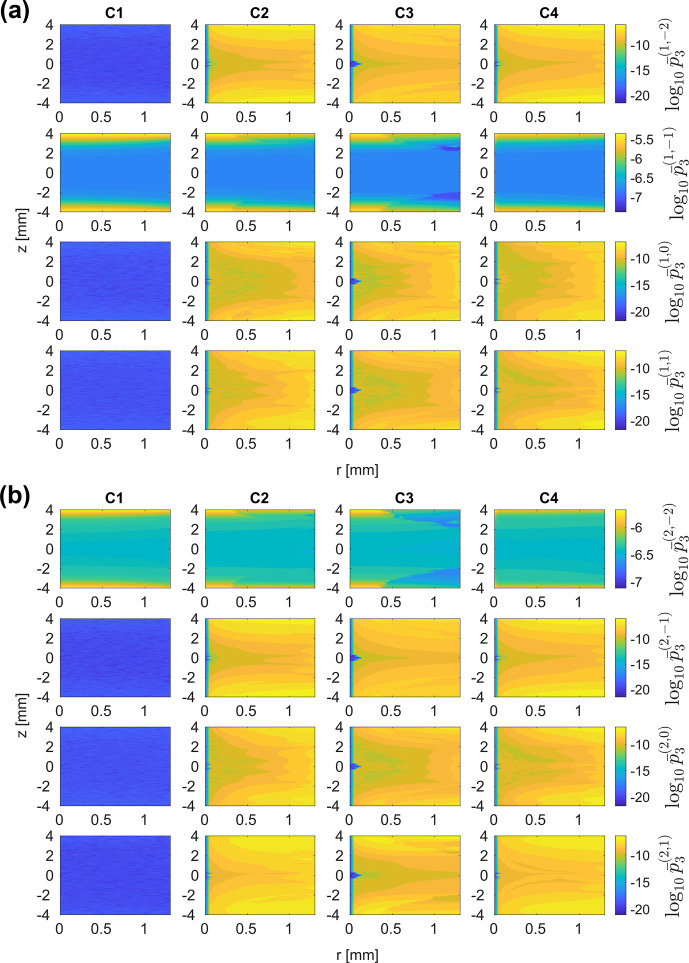
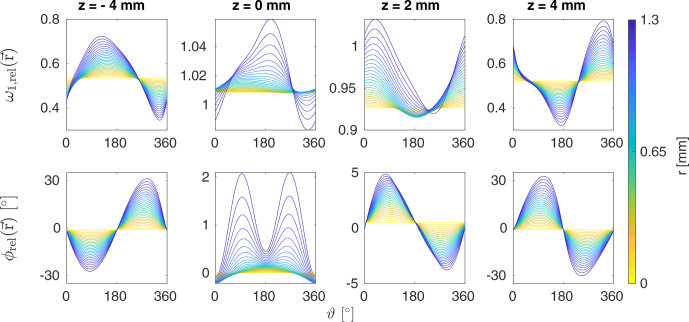
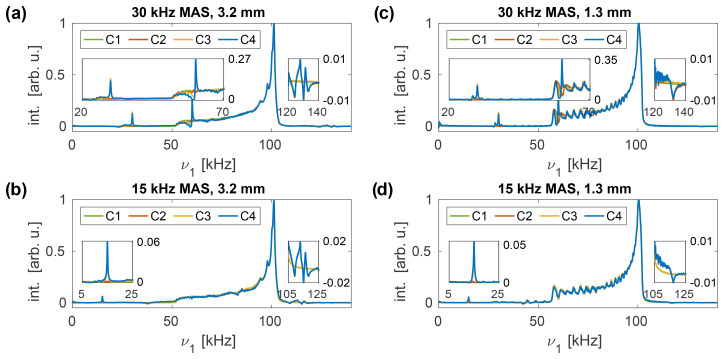
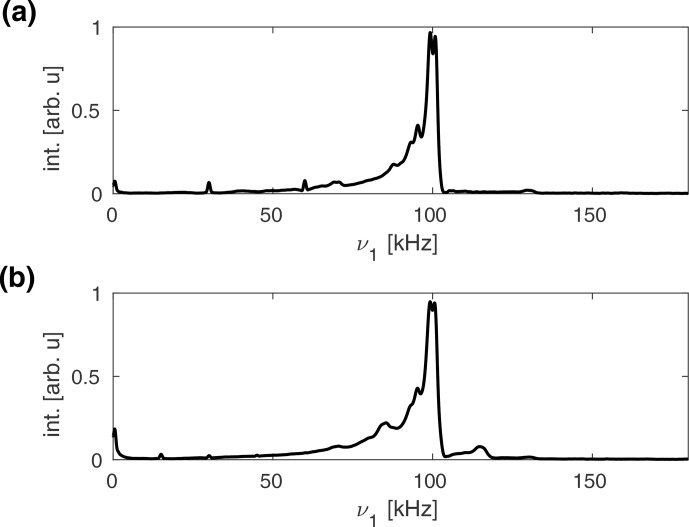
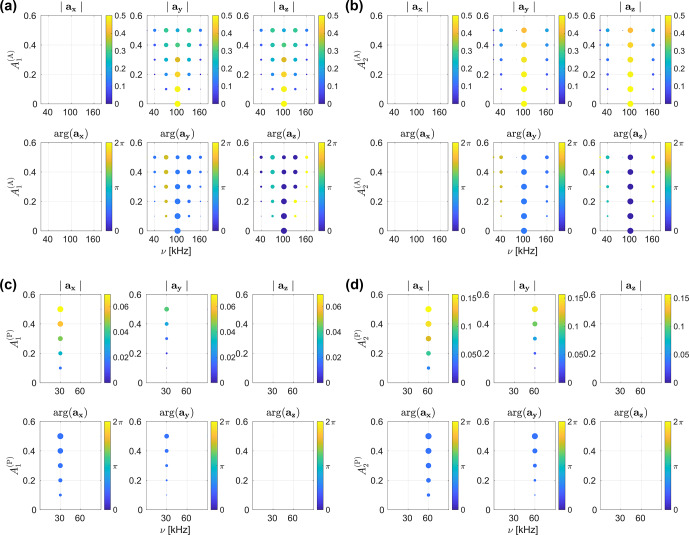
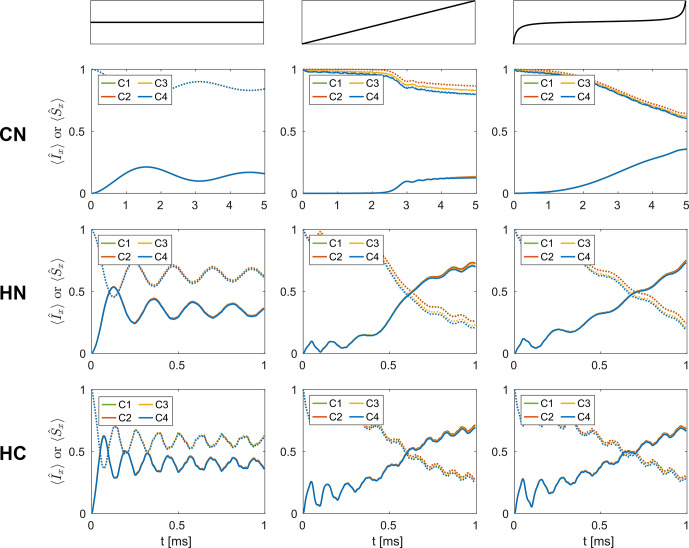
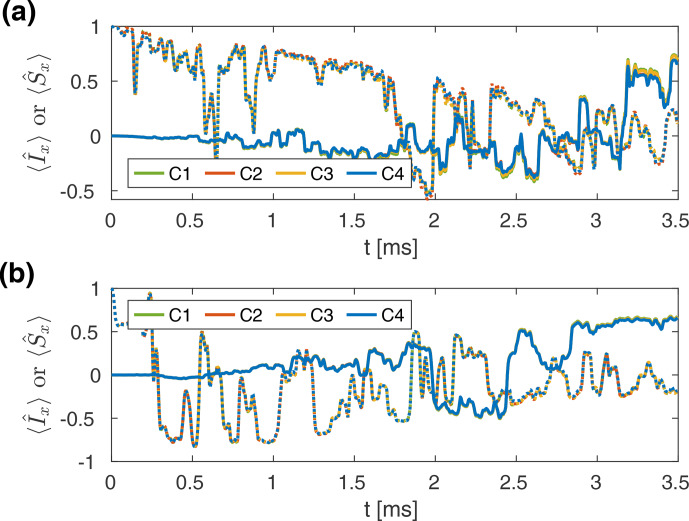
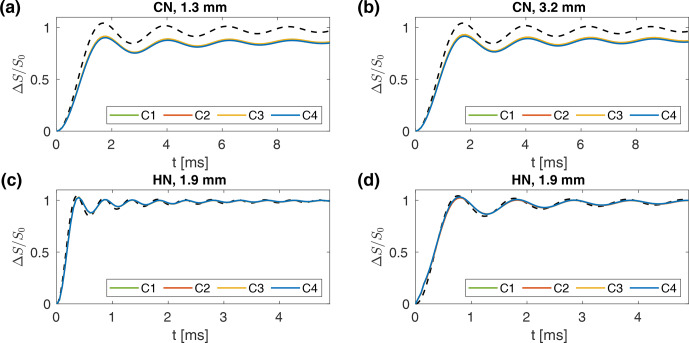
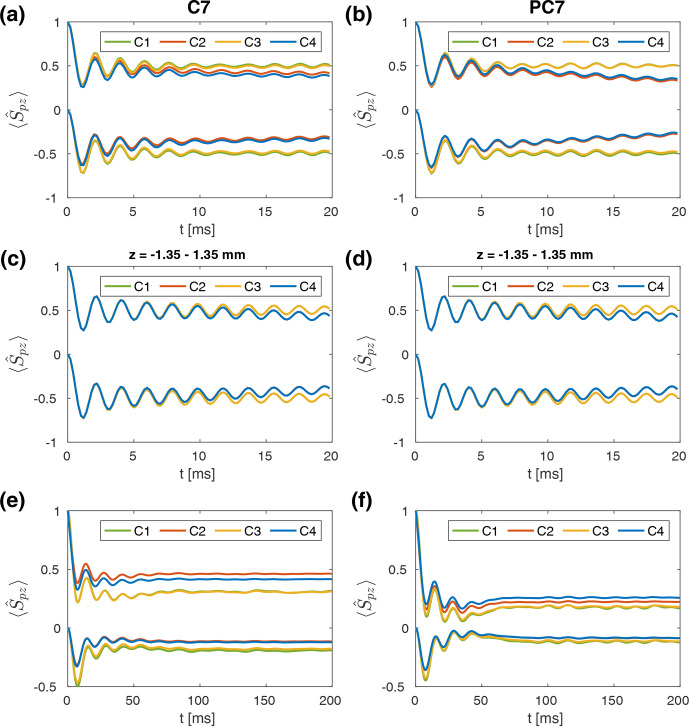
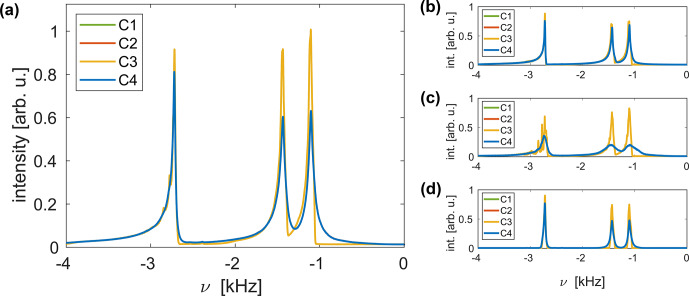
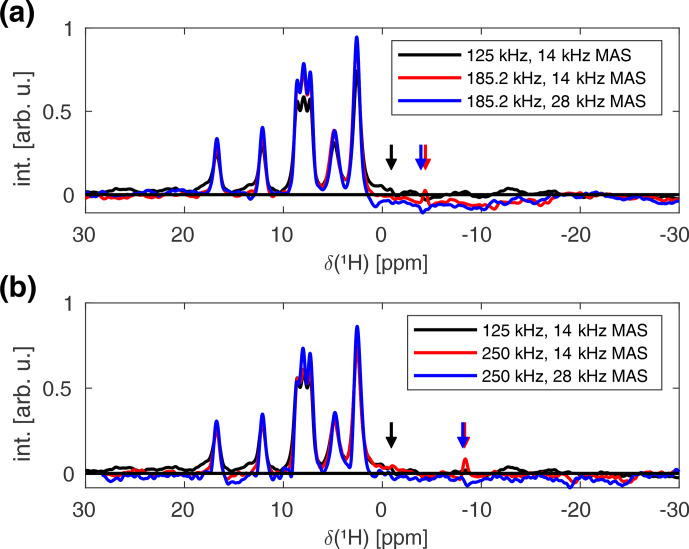
Radio-frequency field inhomogeneity is one of the most common imperfections in NMR experiments. They can lead to imperfect flip angles of applied radio-frequency (rf) pulses or to a mismatch of resonance conditions, resulting in artefacts or degraded performance of experiments. In solid-state NMR under magic angle spinning (MAS), the radial component becomes time-dependent because the rf irradiation amplitude and phase is modulated with integer multiples of the spinning frequency. We analyse the influence of such time-dependent MAS-modulated rf fields on the performance of some commonly used building blocks of solid-state NMR experiments. This analysis is based on analytical Floquet calculations and numerical simulations, taking into account the time dependence of the rf field. We find that, compared to the static part of the rf field inhomogeneity, such time-dependent modulations play a very minor role in the performance degradation of the investigated typical solid-state NMR experiments.
射频场不均匀性是核磁共振实验中最常见的缺陷之一。它们会导致所施加射频(rf)脉冲的翻转角度不理想,或者导致共振条件不匹配,从而产生伪影或实验性能下降。在魔角旋转(MAS)下的固态核磁共振中,径向分量随时间变化,因为射频照射幅度和相位以旋转频率的整数倍进行调制。我们分析了这种随时间变化的MAS调制射频场对固态核磁共振实验中一些常用构建模块性能的影响。该分析基于解析弗洛凯计算和数值模拟,并考虑了射频场的时间依赖性。我们发现,与射频场不均匀性的静态部分相比,这种随时间变化的调制在所研究的典型固态核磁共振实验的性能下降中所起的作用非常小。