Center for RNA Research, Institute for Basic Science (IBS), Seoul National University, Seoul, Republic of Korea.
Interdisciplinary Program in Bioinformatics, Seoul National University, Seoul, Republic of Korea.
Exp Mol Med. 2023 Dec;55(12):2541-2552. doi: 10.1038/s12276-023-01110-0. Epub 2023 Nov 1.
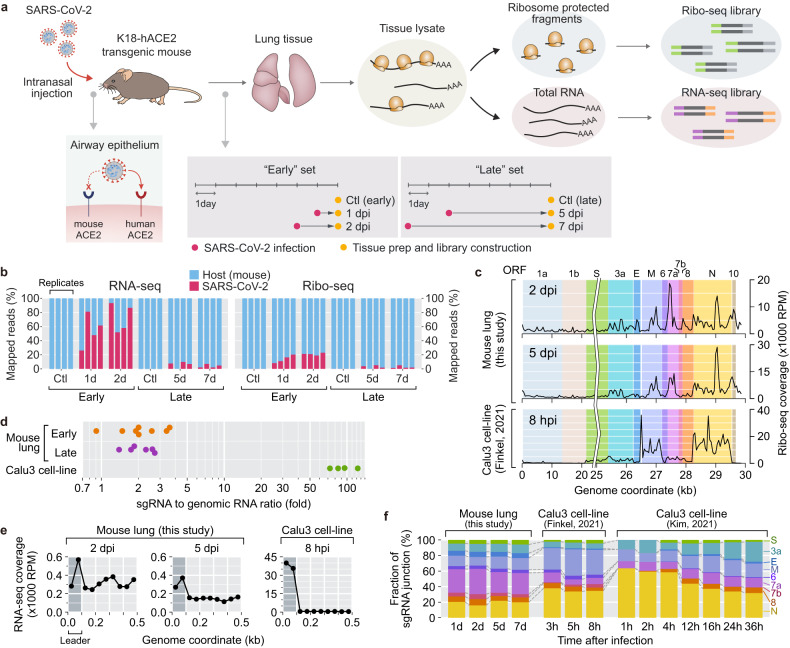
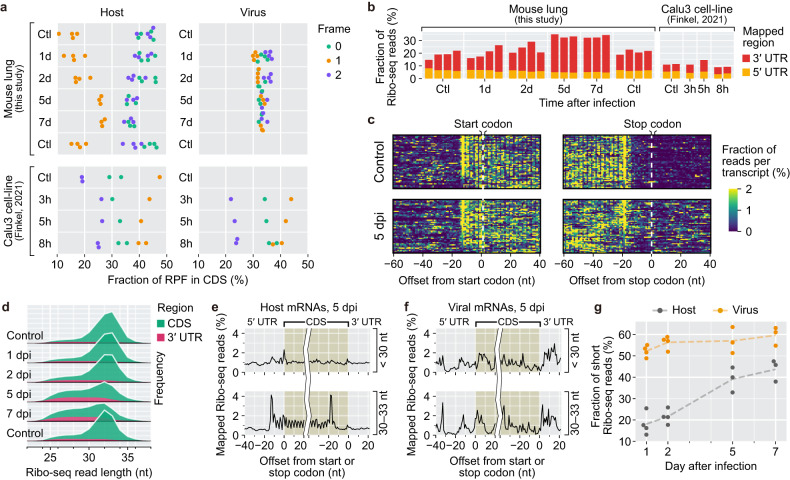
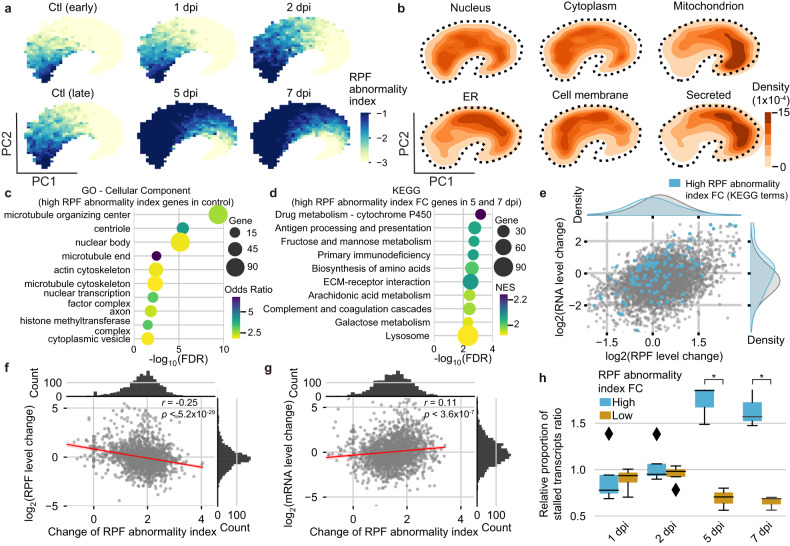
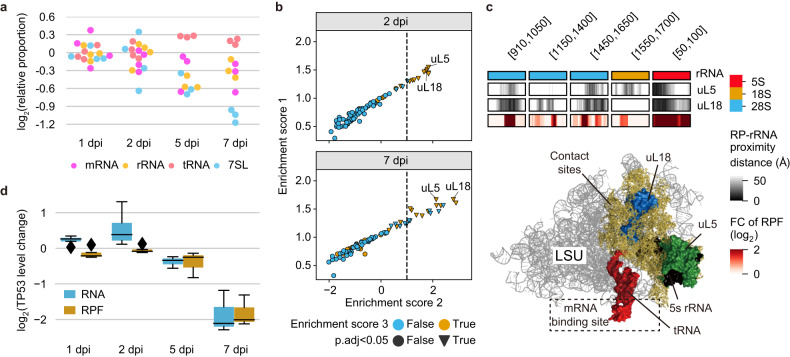
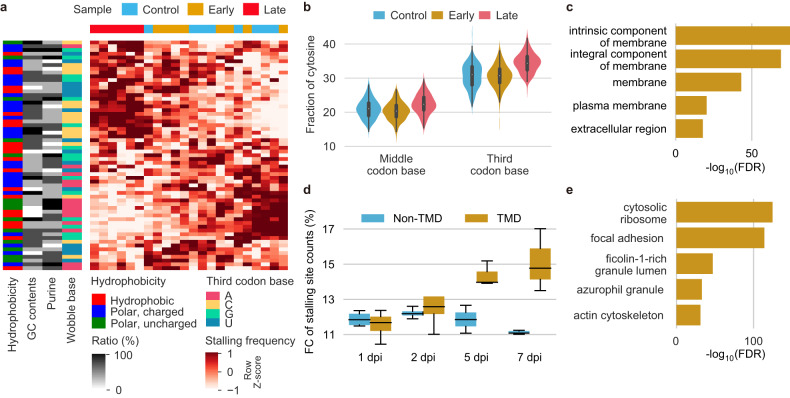
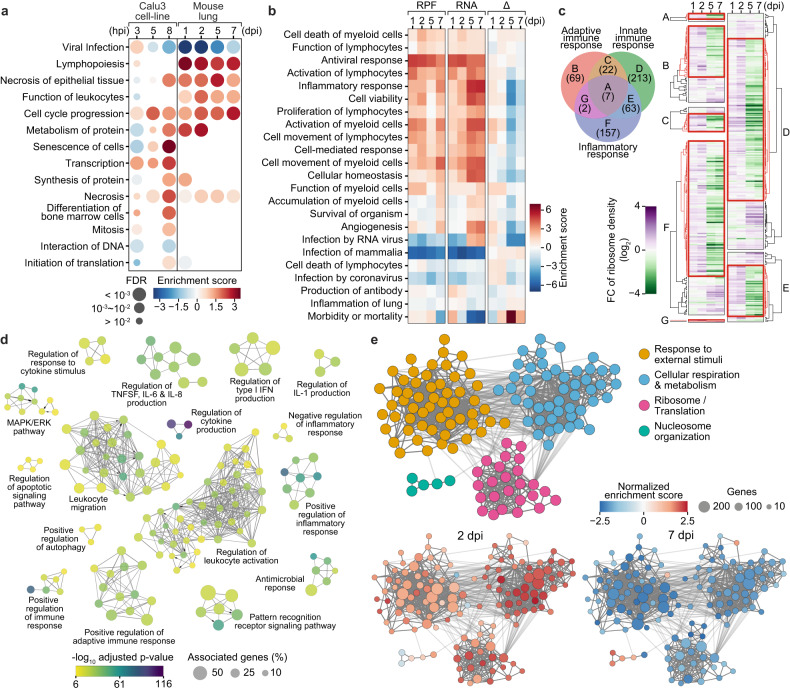
Translational regulation in tissue environments during in vivo viral pathogenesis has rarely been studied due to the lack of translatomes from virus-infected tissues, although a series of translatome studies using in vitro cultured cells with viral infection have been reported. In this study, we exploited tissue-optimized ribosome profiling (Ribo-seq) and severe-COVID-19 model mice to establish the first temporal translation profiles of virus and host genes in the lungs during SARS-CoV-2 pathogenesis. Our datasets revealed not only previously unknown targets of translation regulation in infected tissues but also hitherto unreported molecular signatures that contribute to tissue pathology after SARS-CoV-2 infection. Specifically, we observed gradual increases in pseudoribosomal ribonucleoprotein (RNP) interactions that partially overlapped the trails of ribosomes, being likely involved in impeding translation elongation. Contemporaneously developed ribosome heterogeneity with predominantly dysregulated 5 S rRNP association supported the malfunction of elongating ribosomes. Analyses of canonical Ribo-seq reads (ribosome footprints) highlighted two obstructive characteristics to host gene expression: ribosome stalling on codons within transmembrane domain-coding regions and compromised translation of immunity- and metabolism-related genes with upregulated transcription. Our findings collectively demonstrate that the abrogation of translation integrity may be one of the most critical factors contributing to pathogenesis after SARS-CoV-2 infection of tissues.
由于缺乏病毒感染组织的翻译组,因此很少有研究针对体内病毒发病过程中的组织环境中的翻译调控进行研究,尽管已经有一系列使用病毒感染的体外培养细胞进行的翻译组研究报告。在这项研究中,我们利用组织优化核糖体分析(Ribo-seq)和严重 COVID-19 模型小鼠,建立了 SARS-CoV-2 发病过程中肺部病毒和宿主基因的第一个时间翻译谱。我们的数据集不仅揭示了感染组织中以前未知的翻译调控靶标,还揭示了迄今为止尚未报道的分子特征,这些特征有助于 SARS-CoV-2 感染后的组织病理学。具体而言,我们观察到假核糖体核糖核蛋白(RNP)相互作用逐渐增加,这些相互作用部分重叠核糖体的轨迹,可能参与阻碍翻译延伸。同时发生的核糖体异质性与主要失调的 5S rRNP 相关联,支持延伸核糖体的功能障碍。对规范的 Ribo-seq 读数(核糖体足迹)的分析突出了两种阻碍宿主基因表达的特征:核糖体在跨膜结构域编码区域内的密码子上停滞以及转录上调后与免疫和代谢相关基因的翻译受损。我们的研究结果表明,翻译完整性的破坏可能是 SARS-CoV-2 感染组织后发病机制的最重要因素之一。