Unidad de Radiofarmacia-Ciclotrón, División de Investigación, Facultad de Medicina, Universidad Nacional Autónoma de México, Ciudad de Mexico, Mexico.
Instituto de Neurobiología, Universidad Nacional Autónoma de México, Querétaro City, Mexico.
Pediatr Radiol. 2023 Dec;53(13):2574-2585. doi: 10.1007/s00247-023-05794-4. Epub 2023 Nov 1.
Glycolytic metabolism in the brain of pediatric patients, imaged with [F] fluorodeoxyglucose-positron emission tomography (FDG-PET) is incompletely characterized.
The purpose of the current study was to characterize [F]FDG-PET brain uptake in a large sample of pediatric patients with non-central nervous system diseases as an alternative to healthy subjects to evaluate changes at different pediatric ages.
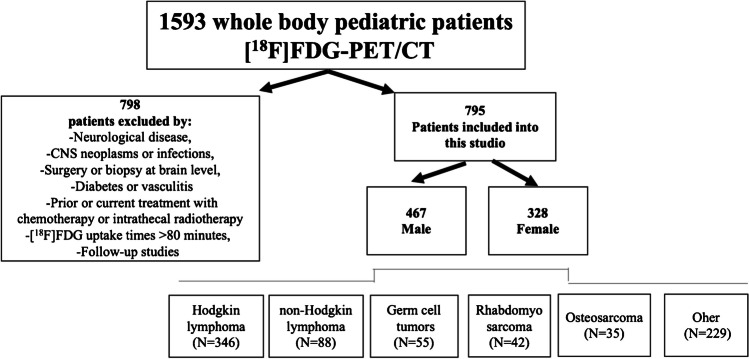
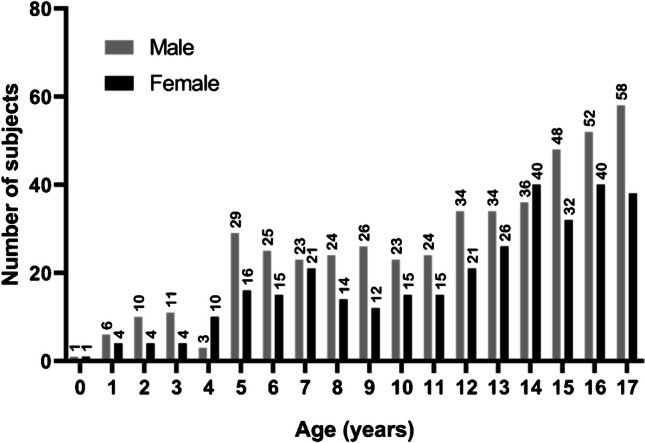
Seven hundred ninety-five [F]FDG-PET examinations from children < 18 years of age without central nervous system diseases were included. Each brain image was spatially normalized, and the standardized uptake value (SUV) was obtained. The SUV and the SUV relative to different pseudo-references were explored as a function of age.
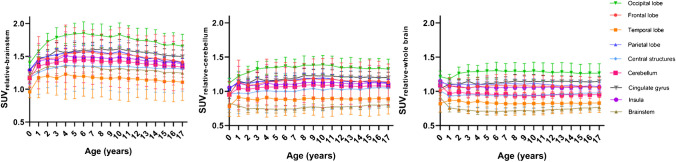
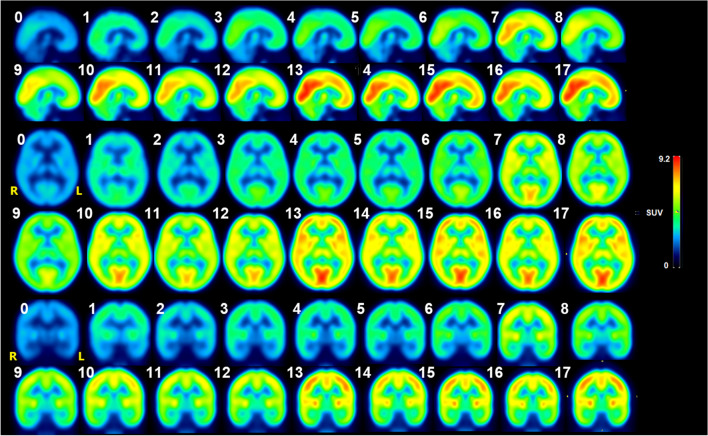
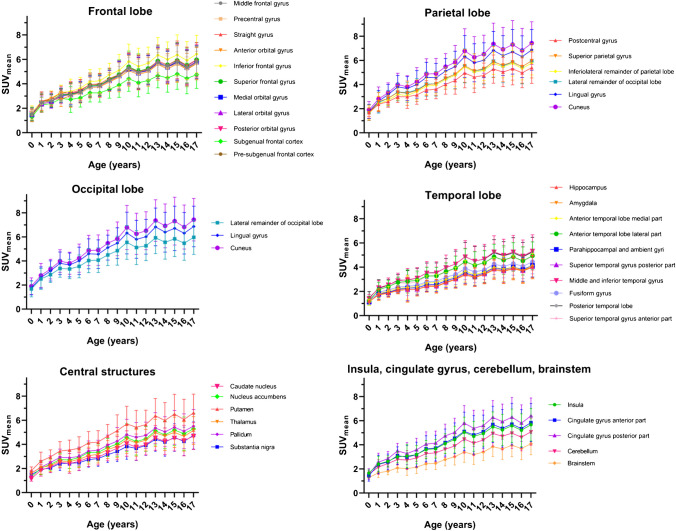
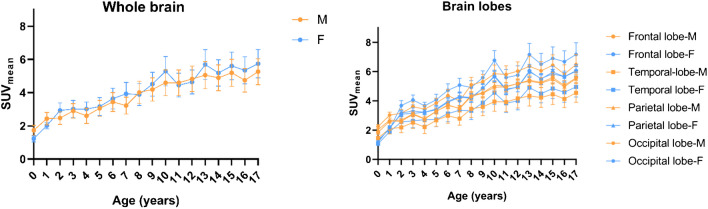
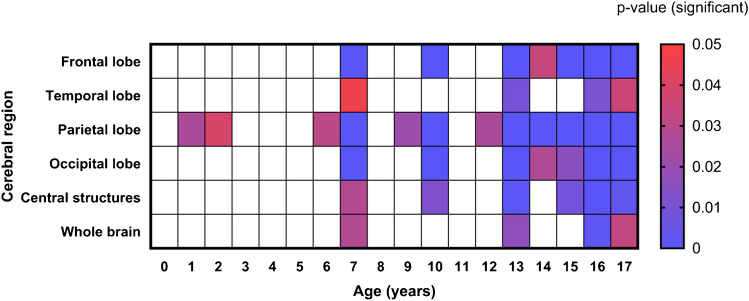
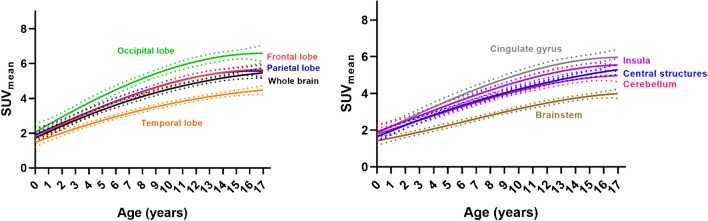
At all evaluated ages, the occipital lobe showed the highest [F]FDG uptake (0.27 ± 0.04 SUV/year), while the parietal lobe and brainstem had the lowest uptake (0.17 ± 0.02 SUV/year, for both regions). An increase [F]FDG uptake was found for all brain regions until 12 years old, while no significant uptake differences were found between ages 13 (SUV = 5.39) to 17 years old (SUV = 5.52) (P < 0.0001 for the whole brain). A sex dependence was found in the SUVmean for the whole brain during adolescence (SUV 5.04-5.25 for males, 5.68-5.74 for females, P = 0.0264). Asymmetries in [F]FDG uptake were found in the temporal and central regions during infancy.
Brain glycolytic metabolism of [F]FDG, measured through the SUVmean, increased with age until early adolescence (< 13 years old), showing differences across brain regions. Age, sex, and brain region influence [F]FDG uptake, with significant hemispheric asymmetries for temporal and central regions.
使用 [F] 氟脱氧葡萄糖正电子发射断层扫描(FDG-PET)对儿科患者脑部的糖酵解代谢进行成像,但尚未完全确定。
本研究的目的是对患有非中枢神经系统疾病的大量儿科患者的 [F]FDG-PET 脑摄取进行特征描述,以此替代健康受试者来评估不同儿科年龄段的变化。
共纳入 795 例年龄小于 18 岁、无中枢神经系统疾病的 [F]FDG-PET 检查。对每个脑图像进行空间归一化,并获得标准化摄取值(SUV)。探讨了 SUV 以及相对于不同伪参考物的 SUV 作为年龄的函数。
在所评估的所有年龄段,枕叶的 [F]FDG 摄取量最高(0.27±0.04 SUV/年),而顶叶和脑桥的摄取量最低(0.17±0.02 SUV/年)。所有脑区的 [F]FDG 摄取量均随年龄增长而增加,直至 12 岁,而 13 岁至 17 岁之间的脑区摄取量无显著差异(SUV=5.39,SUV=5.52,P<0.0001 用于整个大脑)。在青春期,发现全脑 SUVmean 存在性别依赖性(男性 SUV 5.04-5.25,女性 SUV 5.68-5.74,P=0.0264)。在婴儿期发现颞叶和中央区域的 [F]FDG 摄取存在不对称。
通过 SUVmean 测量的 [F]FDG 脑糖酵解代谢随年龄增长而增加,直至青春期早期(<13 岁),不同脑区之间存在差异。年龄、性别和脑区影响 [F]FDG 摄取,颞叶和中央区域存在明显的半球不对称。