Department of Biosystems Engineering, Faculty of Agriculture, University of Tabriz, Tabriz, Iran.
Department of Horticultural Science, Faculty of Agriculture, University of Tabriz, Tabriz, Iran.
Sci Rep. 2023 Nov 1;13(1):18820. doi: 10.1038/s41598-023-44934-6.
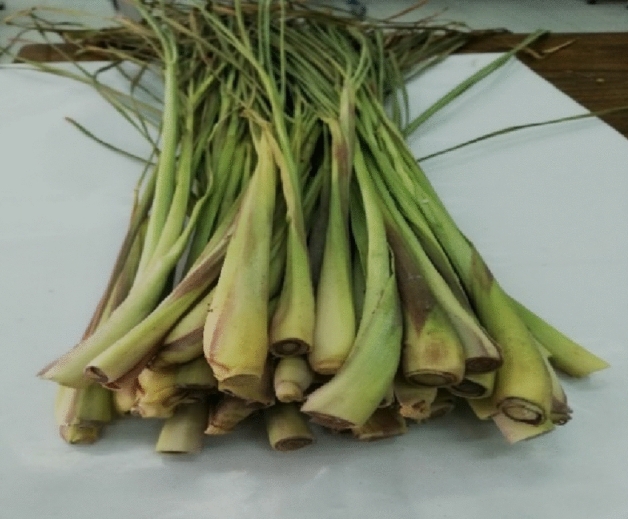
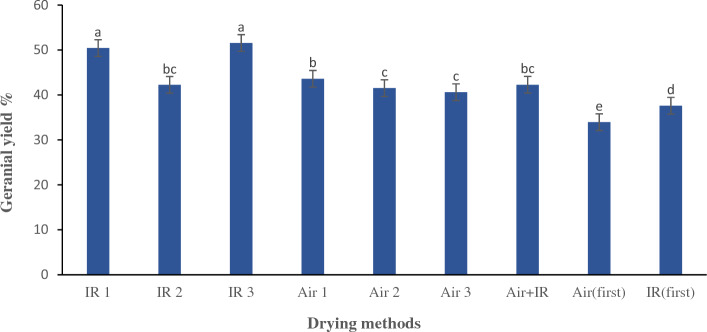
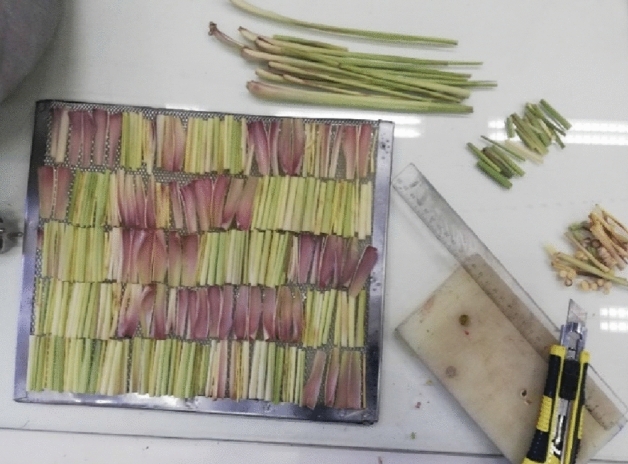
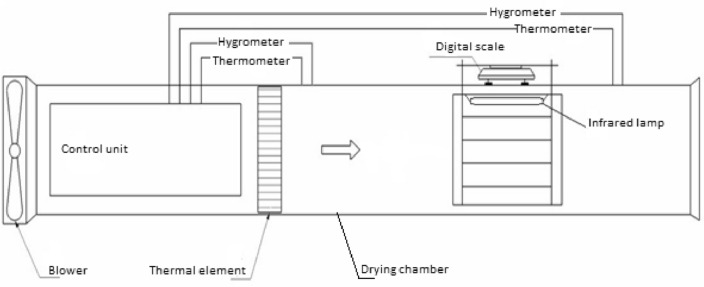
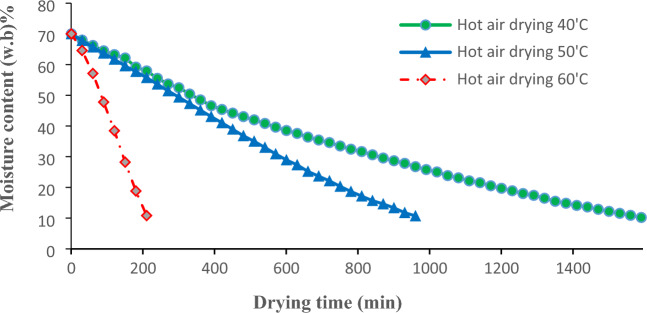
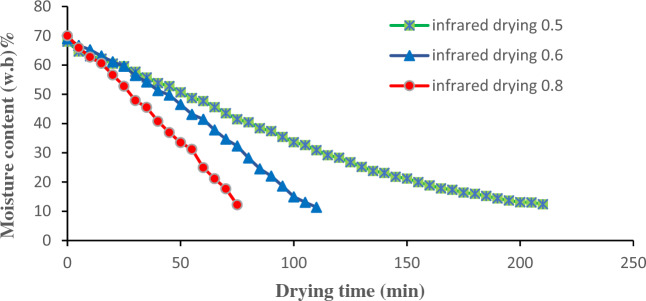
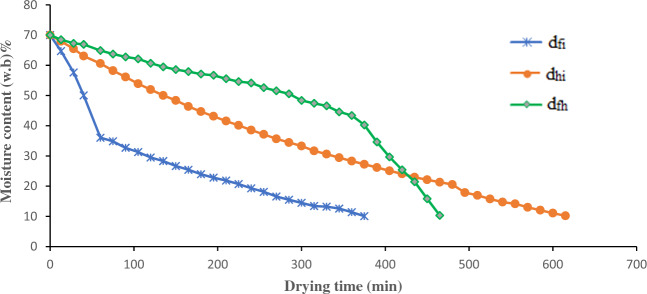
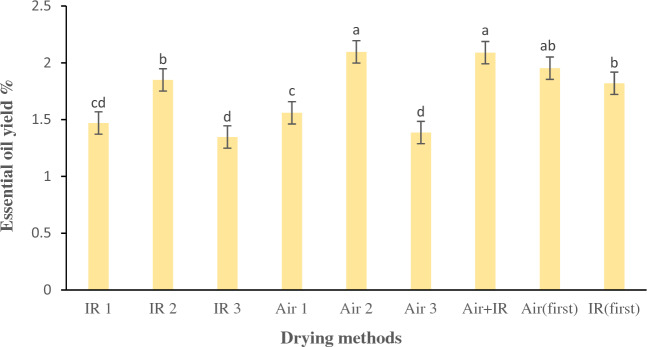
Lemongrass is a fragrant herb with lengthy, thin leaves that contains myrcene (an aromatic compound) as well as citral and geraniol (antimicrobial compounds). Therefore, identifying an appropriate drying method for this plant is crucial for maintaining aromatic and antimicrobial compounds and enhancing the shelf life of the product. This investigation seeks to assess the influence of various drying tactics involving hot air at temperatures of 40, 50, and 60 °C, infrared radiation at intensities of 0.5, 0.6, and 0.8 [Formula: see text], sequential hot-air/infrared, as well as simultaneous hot air-infrared, on the drying mechanism, color, appearance, yield, and essential oil constituents of lemongrass leaves, with the objective of enhancing the marketability of the product. The essential oils of lemongrass were extracted through the process of hydro-distillation, and subsequently, the volatile compounds present were analyzed using Gas Chromatography-Mass Spectrometry (GC-MS). The findings indicated: (a) The most appropriate technique for preserving optimal color quality of lemongrass leaves was through the application of hot air drying solely at a temperature of 60 °C; (b) To optimize the retention and amplification of the essential oil content in lemongrass, our study recommends the employment of a simultaneous hybrid drying technique involving hot air drying at a temperature of 50 °C in conjunction with infrared drying set at a radiation intensity level of 0.6 [Formula: see text]; and (c) The data analysis demonstrated that in order to achieve elevated levels of volatile compounds, specifically neral and geranial, infrared drying with a radiation intensity of 0.6 and 0.8 [Formula: see text], respectively, was found to be optimal.
柠檬草是一种具有长而细的叶子的芳香草本植物,含有月桂烯(一种芳香化合物)以及柠檬醛和香叶醇(抗菌化合物)。因此,确定这种植物的适当干燥方法对于保持芳香和抗菌化合物以及延长产品的保质期至关重要。本研究旨在评估涉及 40、50 和 60°C 热空气、0.5、0.6 和 0.8[Formula: see text]红外辐射、顺序热空气/红外以及同时热空气-红外等各种干燥策略对柠檬草叶片干燥机制、颜色、外观、产量和精油成分的影响,以提高产品的市场竞争力。通过水蒸馏法提取柠檬草精油,然后使用气相色谱-质谱联用仪(GC-MS)分析挥发性化合物。结果表明:(a)保持柠檬草叶片最佳色泽质量的最合适技术是在 60°C 下仅进行热空气干燥;(b)为了优化柠檬草精油含量的保留和放大,我们的研究建议采用同时混合干燥技术,即在 50°C 下进行热空气干燥,并结合辐射强度为 0.6[Formula: see text]的红外干燥;(c)数据分析表明,为了达到较高水平的挥发性化合物,特别是柠檬醛和香叶醛,分别使用辐射强度为 0.6 和 0.8[Formula: see text]的红外干燥是最佳的。