Centre for Applied Health Economics, Griffith University, Brisbane, Australia.
Menzies Health Institute Queensland, Brisbane, Australia.
BMC Womens Health. 2023 Nov 1;23(1):563. doi: 10.1186/s12905-023-02728-y.
To measure symptoms and health-related quality of life in a cross-sectional cohort of menopausal-aged women in China.
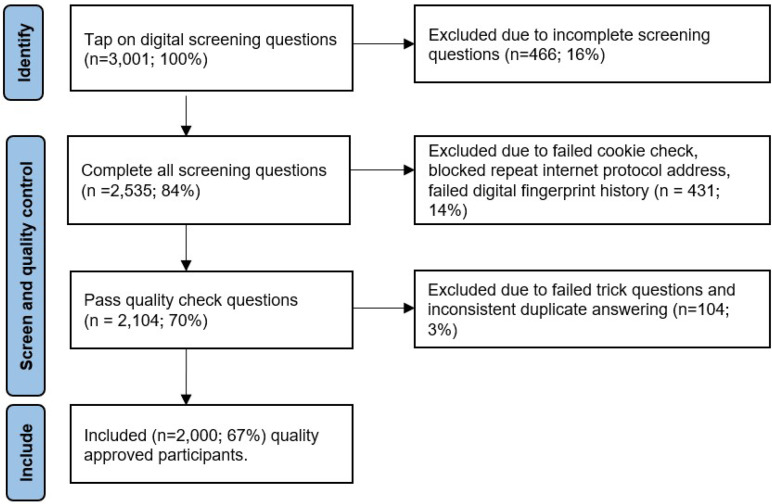
A cross-sectional survey was conducted in a general population cohort of 2,000 Chinese females over the age of 45 years. Patients completed the Chinese version of the EuroQol-5D five level (EQ5D5L) health-related quality of life instrument via Personal Digital Assistant. Raw scores were converted to utility tariffs using value sets for China. Statistical analysis included Pearson's chi-square test, z test for multiple comparisons with adjustment by the Bonferroni method, independent-sample t-test, ANOVA, and adjustment by the Tukey method for multiple comparison. Results were considered statistically significant when p < 0.05 and the study was reported according to the STROBE recommendations.
In a cohort of 2000 women, 732 (37%) were premenopausal, 798 (40%) were perimenopausal and 470 (23%) were postmenopausal. Perimenopausal women reported significantly more symptoms (91%) compared to premenopausal (77%) and postmenopausal (81%) women. Health-related quality of life was significantly lower in symptomatic perimenopausal women compared to premenopausal (0.919, p < 0.05) and postmenopausal (0.877, p < 0.05) women. Within each group there was a statistically significant difference between the health-related quality of life of women with symptoms compared to without symptoms.
The perimenopausal phase of menopause is associated with significantly more symptoms and significantly lower HRQoL compared to premenopausal and postmenopausal phases.
测量中国绝经年龄女性的症状和健康相关生活质量。
对 2000 名年龄在 45 岁以上的中国女性进行了一项横断面人群研究。患者通过个人数字助理完成了中国版 EuroQol-5D 五维(EQ5D5L)健康相关生活质量量表。原始分数使用中国的价值集转换为效用关税。统计分析包括 Pearson χ2 检验、Bonferroni 法调整后的多个比较 z 检验、独立样本 t 检验、方差分析和 Tukey 法调整后的多个比较。当 p<0.05 且研究按照 STROBE 建议报告时,结果被认为具有统计学意义。
在 2000 名女性队列中,732 名(37%)处于绝经前,798 名(40%)处于围绝经期,470 名(23%)处于绝经后。围绝经期女性报告的症状明显多于绝经前(77%)和绝经后(81%)女性(91%)。有症状的围绝经期女性的健康相关生活质量明显低于绝经前(0.919,p<0.05)和绝经后(0.877,p<0.05)女性。在每个组内,有症状和无症状女性之间的健康相关生活质量存在统计学上的显著差异。
与绝经前和绝经后阶段相比,围绝经期的绝经与明显更多的症状和明显更低的 HRQoL 相关。