Cardiovascular Institute, Perelman School of Medicine at the University of Pennsylvania, Philadelphia, PA 19104, USA; Division of Cardiovascular Medicine, Department of Medicine, Perelman School of Medicine at the University of Pennsylvania, Philadelphia, PA 19104, USA; Department of Genetics, Perelman School of Medicine at the University of Pennsylvania, Philadelphia, PA 19104, USA.
Cardiovascular Institute, Perelman School of Medicine at the University of Pennsylvania, Philadelphia, PA 19104, USA; Division of Cardiovascular Medicine, Department of Medicine, Perelman School of Medicine at the University of Pennsylvania, Philadelphia, PA 19104, USA; Department of Genetics, Perelman School of Medicine at the University of Pennsylvania, Philadelphia, PA 19104, USA; Department of Bioengineering, University of Pennsylvania, Philadelphia, PA 19104, USA.
HGG Adv. 2024 Jan 11;5(1):100253. doi: 10.1016/j.xhgg.2023.100253. Epub 2023 Nov 2.
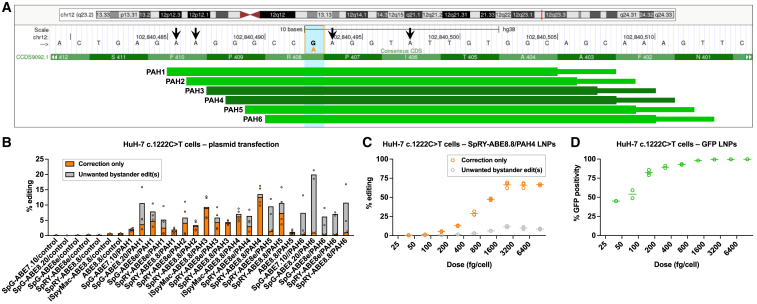
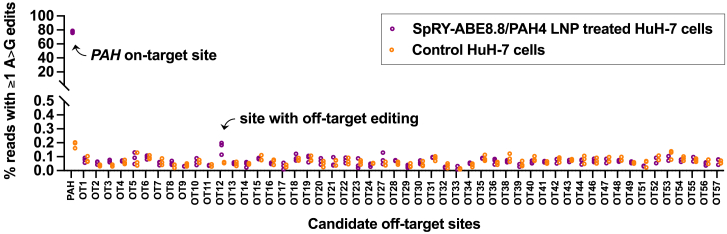
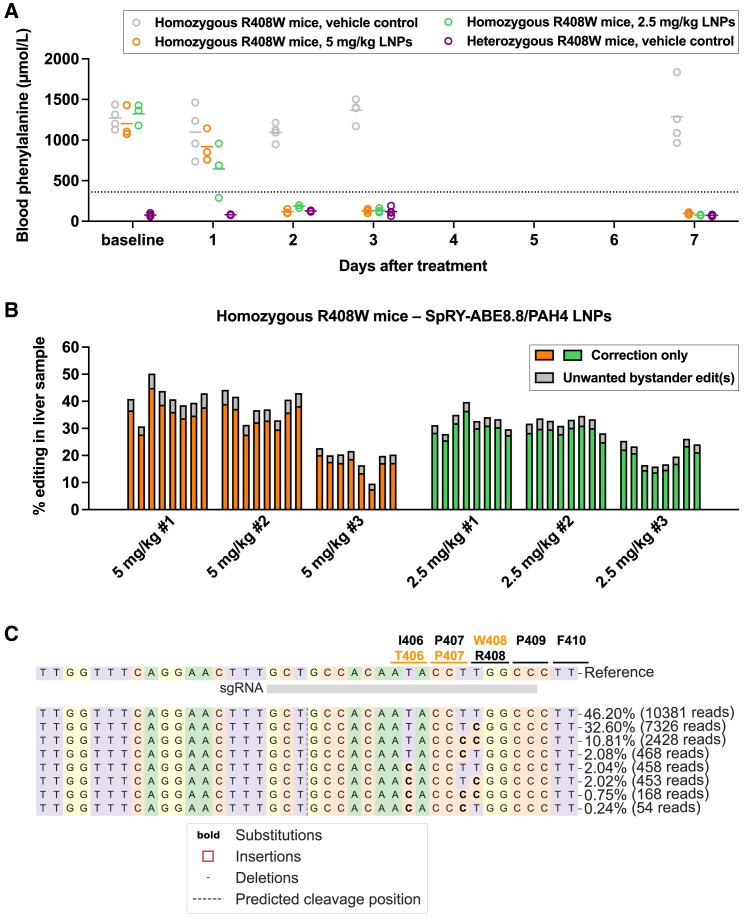
The c.1222C>T (p.Arg408Trp) phenylalanine hydroxylase (PAH) variant is the most frequent cause of phenylketonuria (PKU), an autosomal recessive disorder characterized by accumulation of blood phenylalanine (Phe) to neurotoxic levels. Here we devised a therapeutic base editing strategy to correct the variant, using prime-edited hepatocyte cell lines engineered with the c.1222C>T variant to screen a variety of adenine base editors and guide RNAs in vitro, followed by assessment in c.1222C>T humanized mice in vivo. We found that upon delivery of a selected adenine base editor mRNA/guide RNA combination into mice via lipid nanoparticles (LNPs), there was sufficient PAH editing in the liver to fully normalize blood Phe levels within 48 h. This work establishes the viability of a base editing strategy to correct the most common pathogenic variant found in individuals with the most common inborn error of metabolism, albeit with potential limitations compared with other genome editing approaches.
c.1222C>T(p.Arg408Trp)苯丙氨酸羟化酶(PAH)变体是苯丙酮尿症(PKU)的最常见原因,PKU 是一种常染色体隐性遗传疾病,其特征是血液苯丙氨酸(Phe)积累到神经毒性水平。在这里,我们设计了一种治疗性碱基编辑策略来纠正该变体,使用带有 c.1222C>T 变体的经工程改造的原代编辑肝细胞系在体外筛选各种腺嘌呤碱基编辑器和向导 RNA,然后在体内 c.1222C>T 人源化小鼠中进行评估。我们发现,通过脂质纳米颗粒(LNPs)将选定的腺嘌呤碱基编辑器 mRNA/向导 RNA 组合递送到小鼠体内后,肝脏中有足够的 PAH 编辑,在 48 小时内可完全使血液 Phe 水平正常化。这项工作确立了碱基编辑策略纠正最常见代谢性遗传病个体中最常见致病变体的可行性,尽管与其他基因组编辑方法相比,该策略存在潜在局限性。