Department of Pharmacology, Post Graduate Institute of Medical Education and Research (PGIMER), Chandigarh, Haryana, India.
Department of Pharmacology, Post Graduate Institute of Medical Education and Research (PGIMER), Chandigarh; Department of Pharmacology, MM Institute of Medical Sciences and Research, Maharishi Markandeshwar (Deemed to be university), Mullana, Ambala, Haryana, India.
Indian J Pharmacol. 2023 Sep-Oct;55(5):307-314. doi: 10.4103/ijp.ijp_100_23.
The overexpression of P-glycoprotein (P-gp) contributes to drug resistance in patients with epilepsy, and the change of P-gp expression located at the blood-brain barrier alienates the anti-seizure effects of P-gp substrates. Thus, the present study explored the effect of fingolimod (FTY720) acting through an endothelin-sphingolipid pathway on P-gp-induced pentylenetetrazol (PTZ)-kindled phenobarbital (PB)-resistant rats.
PTZ kindling (30 mg/kg; i.p.) and PB (40 mg/kg; orally) were used to develop an animal model of refractory epilepsy. The effect of Fingolimod on seizure score (Racine scale), plasma and brain levels of PB (high-performance liquid chromatography), and blood-brain barrier permeability (Evans blue dye) was determined. Further, Fingolimod's neuroprotective effect was determined by measuring the levels of various inflammatory cytokines, oxidative stress parameters, and neurotrophic factors in rat brain homogenate. The Fingolimod's effect on P-gp expression was estimated by reverse transcriptase-polymerase chain reaction and immunohistochemistry in rat brain. The H and E staining was done to determine the neuronal injury.
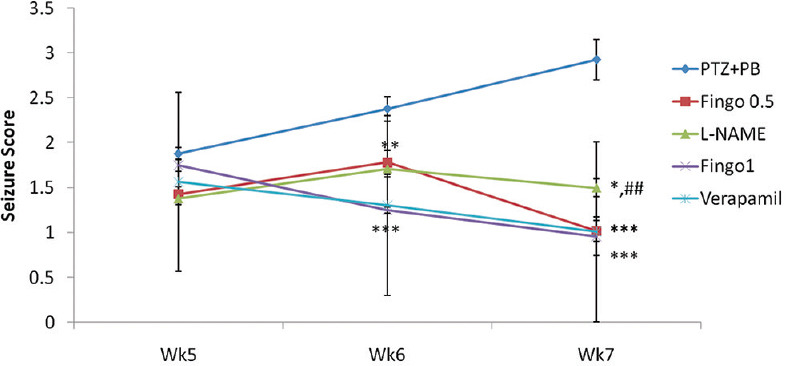
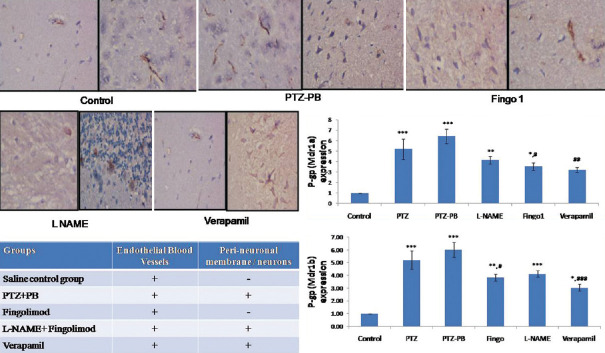
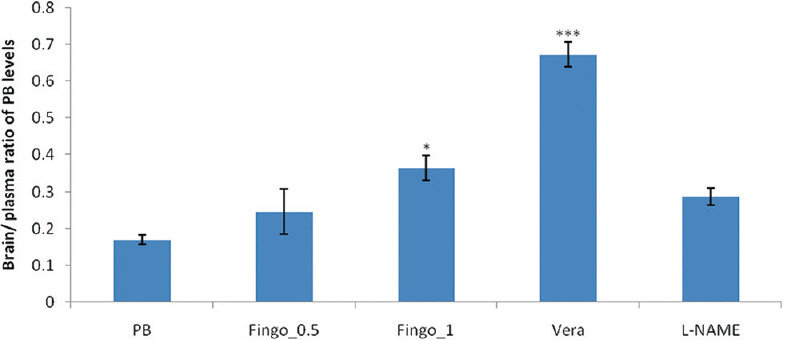
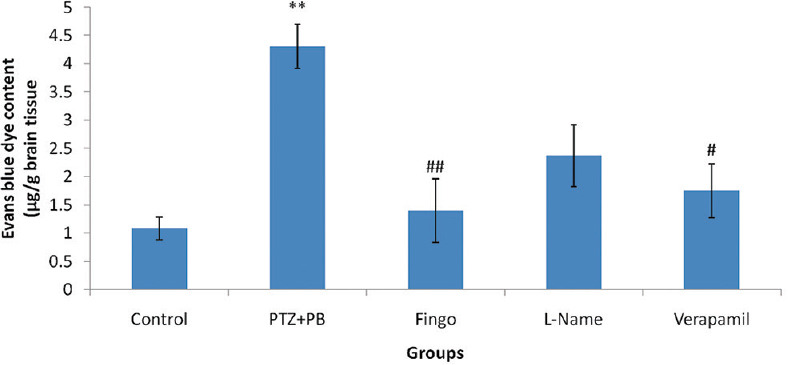
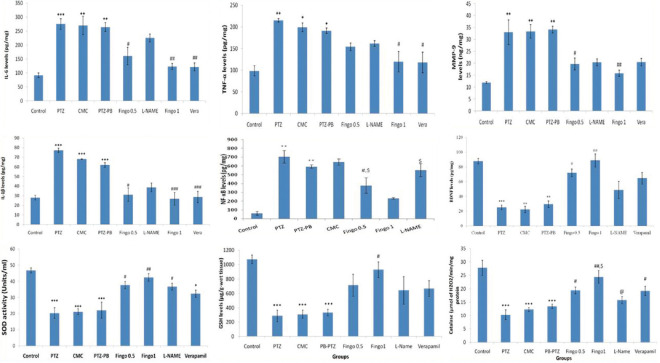
Fingolimod significantly (P < 0.001) reduced the seizure score in a dose-dependent manner and alleviated the blood-brain barrier permeability. It decreased the P-gp expression, which further increased the brain PB concentration. Fingolimod significantly (P < 0.01) reduced oxidative stress as well as inflammation. Moreover, it attenuated the raised neuronal injury score in a resistant model of epilepsy.
The modulation of the P-gp expression by Fingolimod improved drug delivery to the brain in an animal model of refractory epilepsy. Therefore, S1P signaling could serve as an additional therapeutic target to overcome refractoriness.
P-糖蛋白(P-gp)的过度表达导致癫痫患者产生药物耐药性,而位于血脑屏障的 P-gp 表达的改变会使 P-gp 底物的抗惊厥作用减弱。因此,本研究探讨了通过内皮素-鞘脂途径作用的 fingolimod(FTY720)对戊四氮(PTZ)点燃苯巴比妥(PB)耐药大鼠诱导的 P-gp 的影响。
使用 PTZ 点燃(30 mg/kg;腹腔注射)和 PB(40 mg/kg;口服)来开发难治性癫痫动物模型。通过测定 seizure score(Racine 量表)、血浆和脑内 PB 水平(高效液相色谱法)以及血脑屏障通透性(伊文思蓝染料)来确定 fingolimod 的作用。此外,通过测定大鼠脑匀浆中各种炎症细胞因子、氧化应激参数和神经营养因子的水平来确定 fingolimod 的神经保护作用。通过逆转录聚合酶链反应和免疫组织化学法测定 rat brain 中 fingolimod 对 P-gp 表达的影响。通过 H 和 E 染色来确定神经元损伤。
fingolimod 呈剂量依赖性显著(P < 0.001)降低 seizure score,并减轻血脑屏障通透性。它降低了 P-gp 表达,从而进一步增加了脑内 PB 浓度。fingolimod 显著(P < 0.01)降低了氧化应激和炎症。此外,它减轻了难治性癫痫模型中升高的神经元损伤评分。
fingolimod 对 P-gp 表达的调节改善了难治性癫痫动物模型中药物向脑内的递送。因此,S1P 信号可以作为克服耐药性的另一个治疗靶点。