BRAC James P Grant School of Public Health, BRAC University, Dhaka, 1213, Bangladesh.
Department of Statistics, Jahangirnagar University, Savar, Dhaka, 1342, Bangladesh.
J Health Popul Nutr. 2023 Nov 6;42(1):119. doi: 10.1186/s41043-023-00469-0.
Cyber-victimization is closely linked with mental health problems such as anxiety, depression, etc., and has become a growing concern among university students in Bangladesh. In the era of globalization, smart gadgets, the internet, and other online resources are readily available, and these tools and devices have now become the primary method for cyberbullying. The authors aim to explore the impacts of cyber-victimization and other factors on anxiety and depression among university students in Bangladesh.
The primary data for this cross-sectional study were collected using a well-structured questionnaire. This study employs three widely used scales such as cyberbullying inventory, general anxiety disorder-7 (GAD-7), and patient health questionnaire-9 (PHQ-9). Descriptive statistics and multivariable logistic regression analyses are carried out to identify the factors associated with depression and anxiety among university students in Bangladesh.
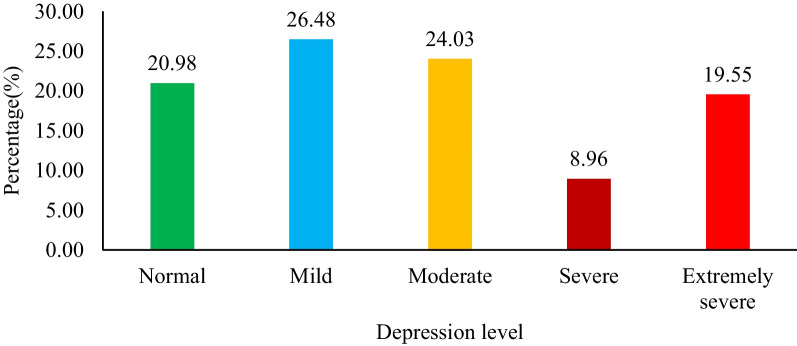
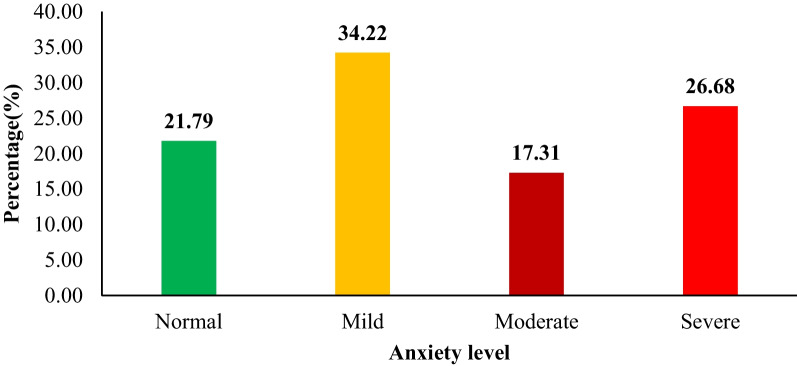
Findings depict that the prevalence of depression and anxiety among university students was 52.5% and 44.0%, respectively. Depressed respondents were considerably more likely to have difficulty sleeping (p < 0.001), spend more time on social media (p = 0.002), have suicidal thoughts (p < 0.001), and have a high cyber-victimization score (p < 0.001) compared to non-depressed respondents. In comparison with non-anxious respondents, anxious respondents were significantly more likely to: have sleeping difficulties (p < 0.001); spend more time on social media (p = 0.031); have suicidal thinking (p < 0.001); and have a comparatively high cyber-victimization score (p < 0.001). Multivariable logistic regression analysis identified that a one-unit increase in the cyber-victimization score results in a 1.24 times higher chance of experiencing depression (AOR: 1.24, 95% CI 1.17-1.31, p < 0.001), and a one-unit increase in the cyber-victimization score results in a 1.23 times higher chance of experiencing anxiety (AOR: 1.23, 95% CI 1.17-1.30, p < 0.001).
University students are struggling with cyberbullying, which can lead to depression and anxiety levels. Promoting more cyberbullying awareness is necessary since failing to do so could result in a sustained or increased prevalence of anxiety and depression levels among students, which could have disastrous repercussions.
网络欺凌与焦虑、抑郁等心理健康问题密切相关,已成为孟加拉国大学生日益关注的问题。在全球化时代,智能手机、互联网和其他在线资源触手可及,这些工具和设备现已成为网络欺凌的主要手段。作者旨在探讨网络欺凌等因素对孟加拉国大学生焦虑和抑郁的影响。
本横断面研究的原始数据是通过精心设计的问卷收集的。本研究采用了三个广泛使用的量表,即网络欺凌量表、广泛性焦虑障碍-7 量表(GAD-7)和患者健康问卷-9 量表(PHQ-9)。采用描述性统计和多变量逻辑回归分析来确定与孟加拉国大学生抑郁和焦虑相关的因素。
研究结果表明,大学生中抑郁和焦虑的患病率分别为 52.5%和 44.0%。与非抑郁组相比,抑郁组的受访者更有可能存在睡眠困难(p<0.001)、花费更多时间在社交媒体上(p=0.002)、有自杀想法(p<0.001)和较高的网络欺凌得分(p<0.001)。与非焦虑组相比,焦虑组的受访者更有可能存在睡眠困难(p<0.001)、花费更多时间在社交媒体上(p=0.031)、有自杀想法(p<0.001)和较高的网络欺凌得分(p<0.001)。多变量逻辑回归分析表明,网络欺凌得分每增加一个单位,患抑郁的几率增加 1.24 倍(AOR:1.24,95%CI 1.17-1.31,p<0.001),患焦虑的几率增加 1.23 倍(AOR:1.23,95%CI 1.17-1.30,p<0.001)。
大学生正面临网络欺凌问题,这可能导致抑郁和焦虑水平的升高。提高对网络欺凌的认识是必要的,因为否则可能会导致学生中焦虑和抑郁水平持续或增加,从而产生灾难性的影响。