Izabel-Shen Dandan, Li Shuang, Luo Tingwei, Wang Jianjun, Li Yan, Sun Qian, Yu Chang-Ping, Hu Anyi
Department of Ecology, Environment and Plant Sciences, Stockholm University, 106 91, Stockholm, Sweden.
CAS Key Laboratory of Urban Pollutant Conversion, Institute of Urban Environment, Chinese Academy of Sciences, Xiamen, 361021, China.
ISME Commun. 2022 Jun 7;2(1):48. doi: 10.1038/s43705-022-00129-0.
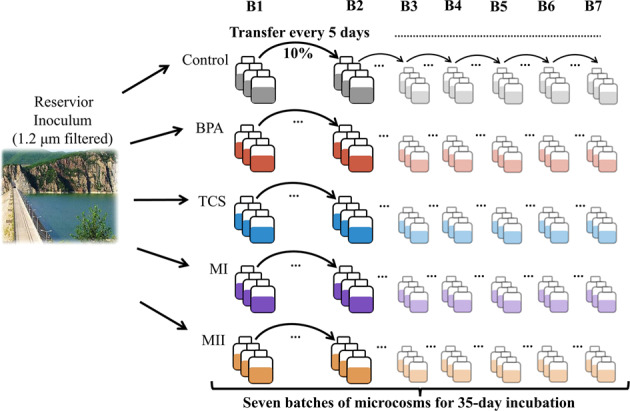
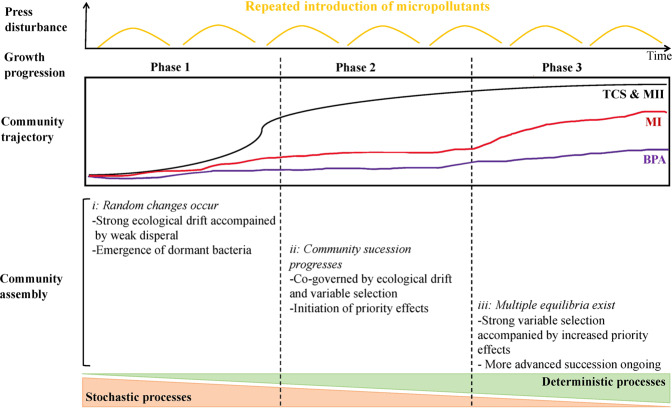
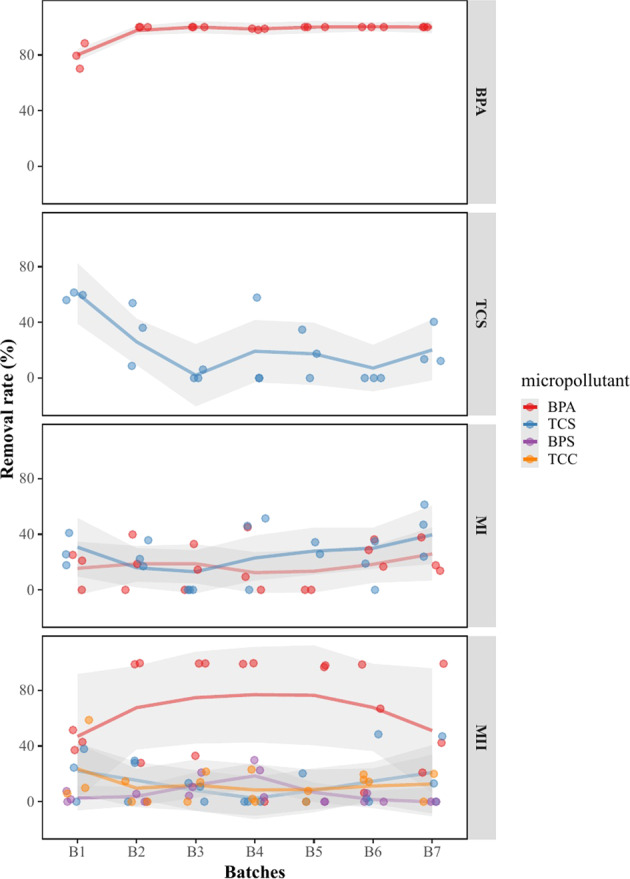
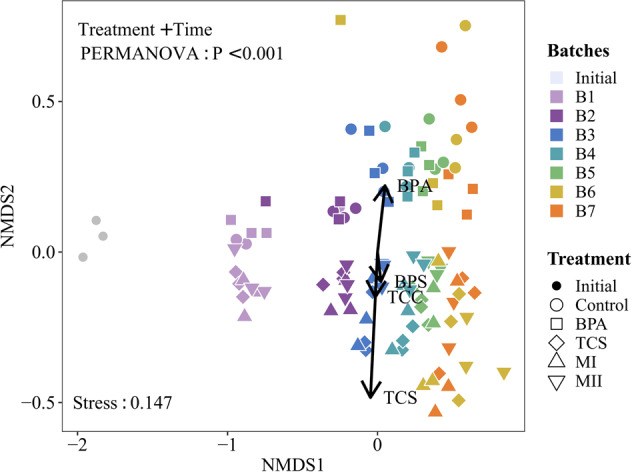
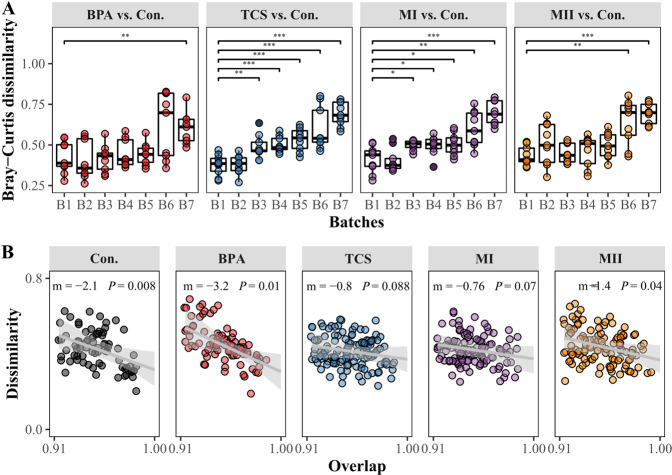
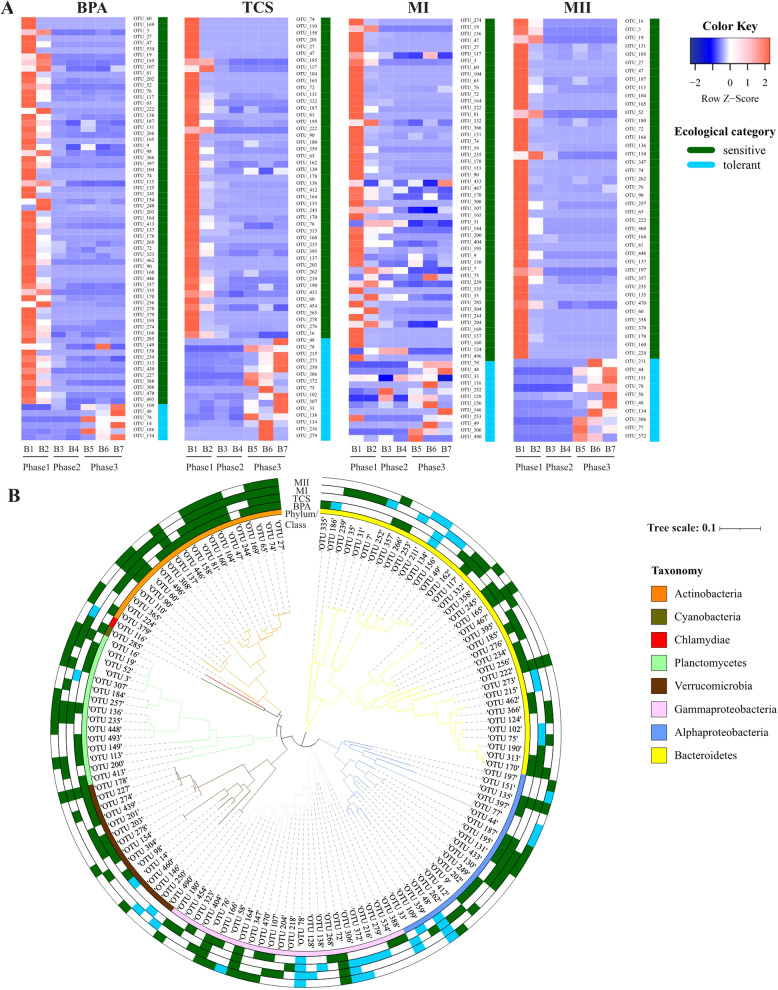
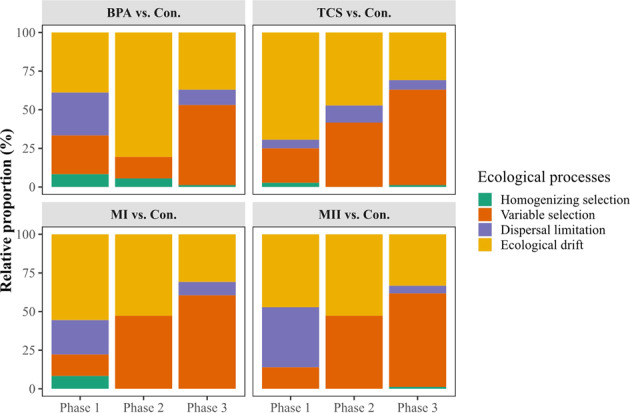
The increasing-volume release of micropollutants into natural surface waters has raised great concern due to their environmental accumulation. Persisting micropollutants can impact multiple generations of organisms, but their microbially-mediated degradation and their influence on community assembly remain understudied. Here, freshwater microbes were treated with several common micropollutants, alone or in combination, and then transferred every 5 days to fresh medium containing the same micropollutants to mimic the repeated exposure of microbes. Metabarcoding of 16S rRNA gene makers was chosen to study the succession of bacterial assemblages following micropollutant exposure. The removal rates of micropollutants were then measured to assess degradation capacity of the associated communities. The degradation of micropollutants did not accelerate over time but altered the microbial community composition. Community assembly was dominated by stochastic processes during early exposure, via random community changes and emergence of seedbanks, and deterministic processes later in the exposure, via advanced community succession. Early exposure stages were characterized by the presence of sensitive microorganisms such as Actinobacteria and Planctomycetes, which were then replaced by more tolerant bacteria such as Bacteroidetes and Gammaproteobacteria. Our findings have important implication for ecological feedback between microbe-micropollutants under anthropogenic climate change scenarios.
由于微污染物在环境中的累积,其向天然地表水的释放量不断增加,这引起了人们的极大关注。持久性微污染物会影响多代生物体,但其微生物介导的降解及其对群落组装的影响仍未得到充分研究。在这里,淡水微生物单独或组合接受几种常见的微污染物处理,然后每5天转移到含有相同微污染物的新鲜培养基中,以模拟微生物的反复暴露。选择对16S rRNA基因标记进行元条形码分析,以研究微污染物暴露后细菌群落的演替。然后测量微污染物的去除率,以评估相关群落的降解能力。微污染物的降解并没有随着时间的推移而加速,但改变了微生物群落组成。在早期暴露期间,群落组装主要由随机过程主导,通过随机的群落变化和种子库的出现,而在暴露后期则由确定性过程主导,通过高级群落演替。早期暴露阶段的特征是存在敏感微生物,如放线菌和浮霉菌,随后被更具耐受性的细菌,如拟杆菌和γ-变形菌所取代。我们的研究结果对于人为气候变化情景下微生物-微污染物之间的生态反馈具有重要意义。