Department of Genetics, Washington University School of Medicine, 660 S. Euclid Ave, Saint Louis, MO, 63108, USA.
Department of Psychiatry, Washington University School of Medicine., 660 S. Euclid Ave, Saint Louis, MO, 63108, USA.
Commun Biol. 2023 Nov 13;6(1):1151. doi: 10.1038/s42003-023-05483-w.
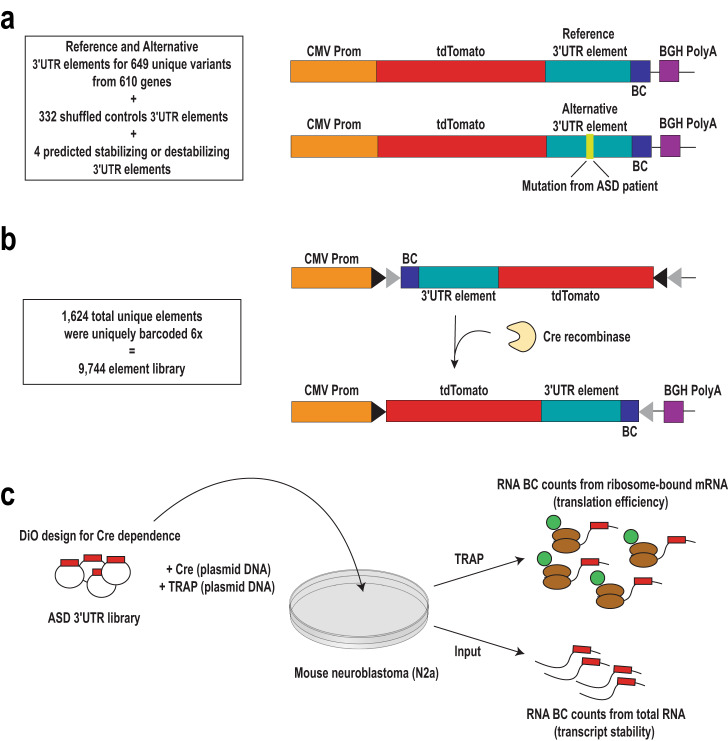
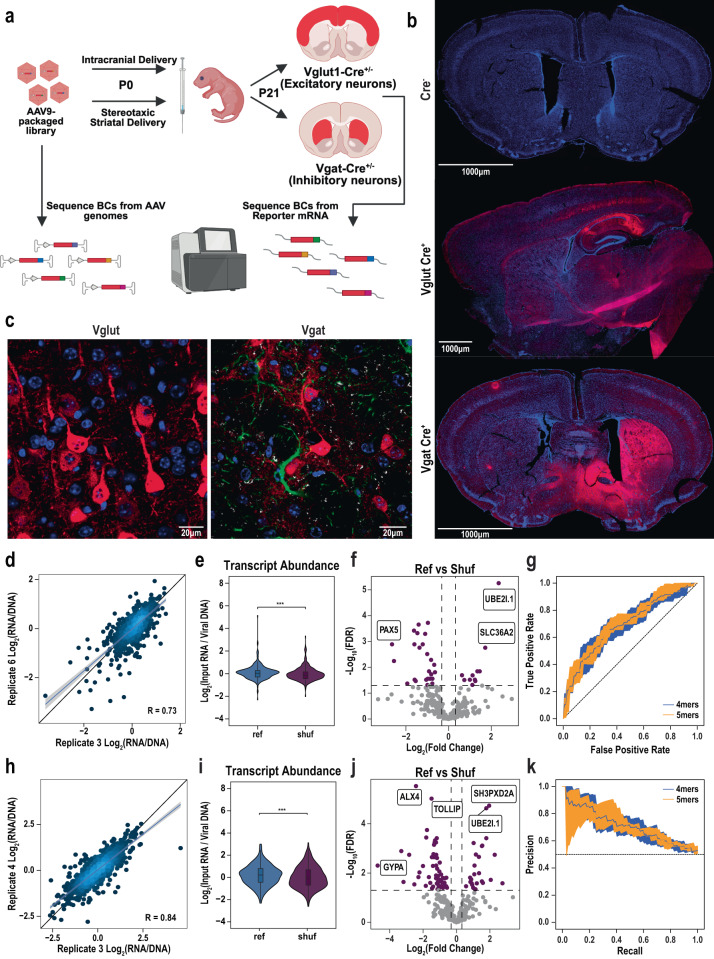
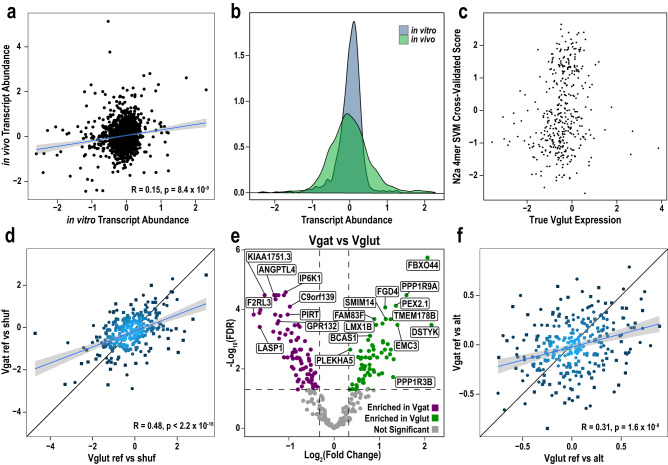
The function of regulatory elements is highly dependent on the cellular context, and thus for understanding the function of elements associated with psychiatric diseases these would ideally be studied in neurons in a living brain. Massively Parallel Reporter Assays (MPRAs) are molecular genetic tools that enable functional screening of hundreds of predefined sequences in a single experiment. These assays have not yet been adapted to query specific cell types in vivo in a complex tissue like the mouse brain. Here, using a test-case 3'UTR MPRA library with genomic elements containing variants from autism patients, we developed a method to achieve reproducible measurements of element effects in vivo in a cell type-specific manner, using excitatory cortical neurons and striatal medium spiny neurons as test cases. This targeted technique should enable robust, functional annotation of genetic elements in the cellular contexts most relevant to psychiatric disease.
调控元件的功能高度依赖于细胞环境,因此,为了理解与精神疾病相关的元件的功能,这些元件在活体大脑的神经元中进行研究是理想的。大规模平行报告基因检测(MPRA)是一种分子遗传学工具,可在单个实验中对数百个预定义序列进行功能筛选。这些检测尚未被适用于在像小鼠大脑这样的复杂组织中对特定细胞类型进行体内特异性查询。在这里,我们使用一个带有来自自闭症患者变体的基因组元件的 3'UTR MPRA 文库,开发了一种方法,可在活体中以细胞类型特异性的方式,对元件的效应进行可重复的测量,以兴奋性皮质神经元和纹状体中间神经元作为测试案例。这种靶向技术应该能够在与精神疾病最相关的细胞环境中,对遗传元件进行稳健的、功能性注释。