Department of Physical Therapy, Postgraduate Program of Physical Therapy, Federal University of Rio Grande do Norte, Natal, State of Rio Grande do Norte, Brazil.
Department of Surgery, Federal University of Rio Grande do Norte, Natal, State of Rio Grande do Norte, Brazil.
PLoS One. 2023 Nov 13;18(11):e0293457. doi: 10.1371/journal.pone.0293457. eCollection 2023.
Rotator cuff tendinopathy is a common shoulder disorder in which the primary treatment is resistance exercises. Isometric exercises are being studied for lower limb tendinopathies but not for rotator cuff tendinopathy. This protocol for a randomized clinical trial aims to compare the effects of two types of exercise (isometric and isotonic) on shoulder pain, functioning, muscle strength, and electromyographic activity in individuals with rotator cuff tendinopathy.
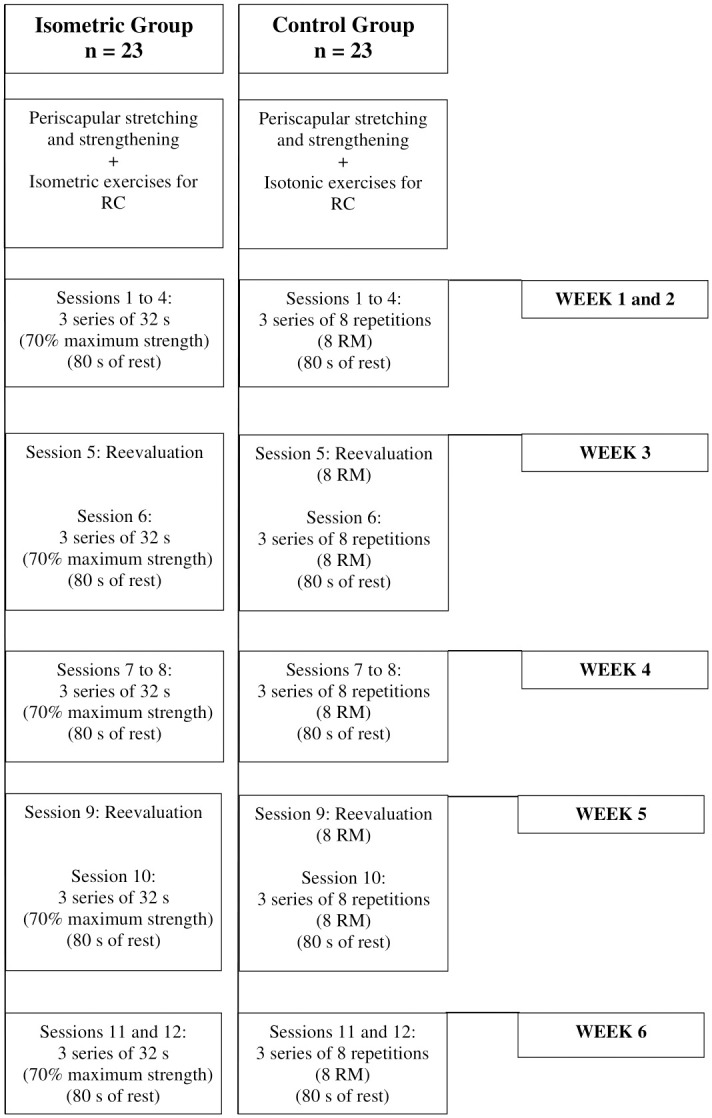
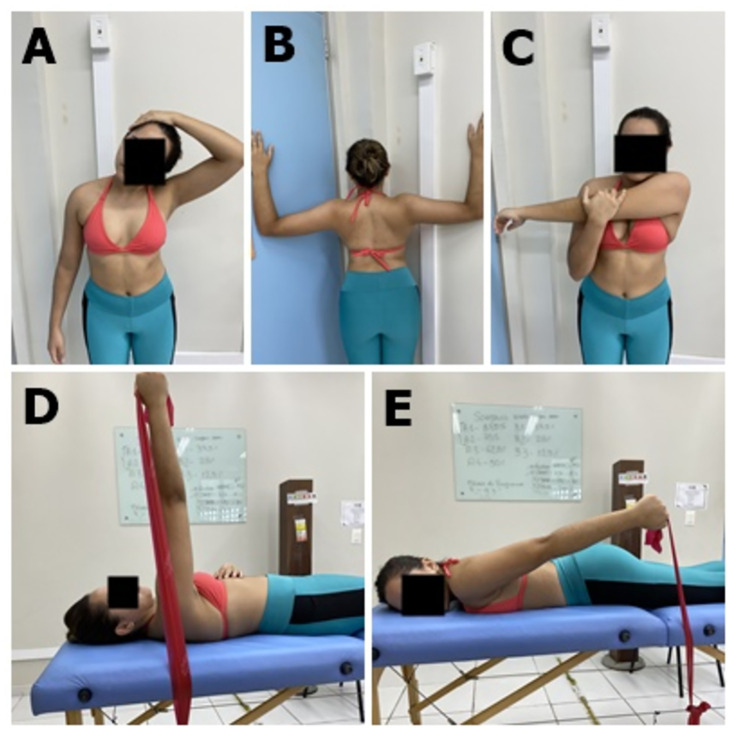
Forty-six individuals (18 to 60 years old) with shoulder pain for more than three months and unilateral supraspinatus and/or infraspinatus tendinopathy will participate in this trial. Individuals will be randomized into two exercise groups: isometric or isotonic. The following outcomes will be evaluated before and after the first session and after six weeks of intervention: shoulder pain and functioning; isometric strength of shoulder elevation and lateral and medial rotation; and electromyographic activity of medial deltoid, infraspinatus, serratus anterior, and lower trapezius. Groups will perform stretching and strengthening of periscapular muscles. The isometric group will perform three sets of 32 s, at 70% of maximal isometric strength. The isotonic group will perform concentric and eccentric exercises (2 s for each phase) in three sets of eight repetitions at a load of eight repetition maximum. The total time under tension of 96 s will be equal for both groups, and load will be adjusted in weeks three and five of the protocol. Treatment effect between groups will be analyzed using linear mixed model.
Trial registration number: Universal Trial Number (UTN) code U1111-1284-7528 and Brazilian Clinical Trials Registry platform-RBR-3pvdvfk.
肩袖肌腱病是一种常见的肩部疾病,其主要治疗方法是阻力运动。等长运动正在研究用于下肢肌腱病,但不适用于肩袖肌腱病。本随机临床试验方案旨在比较两种运动(等长和等张)对肩袖肌腱病患者肩部疼痛、功能、肌肉力量和肌电图活动的影响。
46 名(18 至 60 岁)肩部疼痛超过三个月且单侧冈上肌和/或冈下肌肌腱病患者将参与本试验。患者将随机分为两组:等长组或等张组。在第一次治疗前后和干预 6 周后将评估以下结果:肩部疼痛和功能;肩抬高和外展、内旋的等长力量;三角肌、冈下肌、前锯肌和下斜方肌的肌电图活动。两组将进行肩胛带肌肉的拉伸和强化。等长组将进行三组 32 秒,达到最大等长力量的 70%。等张组将进行三组 8 次重复的向心和离心运动(每个阶段 2 秒),负荷为 8 次重复最大。两组的总张力时间为 96 秒,负荷将在方案的第 3 周和第 5 周进行调整。将使用线性混合模型分析组间治疗效果。
试验注册号:通用试验编号(UTN)代码 U1111-1284-7528 和巴西临床试验注册平台-RBR-3pvdvfk。