Dougherty J P, Temin H M
Mol Cell Biol. 1986 Dec;6(12):4387-95. doi: 10.1128/mcb.6.12.4387-4395.1986.
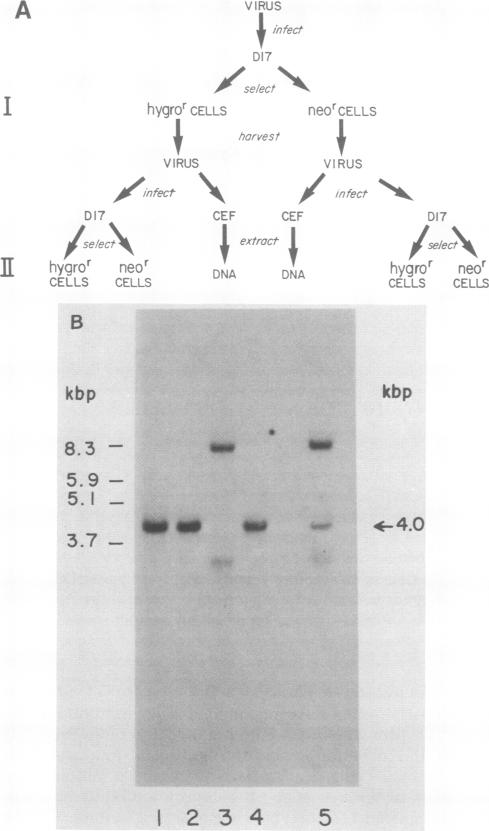
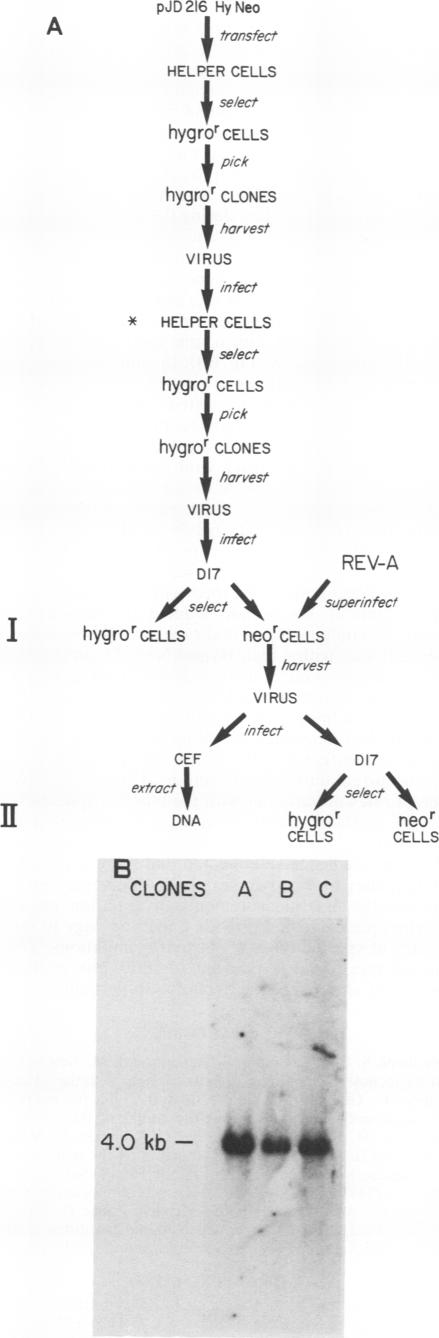
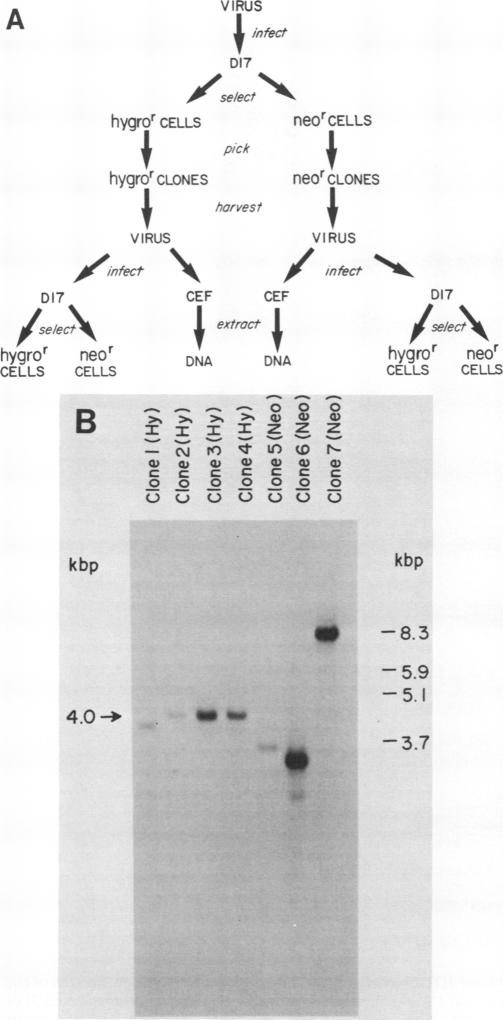
Spleen necrosis virus (SNV) is an avian retrovirus that efficiently infects some mammalian cells (e.g., dog and rat cells). We constructed an SNV-based vector, which contains less than 1 kilobase (kb) of the retrovirus sequence, and a number of derivatives containing selectable markers. We obtained high-titer virus stocks, over 10(6) transforming units per ml, with a vector whose genomic RNA consists of 1,850 bases (full-length SNV RNA is 7.7 kb). We also studied two vectors that both carry two genes which should be expressed from a single promoter, one gene from unspliced mRNA and the other gene from spliced mRNA. In one vector, both genes were efficiently expressed as expected. However, in the other vector, expression of the gene 3' to the splice acceptor was inhibited. When we selected for expression of the 3' gene is this latter case, we found that the resistant cells contained mutant proviruses in which the 3' gene could be expressed. Furthermore, we found that mutations were generated during a single round of virus replication (provirus to provirus) at a rate of approximately 0.5% mutations per cycle.
脾坏死病毒(SNV)是一种禽逆转录病毒,能有效感染某些哺乳动物细胞(如狗和大鼠细胞)。我们构建了一种基于SNV的载体,其逆转录病毒序列少于1千碱基(kb),以及一些含有选择标记的衍生物。我们获得了高滴度病毒储备液,每毫升超过10⁶转化单位,所用载体的基因组RNA由1850个碱基组成(全长SNV RNA为7.7 kb)。我们还研究了两种载体,它们都携带两个应由单个启动子表达的基因,一个基因来自未剪接的mRNA,另一个基因来自剪接的mRNA。在一种载体中,两个基因都如预期那样高效表达。然而,在另一种载体中,剪接受体3'端基因的表达受到抑制。当我们在后者这种情况下选择3'端基因的表达时,我们发现抗性细胞含有突变的前病毒,其中3'端基因能够表达。此外,我们发现突变在病毒的单个复制轮次(从前病毒到前病毒)中以每个循环约0.5%的突变率产生。