Serrao Erik, Ballandras-Colas Allison, Cherepanov Peter, Maertens Goedele N, Engelman Alan N
Department of Cancer Immunology and AIDS, Dana-Farber Cancer Institute, Boston, MA, USA.
Division of Infectious Diseases, Imperial College London, London, UK.
Retrovirology. 2015 Apr 30;12:39. doi: 10.1186/s12977-015-0167-3.
Retroviral integration favors weakly conserved palindrome sequences at the sites of viral DNA joining and generates a short (4-6 bp) duplication of host DNA flanking the provirus. We previously determined two key parameters that underlie the target DNA preference for prototype foamy virus (PFV) and human immunodeficiency virus type 1 (HIV-1) integration: flexible pyrimidine (Y)/purine (R) dinucleotide steps at the centers of the integration sites, and base contacts with specific integrase residues, such as Ala188 in PFV integrase and Ser119 in HIV-1 integrase. Here we examined the dinucleotide preference profiles of a range of retroviruses and correlated these findings with respect to length of target site duplication (TSD).
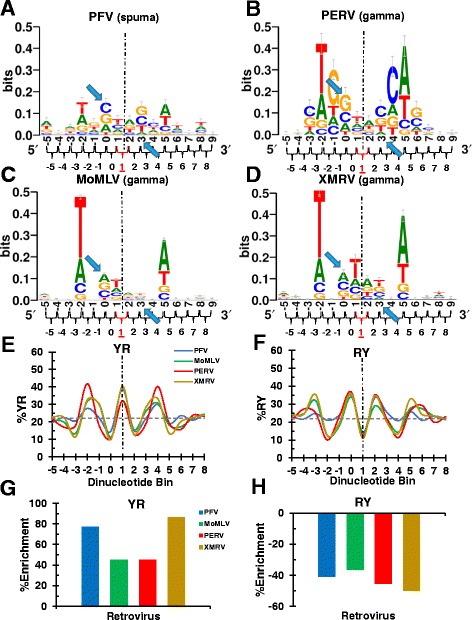
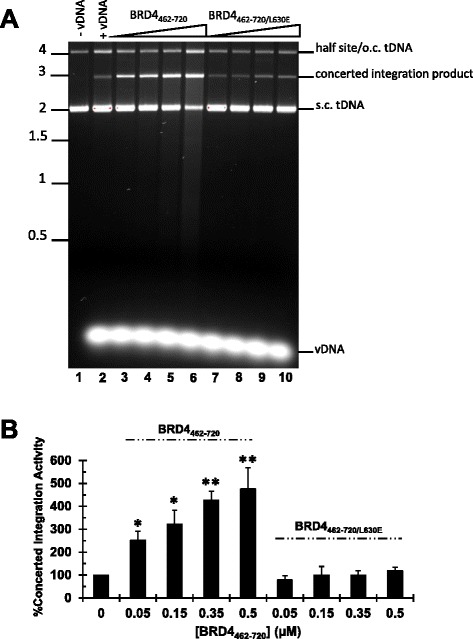
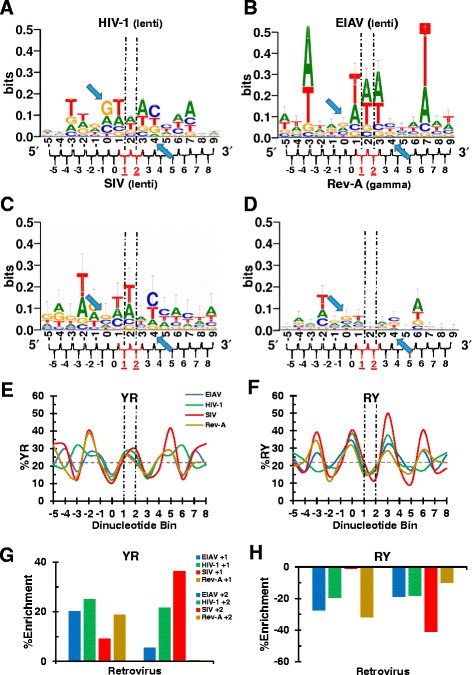
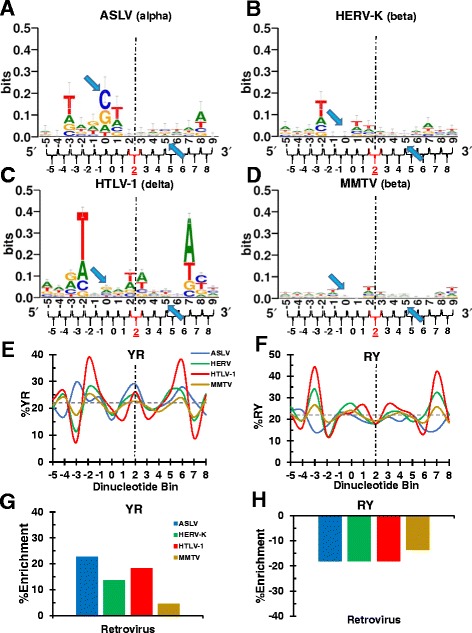
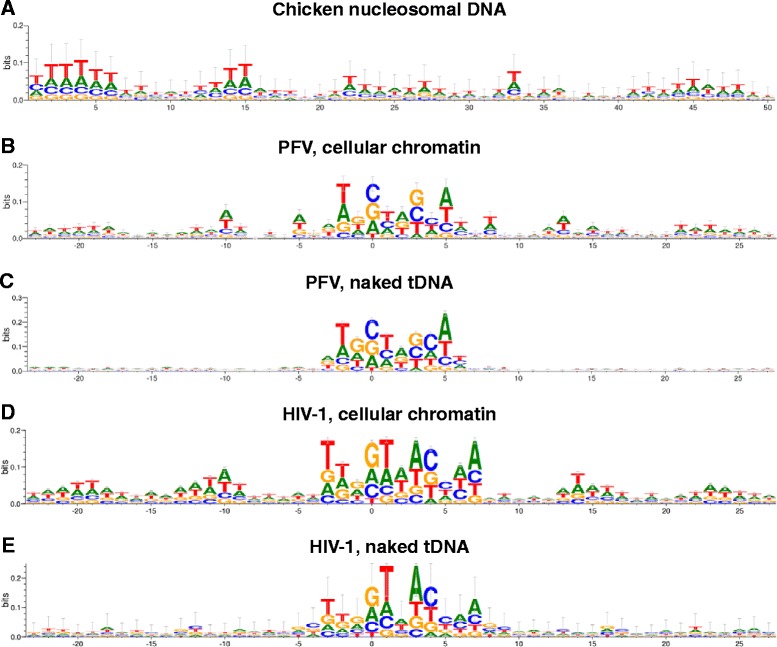
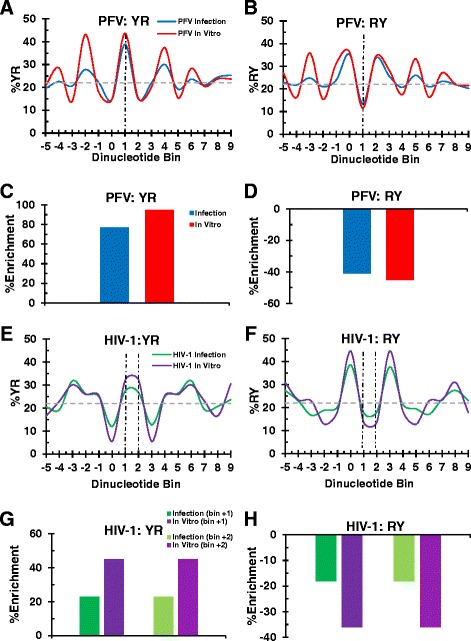
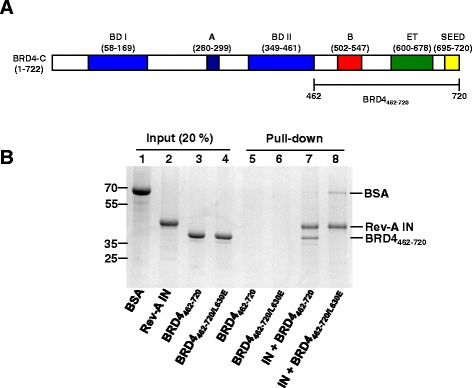
Integration datasets covering six viral genera and the three lengths of TSD were accessed from the literature or generated in this work. All viruses exhibited significant enrichments of flexible YR and/or selection against rigid RY dinucleotide steps at the centers of integration sites, and the magnitude of this enrichment inversely correlated with TSD length. The DNA sequence environments of in vivo-generated HIV-1 and PFV sites were consistent with integration into nucleosomes, however, the local sequence preferences were largely independent of target DNA chromatinization. Integration sites derived from cells infected with the gammaretrovirus reticuloendotheliosis virus strain A (Rev-A), which yields a 5 bp TSD, revealed the targeting of global chromatin features most similar to those of Moloney murine leukemia virus, which yields a 4 bp duplication. In vitro assays revealed that Rev-A integrase interacts with and is catalytically stimulated by cellular bromodomain containing 4 protein.
Retroviral integrases have likely evolved to bend target DNA to fit scissile phosphodiester bonds into two active sites for integration, and viruses that cut target DNA with a 6 bp stagger may not need to bend DNA as sharply as viruses that cleave with 4 bp or 5 bp staggers. For PFV and HIV-1, the selection of signature bases and central flexibility at sites of integration is largely independent of chromatin structure. Furthermore, global Rev-A integration is likely directed to chromatin features by bromodomain and extraterminal domain proteins.
逆转录病毒整合倾向于在病毒DNA连接位点选择弱保守的回文序列,并在原病毒两侧产生短的(4 - 6个碱基对)宿主DNA重复序列。我们之前确定了两个关键参数,它们是原型泡沫病毒(PFV)和1型人类免疫缺陷病毒(HIV - 1)整合时对靶DNA偏好的基础:整合位点中心处灵活的嘧啶(Y)/嘌呤(R)二核苷酸步移,以及与特定整合酶残基的碱基接触,如PFV整合酶中的丙氨酸188和HIV - 1整合酶中的丝氨酸119。在此,我们研究了一系列逆转录病毒的二核苷酸偏好谱,并将这些发现与靶位点重复序列(TSD)的长度相关联。
从文献中获取或在本研究中生成了涵盖六个病毒属以及三种TSD长度的整合数据集。所有病毒在整合位点中心处均表现出灵活的YR二核苷酸步移显著富集和/或对刚性RY二核苷酸步移的选择偏好,且这种富集程度与TSD长度呈负相关。体内产生的HIV - 1和PFV位点的DNA序列环境与整合到核小体中的情况一致,然而,局部序列偏好很大程度上独立于靶DNA的染色质化。感染γ逆转录病毒网状内皮组织增生症病毒A株(Rev - A)的细胞产生5个碱基对的TSD,其整合位点显示出与产生4个碱基对重复序列的莫洛尼氏鼠白血病病毒最相似的全局染色质特征靶向性。体外实验表明,Rev - A整合酶与含细胞溴结构域4蛋白相互作用并受到其催化刺激。
逆转录病毒整合酶可能已经进化,使靶DNA弯曲,以便将可切割的磷酸二酯键适配到两个用于整合的活性位点,并且以6个碱基对错开方式切割靶DNA的病毒可能不需要像以4个碱基对或5个碱基对错开方式切割的病毒那样剧烈地弯曲DNA。对于PFV和HIV - 1,整合位点处特征性碱基的选择和中心灵活性在很大程度上独立于染色质结构。此外,Rev - A的全局整合可能由溴结构域和额外末端结构域蛋白导向染色质特征。