Department of Pain Treatment, Shunyi District Hospital of Beijing, Beijing, 101300, China.
BMC Surg. 2023 Nov 15;23(1):345. doi: 10.1186/s12893-023-02242-w.
To comprehensively compare and assess the effects of different lumbar fusion techniques in patients with lumbar spinal stenosis (LSS).
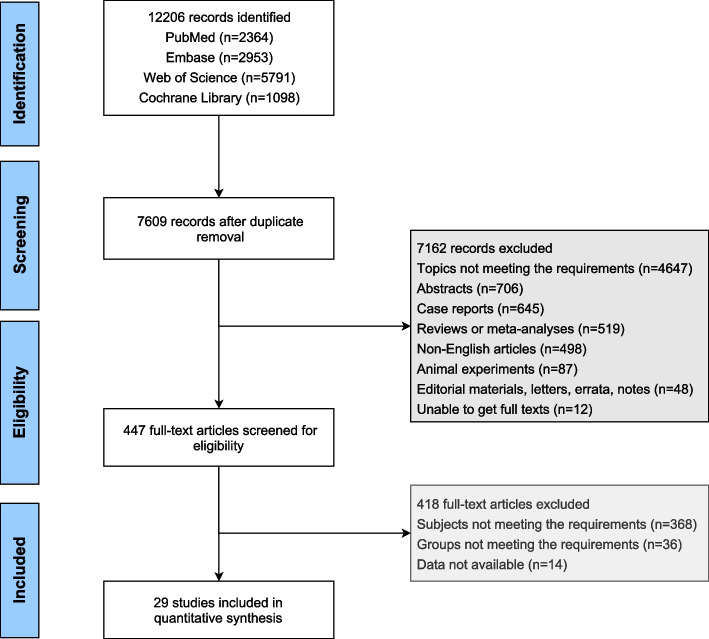
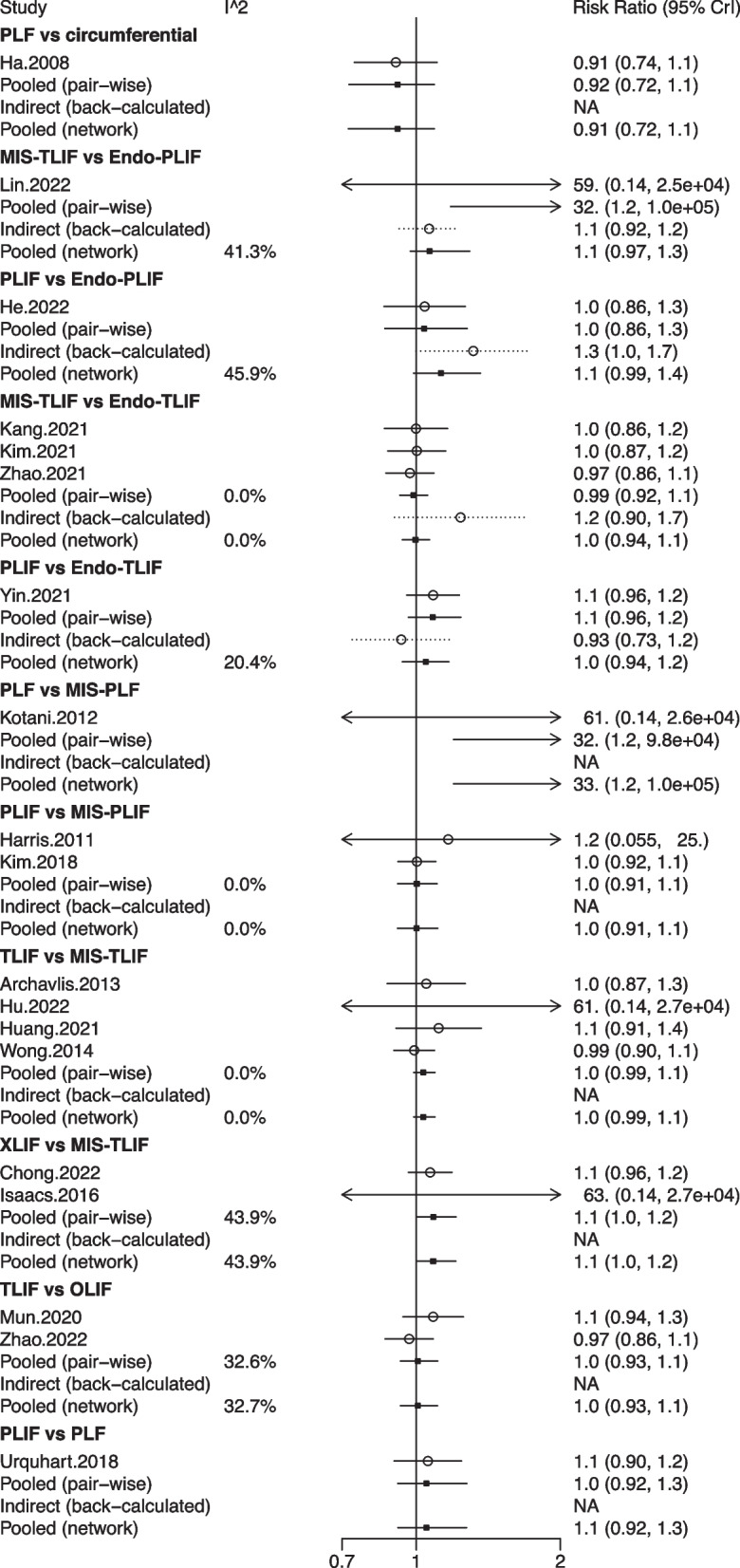
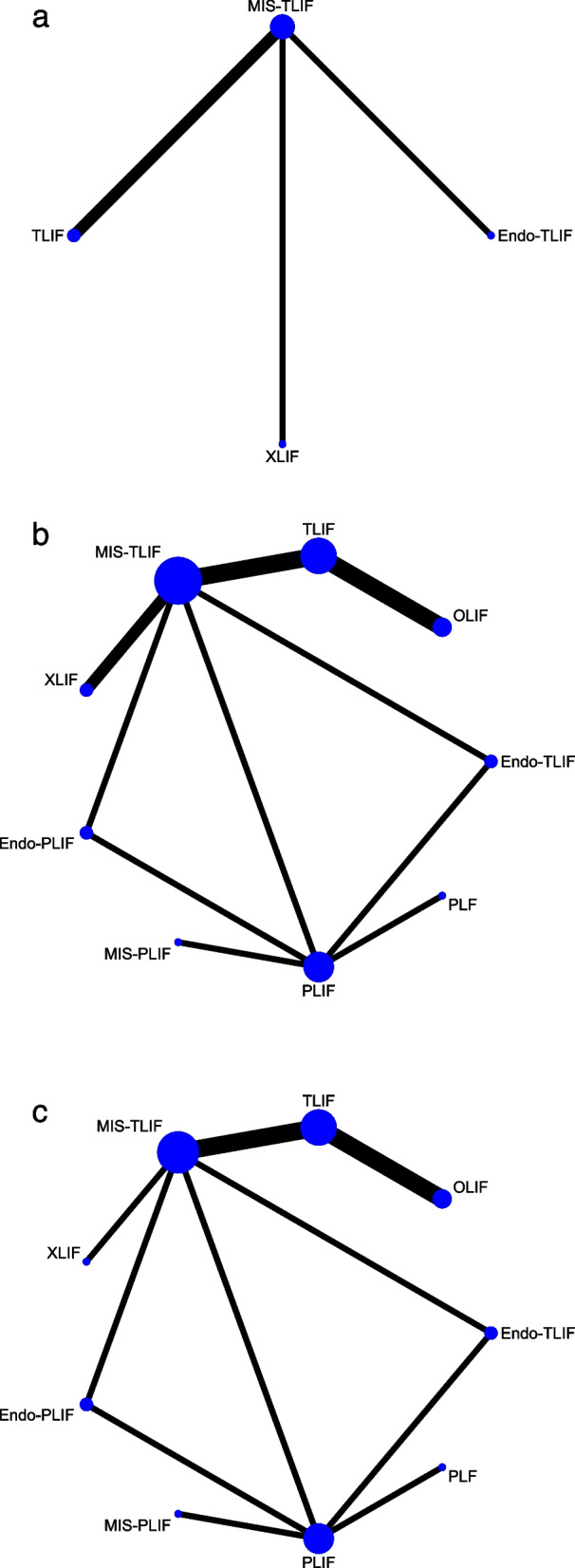
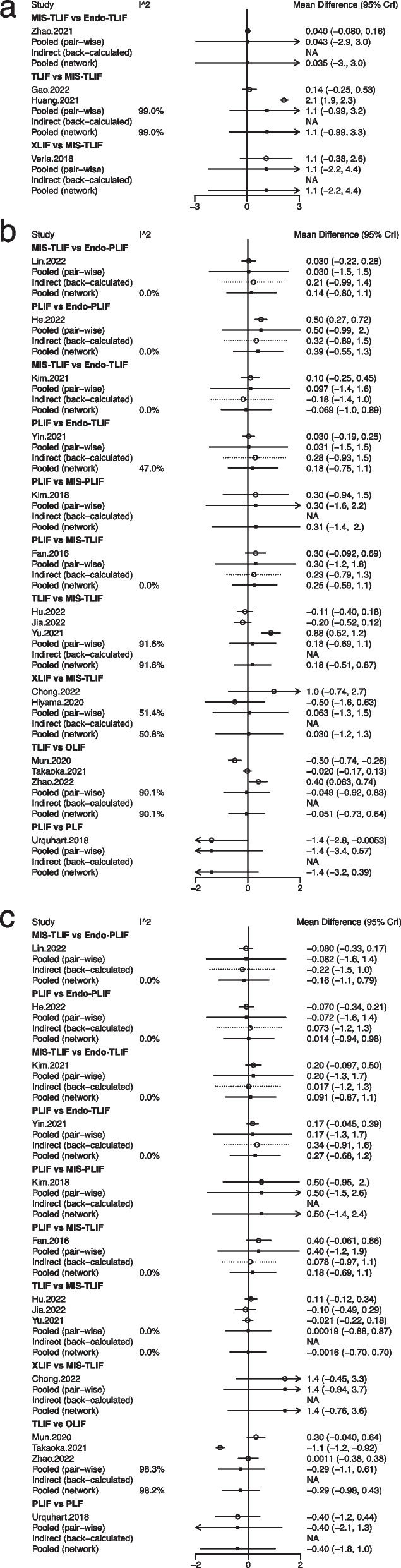
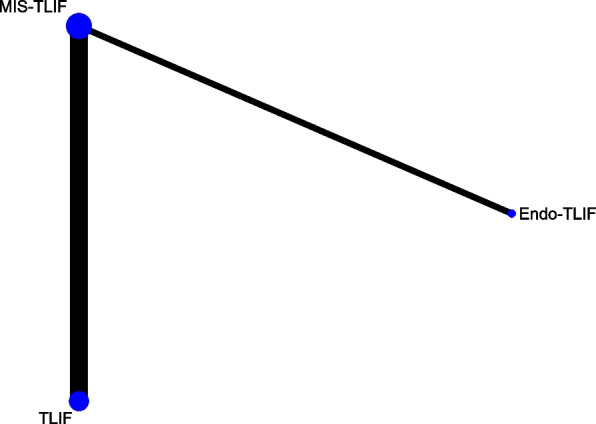
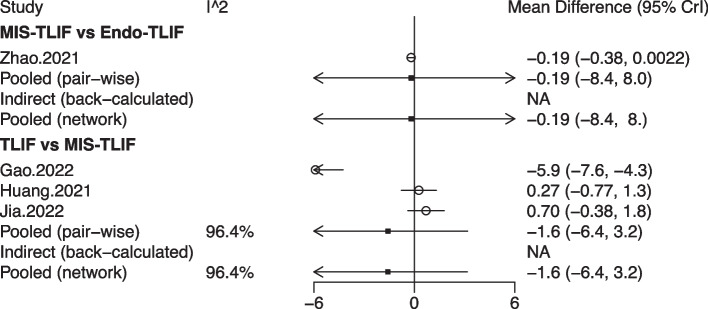
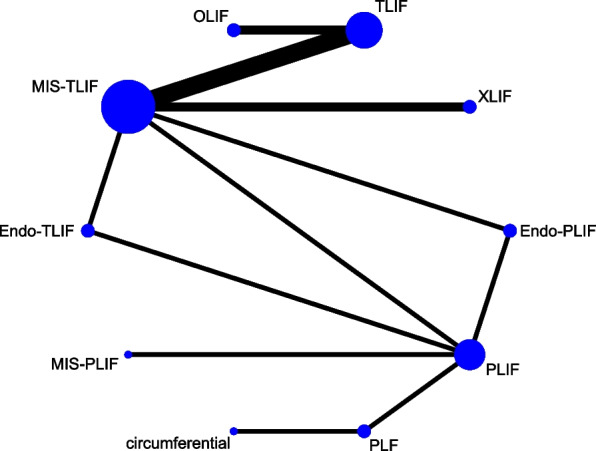
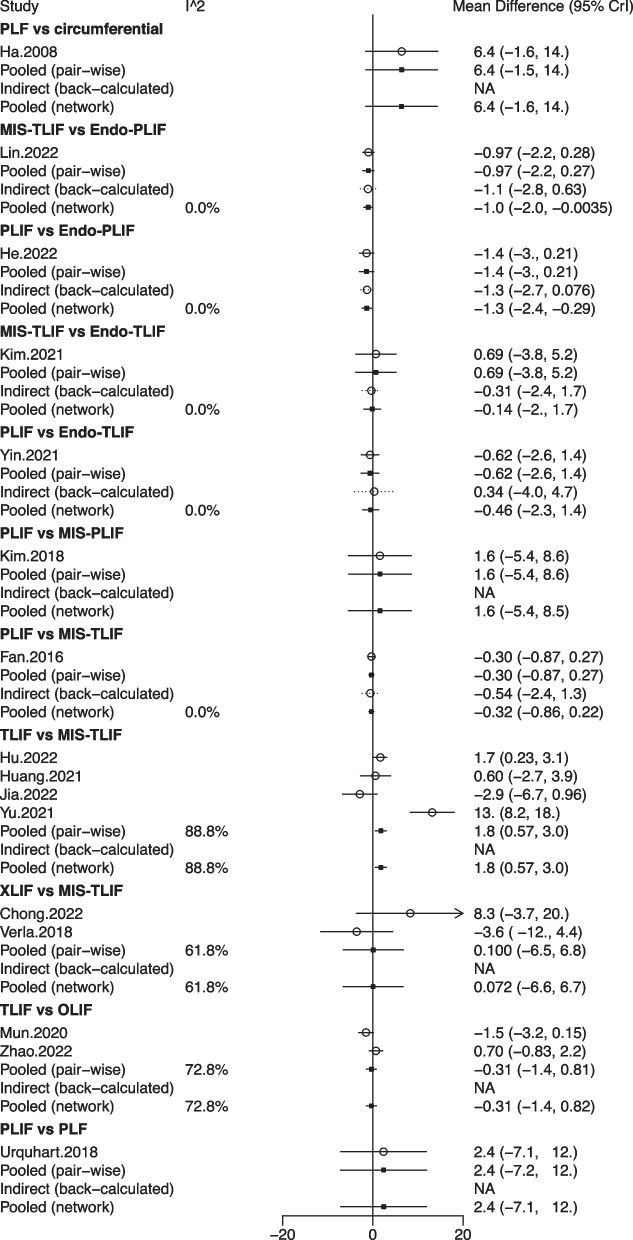
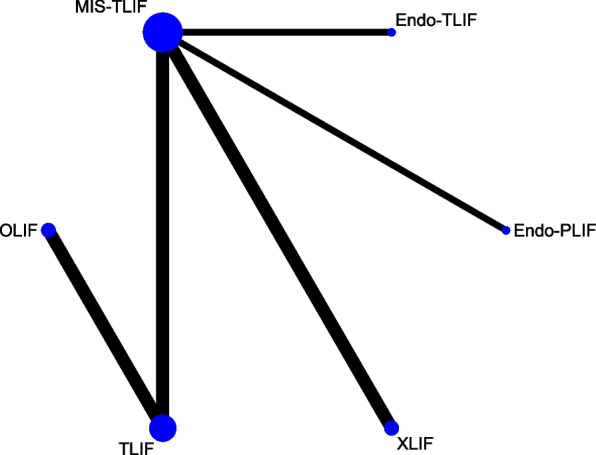
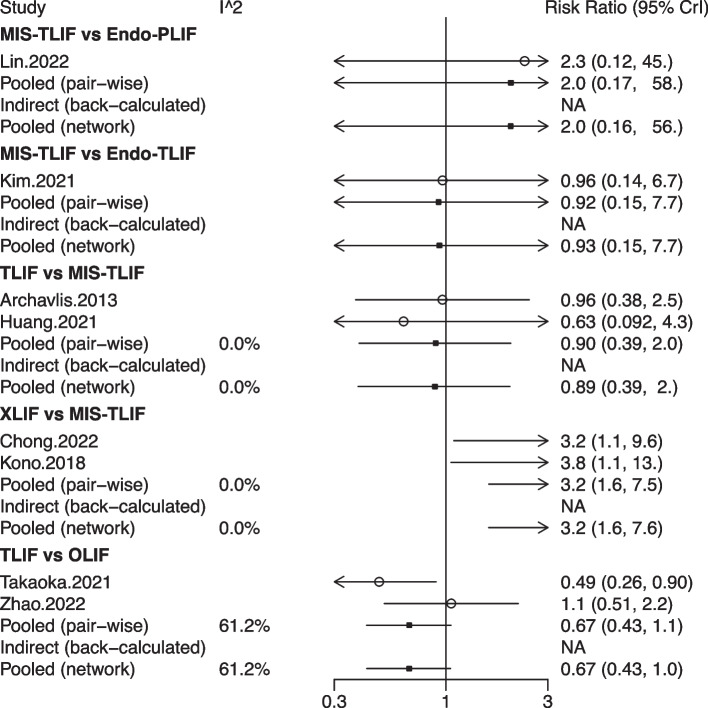
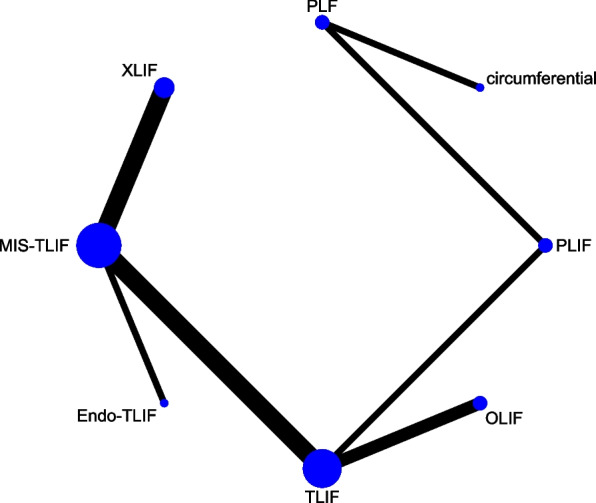
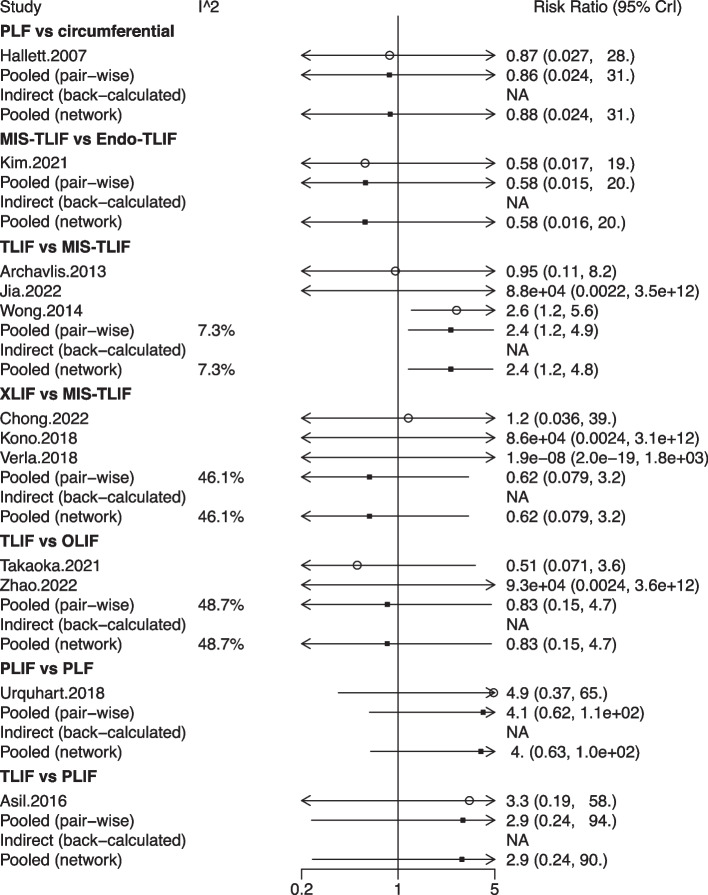
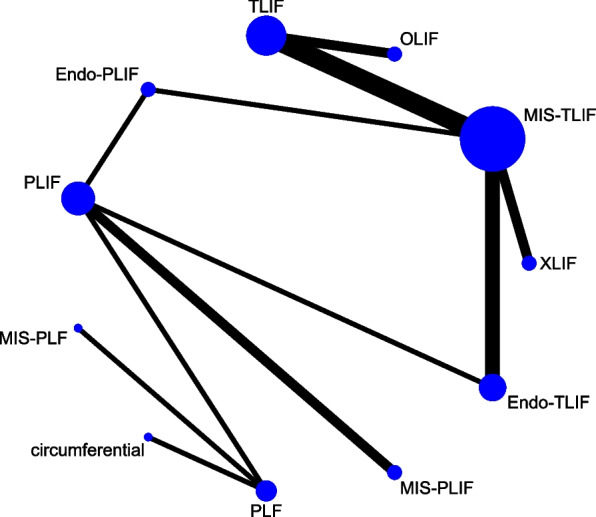
PubMed, Embase, Cochrane Library, and Web of Science databases were systematically searched up to December 24, 2022 in this network meta-analysis. Outcomes were pain (pain, low back pain, and leg pain), Japanese Orthopaedic Association (JOA), Oswestry Disability Index (ODI), complications, reoperation, and fusion. Network plots illustrated the direct and indirect comparisons of different fusion techniques for the outcomes. League tables showed the comparisons of any two fusion techniques, based on both direct and indirect evidence. The efficacy of each fusion technique for LSS was ranked by rank probabilities.
Totally 29 studies involving 2,379 patients were eligible. For pain, percutaneous endoscopic transforaminal lumbar interbody fusion (Endo-TLIF) was most likely to be the best technique, followed by minimally invasive transforaminal lumbar interbody fusion (MIS-TLIF), extreme lateral interbody fusion (XLIF), and transforaminal lumbar interbody fusion (TLIF). Percutaneous endoscopic posterior lumbar interbody fusion (Endo-PLIF) had the greatest likelihood to be the optimal technique for low back pain, followed sequentially by MIS-TLIF, minimally invasive posterior lumbar interbody fusion (MIS-PLIF), XLIF, Endo-TLIF, TLIF, oblique lumbar interbody fusion (OLIF), posterior lumbar interbody fusion (PLIF), and posterolateral lumbar fusion (PLF). MIS-PLIF was ranked the most effective technique concerning leg pain, followed by Endo-TLIF, MIS-TLIF, TLIF, Endo-PLIF, PLIF, OLIF, PLF, and XLIF. As regards JOA scores, Endo-TLIF had the maximum probability to be the best technique, followed by MIS-TLIF and TLIF. Endo-PLIF had the greatest likelihood to be the optimum technique for complications, followed by TLIF, MIS-TLIF, Endo-TLIF, OLIF, and XLIF.
Minimally invasive fusion techniques may be effective in the treatment of LSS, compared with traditional techniques. Minimally invasive techniques were likely non-inferior with regards to postoperative complications.
全面比较和评估不同腰椎融合技术在腰椎管狭窄症(LSS)患者中的效果。
本网络荟萃分析系统检索了 PubMed、Embase、Cochrane 图书馆和 Web of Science 数据库,检索时间截至 2022 年 12 月 24 日。结局指标包括疼痛(疼痛、腰痛和腿痛)、日本矫形协会(JOA)、Oswestry 残疾指数(ODI)、并发症、再次手术和融合。网络图显示了不同融合技术治疗结局的直接和间接比较。排名表显示了基于直接和间接证据的任何两种融合技术的比较。根据秩概率对每种融合技术治疗 LSS 的疗效进行了排名。
共纳入 29 项研究,涉及 2379 名患者。在疼痛方面,经皮内镜经椎间孔腰椎体间融合术(Endo-TLIF)最有可能是最佳技术,其次是微创经椎间孔腰椎体间融合术(MIS-TLIF)、极外侧椎间融合术(XLIF)和经椎间孔腰椎体间融合术(TLIF)。经皮内镜后路腰椎体间融合术(Endo-PLIF)治疗腰痛最有可能是最佳技术,其次是 MIS-TLIF、微创后路腰椎体间融合术(MIS-PLIF)、XLIF、Endo-TLIF、TLIF、斜侧腰椎体间融合术(OLIF)、后路腰椎体间融合术(PLIF)和后外侧腰椎融合术(PLF)。在腿痛方面,MIS-PLIF 被认为是最有效的技术,其次是 Endo-TLIF、MIS-TLIF、TLIF、Endo-PLIF、PLIF、OLIF、PLF 和 XLIF。就 JOA 评分而言,Endo-TLIF 最有可能是最佳技术,其次是 MIS-TLIF 和 TLIF。Endo-PLIF 治疗并发症最有可能是最佳技术,其次是 TLIF、MIS-TLIF、Endo-TLIF、OLIF 和 XLIF。
与传统技术相比,微创融合技术可能在治疗 LSS 方面更有效。微创技术在术后并发症方面可能无差异。