Department of Biomolecular Chemistry, Leibniz Institute for Natural Product Research and Infection Biology, Jena, Germany.
Department of Microbiology and Immunology, Doherty Institute, Melbourne, Australia.
mBio. 2023 Dec 19;14(6):e0182423. doi: 10.1128/mbio.01824-23. Epub 2023 Nov 16.
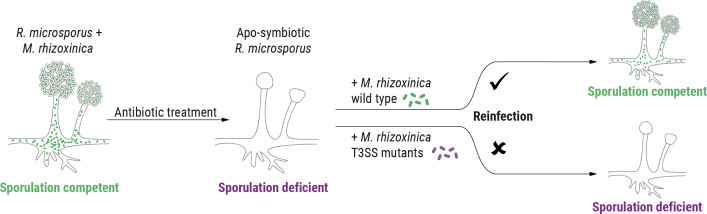
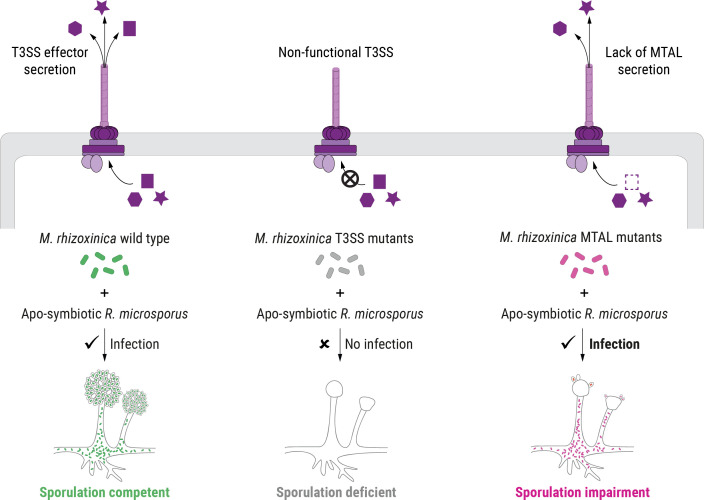
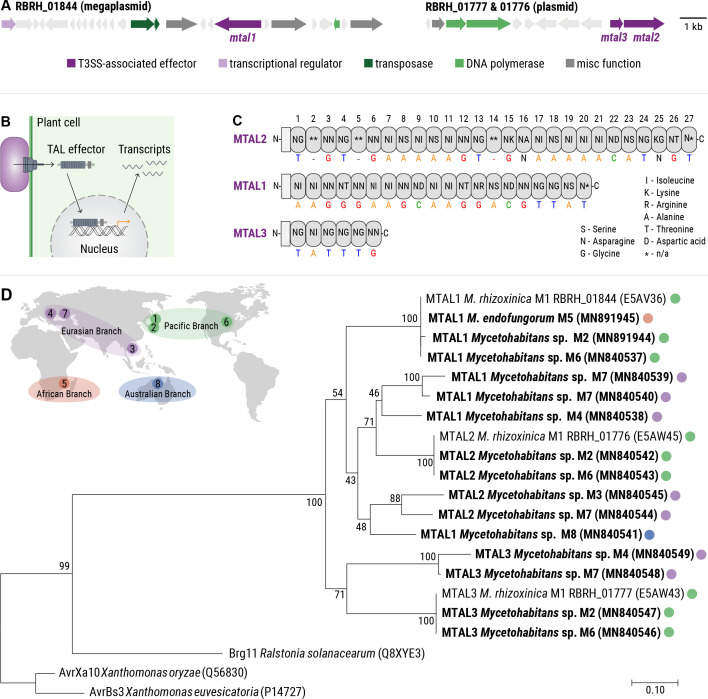
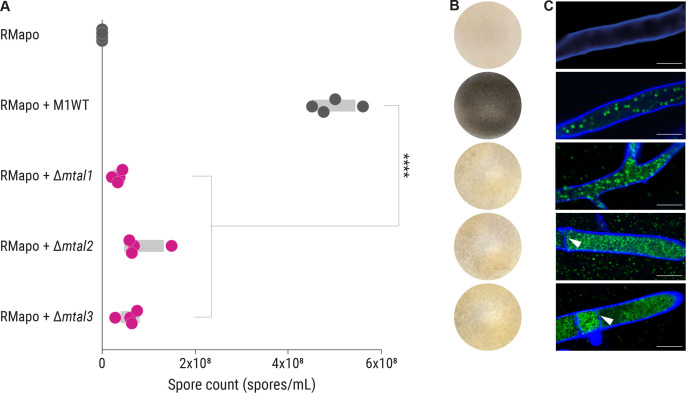
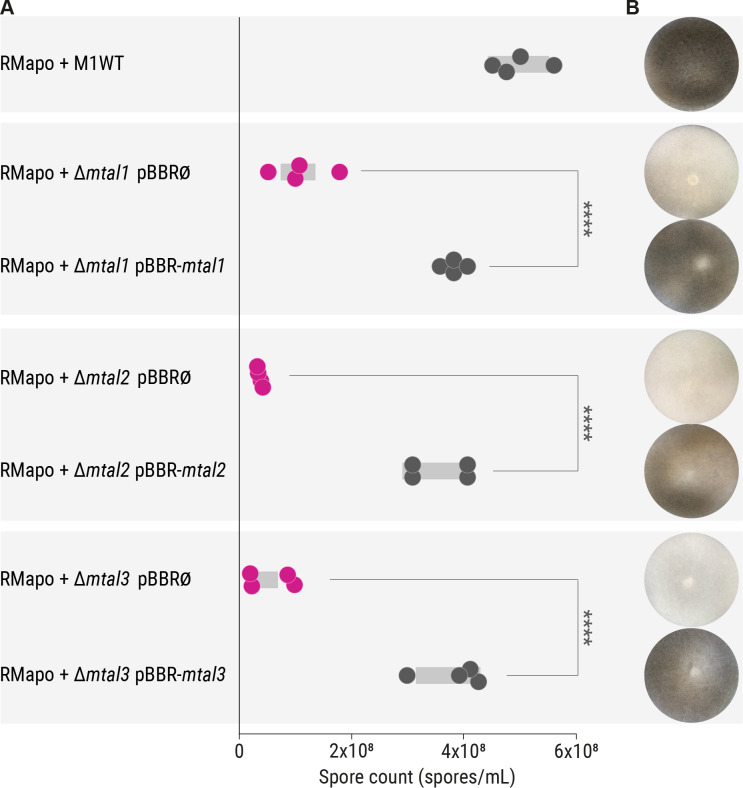
Interactions between fungi and bacteria are critically important in ecology, medicine, and biotechnology. In this study, we shed light on factors that promote the persistence of a toxin-producing, phytopathogenic symbiosis that causes severe crop losses in Asia. We present an unprecedented case where bacterially produced transcription activator-like (TAL) effectors are key to maintaining a stable endosymbiosis. In their absence, fungal sporulation is abrogated, leading to collapse of the phytopathogenic alliance. The TAL (MTAL)-mediated mechanism of host control illustrates a unique role of bacterial effector molecules that has broader implications, potentially serving as a model to understand how prokaryotic symbionts interact with their eukaryotic hosts.
真菌和细菌之间的相互作用在生态学、医学和生物技术中至关重要。在这项研究中,我们揭示了促进产毒素、植物病原共生体持续存在的因素,这种共生体导致亚洲严重的作物损失。我们提出了一个前所未有的案例,即细菌产生的转录激活样(TAL)效应子是维持稳定共生关系的关键。在它们不存在的情况下,真菌的孢子形成被阻断,导致植物病原联盟的崩溃。TAL(MTAL)介导的宿主控制机制说明了细菌效应分子的独特作用,这具有更广泛的意义,可能成为理解原核共生体如何与真核宿主相互作用的模型。