Sethna Julian, Wong Kristal, Meyers Kevin
Division of Pediatric Nephrology, Children's Hospital of Philadelphia, Philadelphia PA.
medRxiv. 2023 Nov 12:2023.11.11.23298417. doi: 10.1101/2023.11.11.23298417.
The aim was to compare cardiometabolic health between Asian American children and Non-Hispanic White (NHW) children as well as to compare cardiometabolic health among Asian American children by birthplace.
Children aged 6-17 years enrolled in the National Health and Nutrition Examination Survey (NHANES) from 2011-2018 who self-identified as non-Hispanic Asian and NHW were included. Among Asian Americans, place of birth was defined as foreign-born vs United States (US)-born. Regression models were adjusted for age, sex, household income, food insecurity, passive smoke exposure, and body mass index (BMI) z-score.
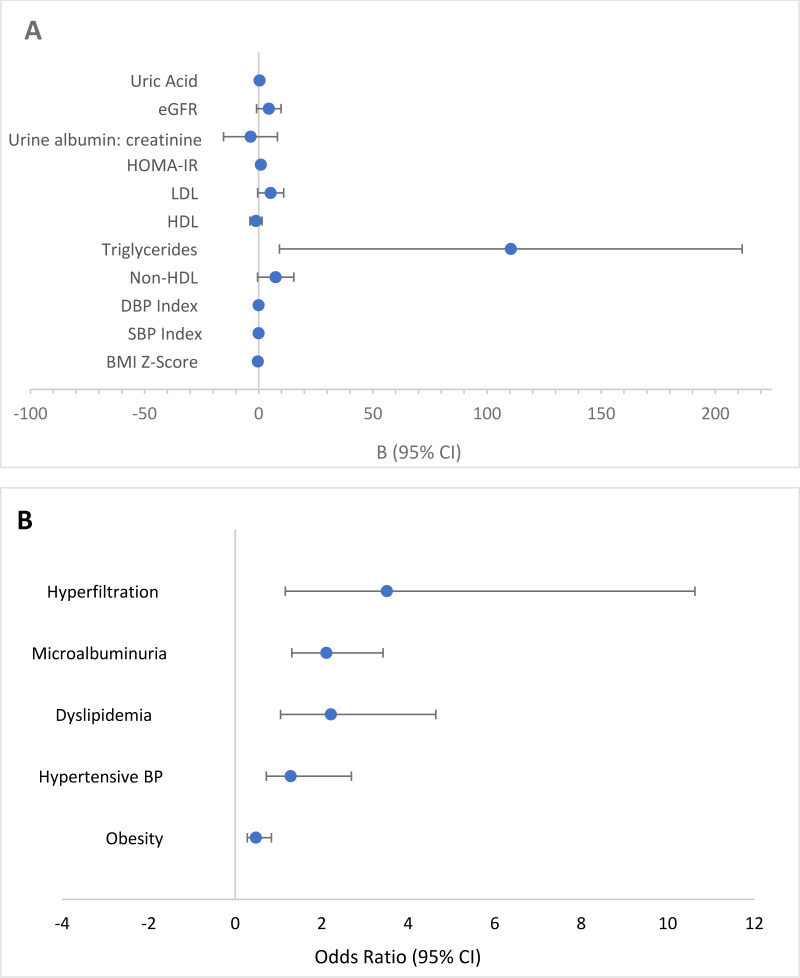
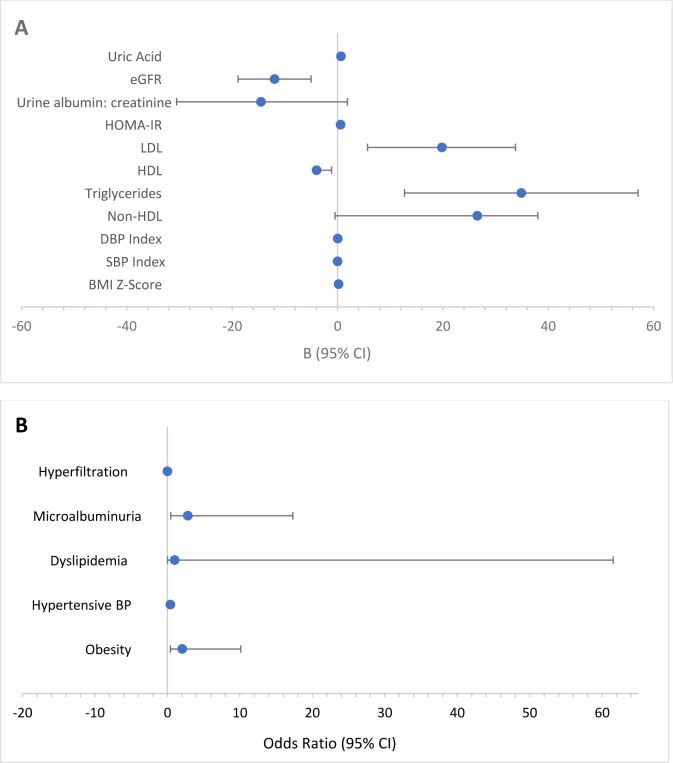
Among 3369 children, 8.4% identified as Asian American (age 11.7 years) and 91.6% identified as NHW (age 11.7 years). Compared to NHW children, Asian American children had significantly lower BMI z-scores and odds of obesity. Asian American children had higher HOMA-IR and uric acid, and greater odds of dyslipidemia, microalbuminuria and glomerular hyperfiltration compared to NHW children. Among Asian Americans, 30.5% were foreign-born. Compared to foreign-born Asian American children, US-born Asian American children had significantly higher non-HDL, triglycerides, HOMA-IR and uric acid, lower HDL, and lower odds of hyperfiltration. There were no differences in blood pressure by racial group or place of birth.
Although Asian American children have lower odds of obesity, they have significantly worse glucose intolerance, higher serum uric acid levels, more dyslipidemia and more microalbuminuria compared to NHW children. US-born Asian American children have worse cardiometabolic health profiles compared to foreign-born Asian Americans.
目的是比较亚裔美国儿童与非西班牙裔白人(NHW)儿童之间的心脏代谢健康状况,并按出生地比较亚裔美国儿童之间的心脏代谢健康状况。
纳入2011年至2018年参加美国国家健康与营养检查调查(NHANES)的6至17岁儿童,这些儿童自我认定为非西班牙裔亚裔和NHW。在亚裔美国人中,出生地定义为外国出生与美国出生。回归模型针对年龄、性别、家庭收入、粮食不安全、被动吸烟暴露和体重指数(BMI)z评分进行了调整。
在3369名儿童中,8.4%被认定为亚裔美国儿童(年龄11.7岁),91.6%被认定为NHW儿童(年龄11.7岁)。与NHW儿童相比,亚裔美国儿童的BMI z评分和肥胖几率显著更低。与NHW儿童相比,亚裔美国儿童的HOMA-IR和尿酸更高,血脂异常、微量白蛋白尿和肾小球高滤过的几率更大。在亚裔美国人中,30.5%是外国出生。与外国出生的亚裔美国儿童相比,美国出生的亚裔美国儿童的非高密度脂蛋白、甘油三酯、HOMA-IR和尿酸显著更高,高密度脂蛋白更低,高滤过几率更低。种族组或出生地在血压方面没有差异。
尽管亚裔美国儿童肥胖几率较低,但与NHW儿童相比,他们的葡萄糖耐量明显更差,血清尿酸水平更高,血脂异常和微量白蛋白尿更多。与外国出生的亚裔美国人相比,美国出生的亚裔美国儿童的心脏代谢健康状况更差。