Zhang Guanghai, Zhao Lu, Li Wei, Yao Heng, Lu Canhua, Zhao Gaokun, Wu Yuping, Li Yongping, Kong Guanghui
Yunnan Academy of Tobacco Agricultural Sciences, Kunming, Yunnan, 650021, China.
AMB Express. 2023 Nov 22;13(1):132. doi: 10.1186/s13568-023-01642-8.
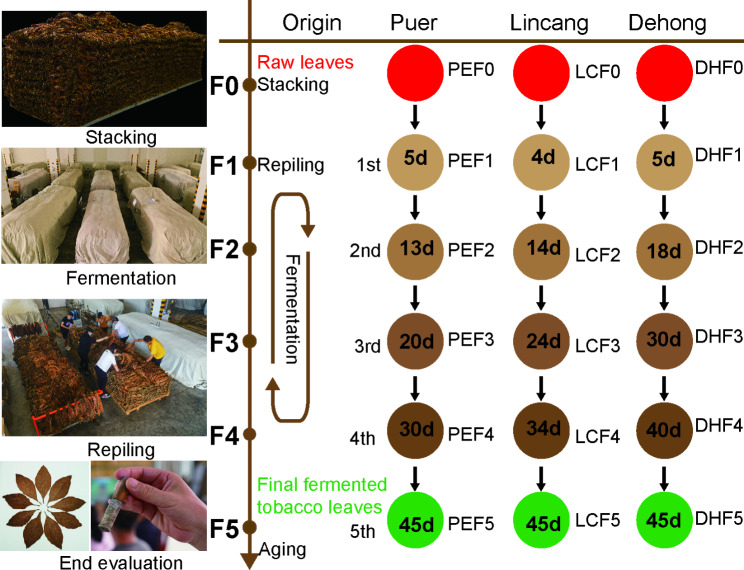
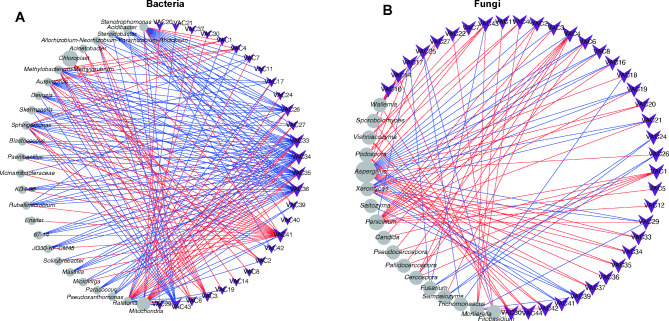
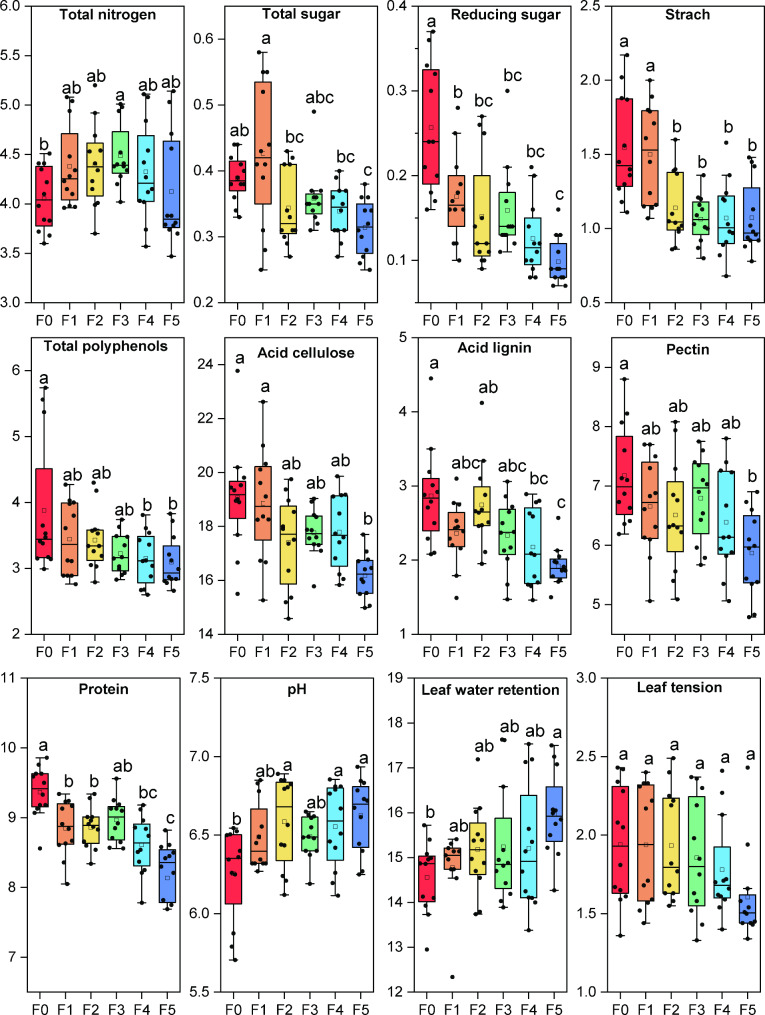
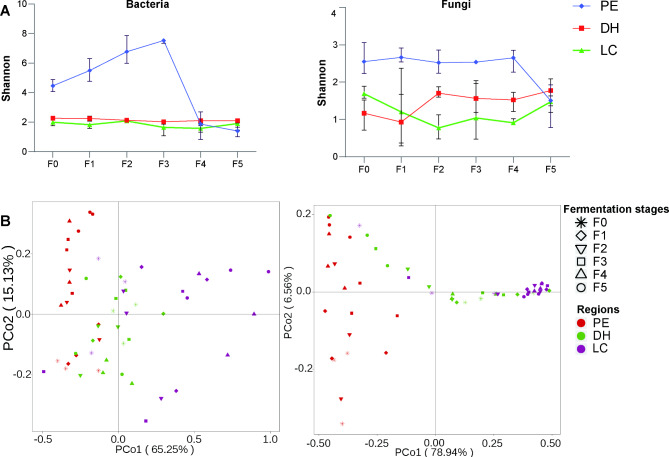
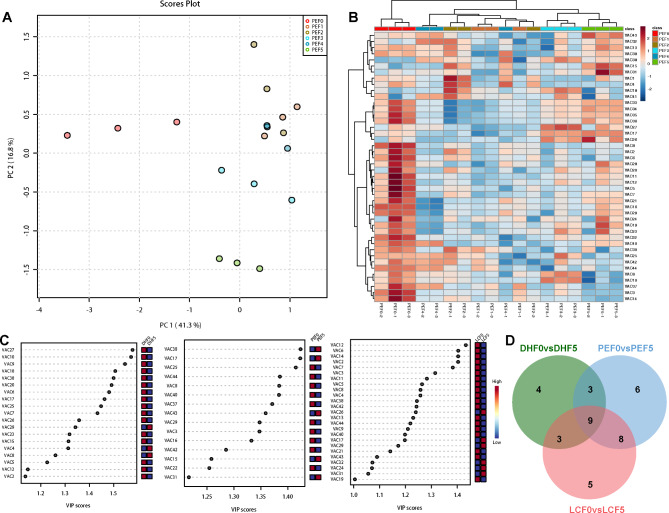
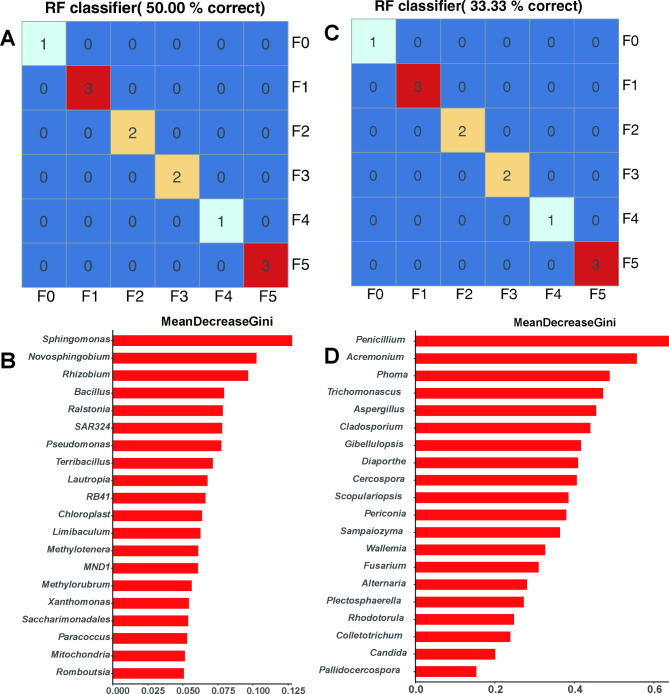
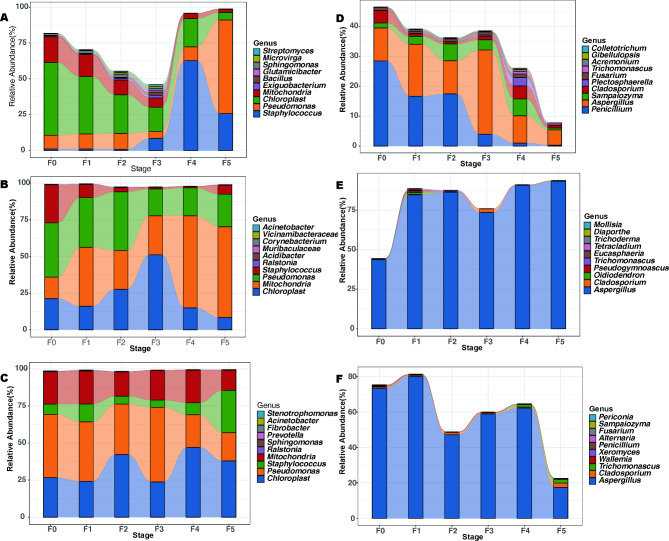
Leaf stacking fermentation involves enzymatic actions of many microorganisms and is an efficient and environmentally benign process for degrading macromolecular organic compounds. We investigated the dynamics of metabolite profiles, bacterial and fungal communities and their interactions during fermentation using cigar leaves from three geographic regions. The results showed that the contents of total sugar, reducing sugar, starch, cellulose, lignin, pectin, polyphenol and protein in cigar tobacco leaves was significantly decreased during fermentation. Notably, the furfural, neophytadiene, pyridine, benzyl alcohol, geranylacetone, 3-hydroxy-2-butanone, N-hexanal, 3-Methyl-1-butanol and 2,3-pentanedione were important features volatile aroma compounds during fermentation. The α-diversity of fungi and bacteria initially increased and then decreased during fermentation. An analysis of variance showed that microbial diversity was influenced by fermentation stages and growing locations, in which the all stages had greater impacts on α- and β-diversity than all regions. Microbiome profiling had identified several core bacteria including Sphingomonas, Bacillus, Staphylococcus, Pseudomonas, Ralstonia, Massilia and Fibrobacter. Fungal biomarkers included Aspergillus, Penicillium, Fusarium, Cladosporium and Trichomonascus. Interestingly, the molecular ecological networks showed that the core taxa had significant correlations with metabolic enzymes and physicochemical properties; bacteria and fungi jointly participated in the carbohydrate and nitrogen compound degrading and volatile aroma compound chemosynthesis processes during fermentation. These studies provide insights into the coupling of material conversion and microbial community succession during leaf fermentation.
烟叶堆积发酵涉及多种微生物的酶促作用,是一种降解大分子有机化合物的高效且环境友好的过程。我们使用来自三个地理区域的雪茄烟叶,研究了发酵过程中代谢物谱、细菌和真菌群落及其相互作用的动态变化。结果表明,雪茄烟叶在发酵过程中总糖、还原糖、淀粉、纤维素、木质素、果胶、多酚和蛋白质的含量显著降低。值得注意的是,糠醛、新植二烯、吡啶、苯甲醇、香叶基丙酮、3-羟基-2-丁酮、正己醛、3-甲基-1-丁醇和2,3-戊二酮是发酵过程中重要的挥发性香气特征化合物。发酵过程中真菌和细菌的α多样性先增加后降低。方差分析表明,微生物多样性受发酵阶段和种植地点的影响,其中所有阶段对α多样性和β多样性的影响均大于所有区域。微生物群落分析确定了几种核心细菌,包括鞘氨醇单胞菌属、芽孢杆菌属、葡萄球菌属、假单胞菌属、罗尔斯通氏菌属、马赛菌属和纤维杆菌属。真菌生物标志物包括曲霉属、青霉属、镰刀菌属、枝孢菌属和毛滴虫属。有趣的是,分子生态网络表明核心分类群与代谢酶和理化性质具有显著相关性;细菌和真菌在发酵过程中共同参与碳水化合物和含氮化合物的降解以及挥发性香气化合物的化学合成过程。这些研究为烟叶发酵过程中物质转化与微生物群落演替的耦合提供了见解。