Department of Pharmacology & Therapeutics, University of Liverpool, Liverpool, UK.
Department of Pediatrics, Samsung Medical Center, Gangnam-gu, Seoul, Korea (the Republic of).
J Immunother Cancer. 2023 Nov 22;11(11):e007798. doi: 10.1136/jitc-2023-007798.
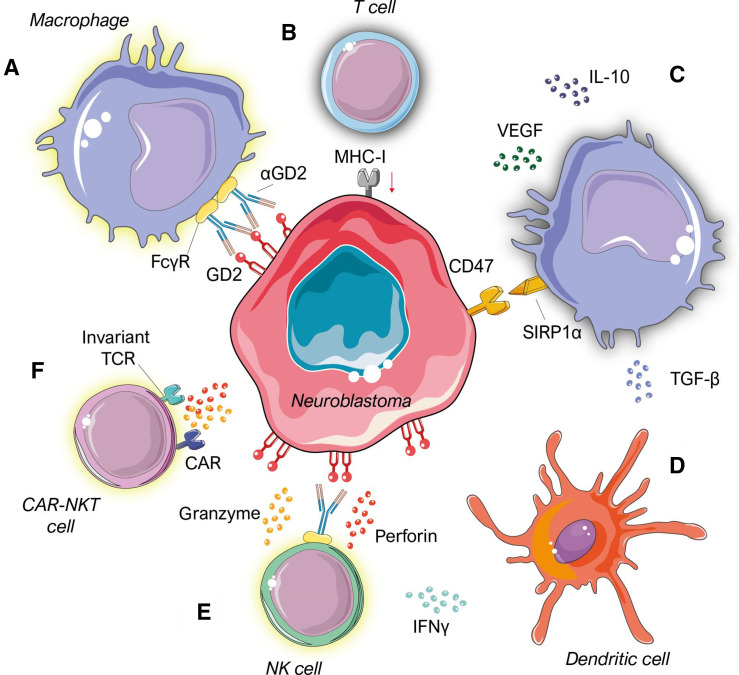
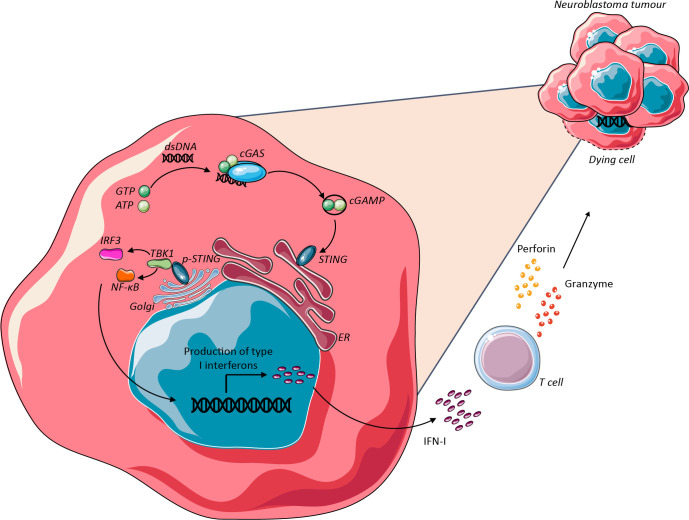
Neuroblastoma is the most frequent extracranial childhood tumour but effective treatment with current immunotherapies is challenging due to its immunosuppressive microenvironment. Efforts to date have focused on using immunotherapy to increase tumour immunogenicity and enhance anticancer immune responses, including anti-GD2 antibodies; immune checkpoint inhibitors; drugs which enhance macrophage and natural killer T (NKT) cell function; modulation of the cyclic GMP-AMP synthase-stimulator of interferon genes pathway; and engineering neuroblastoma-targeting chimeric-antigen receptor-T cells. Some of these strategies have strong preclinical foundation and are being tested clinically, although none have demonstrated notable success in treating paediatric neuroblastoma to date. Recently, approaches to overcome heterogeneity of neuroblastoma tumours and treatment resistance are being explored. These include rational combination strategies with the aim of achieving synergy, such as dual targeting of GD2 and tumour-associated macrophages or natural killer cells; GD2 and the B7-H3 immune checkpoint; GD2 and enhancer of zeste-2 methyltransferase inhibitors. Such combination strategies provide opportunities to overcome primary resistance to and maximize the benefits of immunotherapy in neuroblastoma.
神经母细胞瘤是最常见的儿童颅外肿瘤,但由于其免疫抑制微环境,目前的免疫疗法在治疗上具有挑战性。迄今为止,人们一直致力于利用免疫疗法来提高肿瘤的免疫原性,并增强抗癌免疫反应,包括抗 GD2 抗体;免疫检查点抑制剂;增强巨噬细胞和自然杀伤 T(NKT)细胞功能的药物;调节环鸟苷酸-腺苷酸合酶-干扰素基因刺激物途径;以及工程神经母细胞瘤靶向嵌合抗原受体-T 细胞。其中一些策略具有很强的临床前基础,并正在进行临床测试,但迄今为止,没有一种策略在治疗儿童神经母细胞瘤方面取得显著成功。最近,人们正在探索克服神经母细胞瘤肿瘤异质性和治疗耐药性的方法。这些方法包括旨在实现协同作用的合理联合策略,例如双重靶向 GD2 和肿瘤相关巨噬细胞或自然杀伤细胞;GD2 和 B7-H3 免疫检查点;GD2 和增强子 Zeste-2 甲基转移酶抑制剂。这些联合策略为克服对神经母细胞瘤免疫治疗的原发性耐药并最大限度地提高其疗效提供了机会。