Enterprise for the Conservation of the Zapata Swamp, Ciénaga de Zapata, Matanzas, Cuba.
Department of Integrative Biology, University of Guelph, Guelph, ON, Canada.
Sci Rep. 2023 Nov 22;13(1):20438. doi: 10.1038/s41598-023-47675-8.
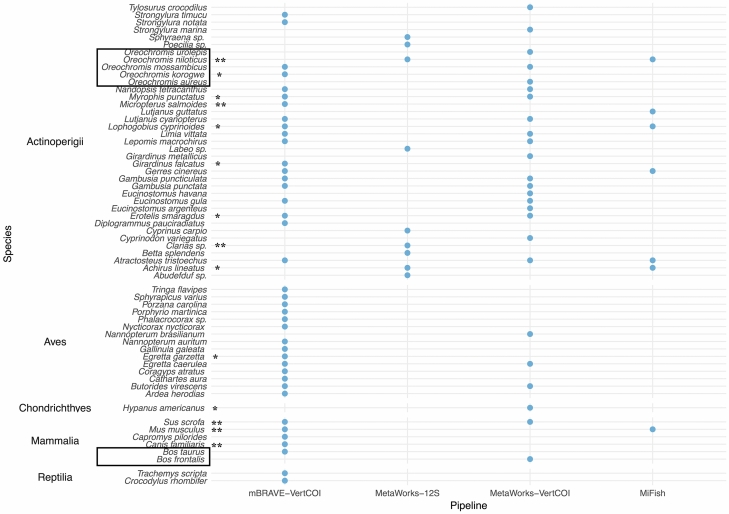
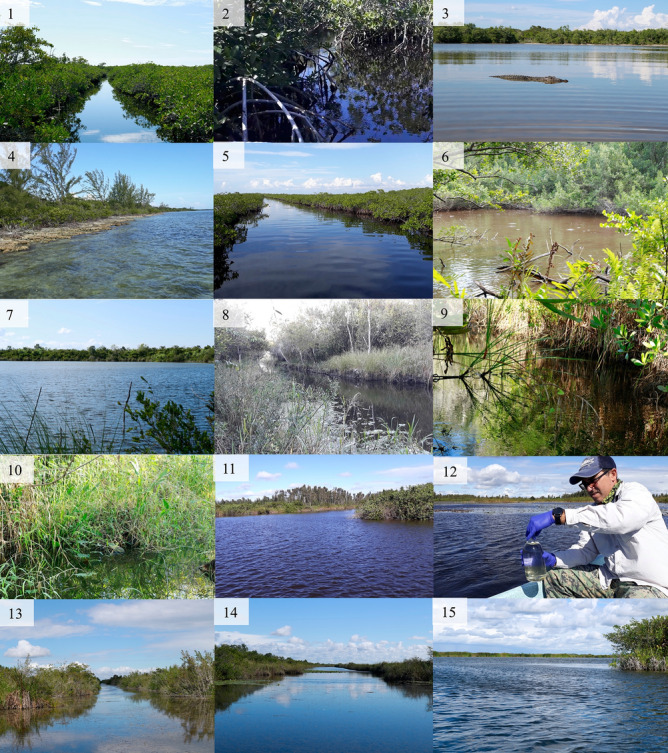
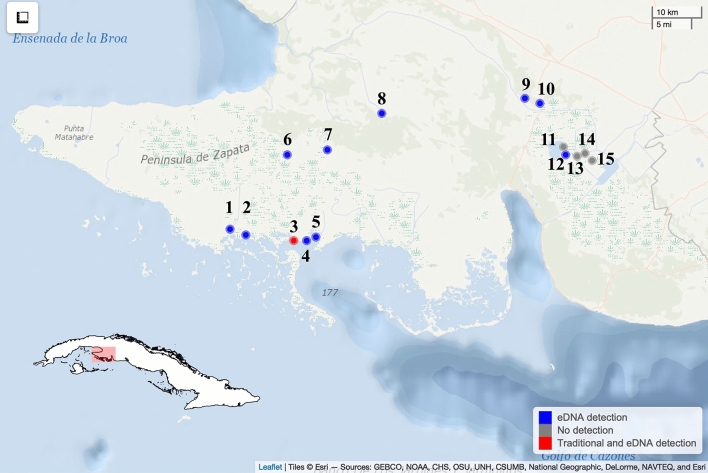
Crocodylians globally face considerable challenges, including population decline and extensive habitat modification. Close monitoring of crocodylian populations and their habitats is imperative for the timely detection of population trends, especially in response to management interventions. Here we use eDNA metabarcoding to identify the Critically Endangered Crocodylus rhombifer and the Vulnerable C. acutus, as well as vertebrate community diversity, in Cuba's Zapata Swamp. We tested four different primer sets, including those used previously in Crocodylus population genetic and phylogenetic research, for their efficiency at detecting crocodylian eDNA. We detected C. rhombifer eDNA in 11 out of 15 sampled locations within its historical geographic distribution. We found that data analyses using the VertCOI primers and the mBRAVE bioinformatics pipeline were the most effective molecular marker and pipeline combination for identifying this species from environmental samples. We also identified 55 vertebrate species in environmental samples across the four bioinformatics pipelines- ~ 85% known to be present in the Zapata ecosystem. Among them were eight species previously undetected in the area and eight alien species, including known predators of hatchling crocodiles (e.g., Clarias sp.) and egg predators (e.g., Mus musculus). This study highlights eDNA metabarcoding as a powerful tool for crocodylian biomonitoring within fragile and diverse ecosystems, particularly where fast, non-invasive methods permit detection in economically important areas and will lead to a better understanding of complex human-crocodile interactions and evaluate habitat suitability for potential reintroductions or recovery programs for threatened crocodylian species.
全球范围内的鳄类面临着巨大的挑战,包括种群减少和栖息地的广泛改变。密切监测鳄类种群及其栖息地对于及时发现种群趋势至关重要,特别是在应对管理干预时。在这里,我们使用 eDNA 代谢组学来识别极度濒危的湾鳄和易危的扬子鳄,以及古巴萨帕塔沼泽的脊椎动物群落多样性。我们测试了四个不同的引物组,包括以前在鳄类种群遗传和系统发育研究中使用的引物组,以评估它们检测鳄类 eDNA 的效率。我们在湾鳄历史地理分布范围内的 15 个采样点中的 11 个点检测到了湾鳄的 eDNA。我们发现,使用 VertCOI 引物和 mBRAVE 生物信息学管道进行数据分析是从环境样本中识别该物种的最有效分子标记和管道组合。我们还在四个生物信息学管道的环境样本中鉴定出了 55 种脊椎动物物种——~85%已知存在于萨帕塔生态系统中。其中包括该地区以前未检测到的 8 个物种和 8 个外来物种,包括已知的幼鳄捕食者(如 Clarias sp.)和卵捕食者(如 Mus musculus)。本研究强调了 eDNA 代谢组学作为脆弱和多样化生态系统中鳄类生物监测的有力工具,特别是在快速、非侵入性方法允许在经济重要地区进行检测的情况下,它将有助于更好地了解复杂的人类与鳄类的相互作用,并评估潜在的受威胁鳄类物种重新引入或恢复计划的栖息地适宜性。