Institute of Ecology and Evolution, School of Biology, University of Edinburgh, Edinburgh, EH9 3FL, UK.
Department of Animal and Aquacultural Sciences, Faculty of Biosciences, Norwegian University of Life Sciences, Post Box 5003, 1433, Ås, Norway.
Sci Rep. 2023 Nov 22;13(1):20481. doi: 10.1038/s41598-023-47208-3.
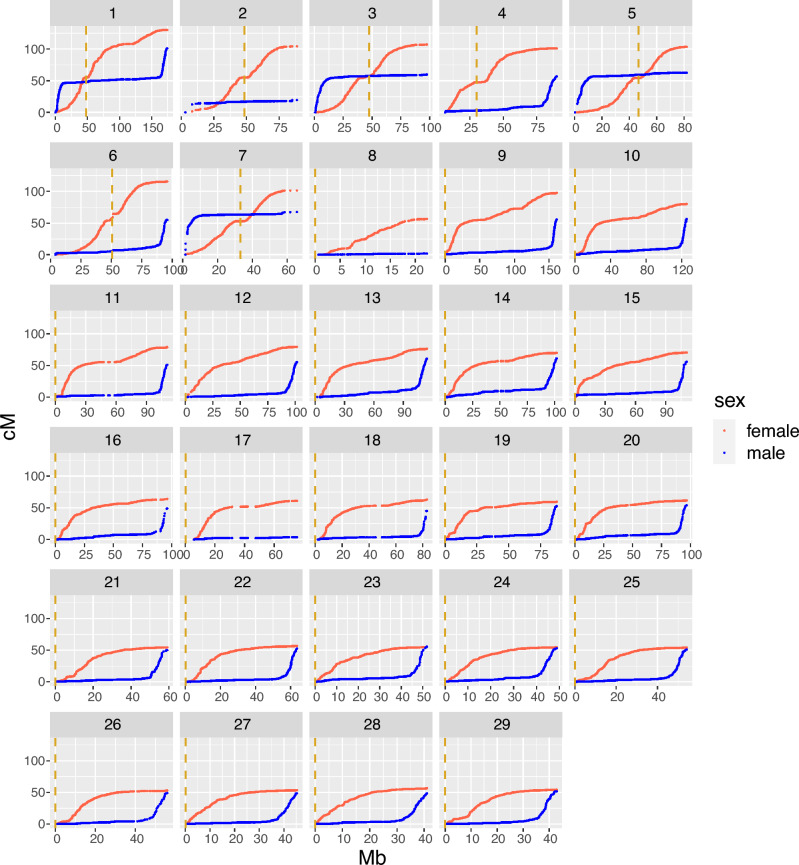
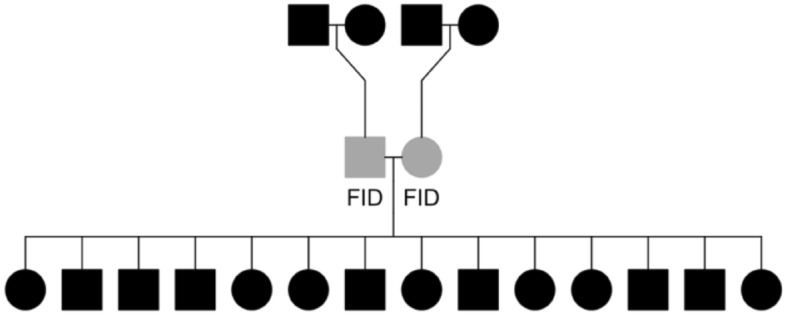
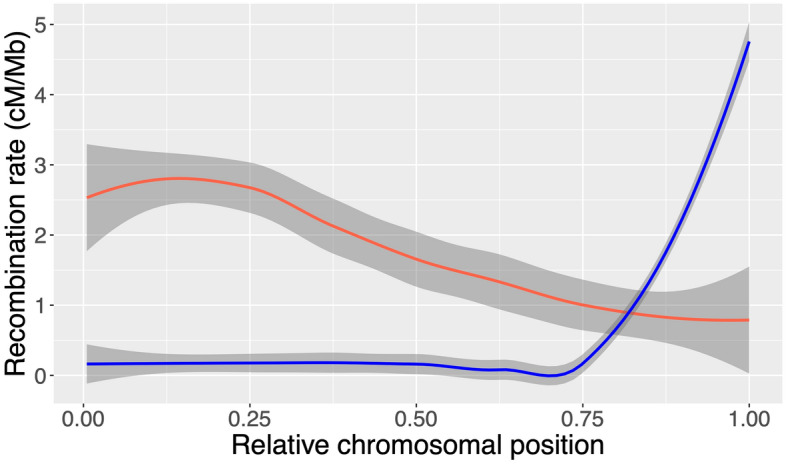
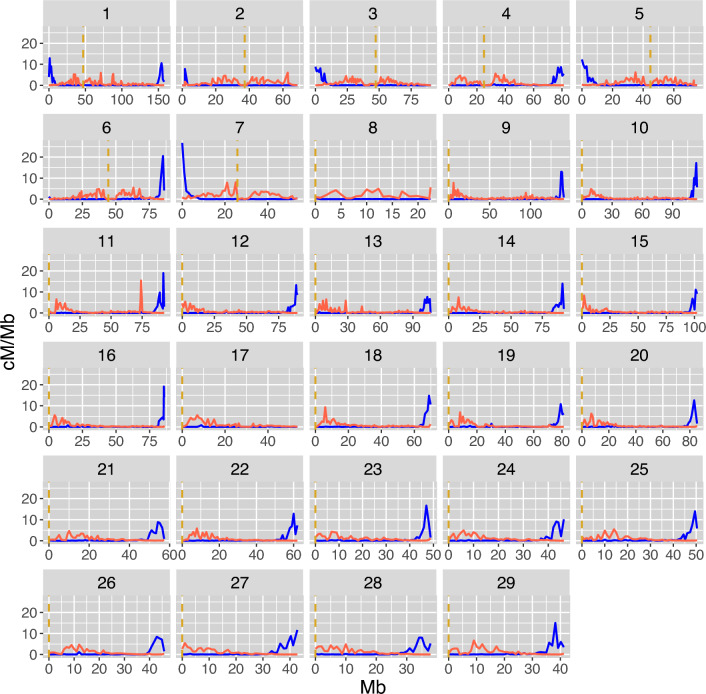
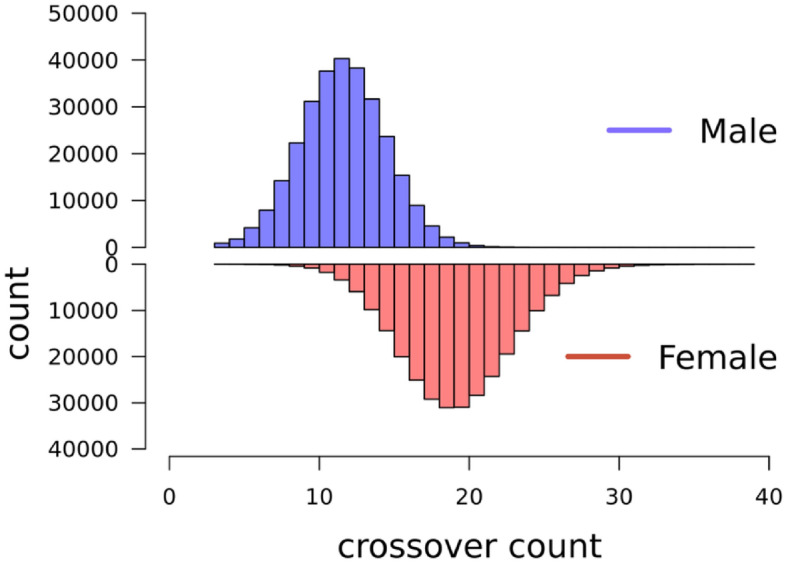
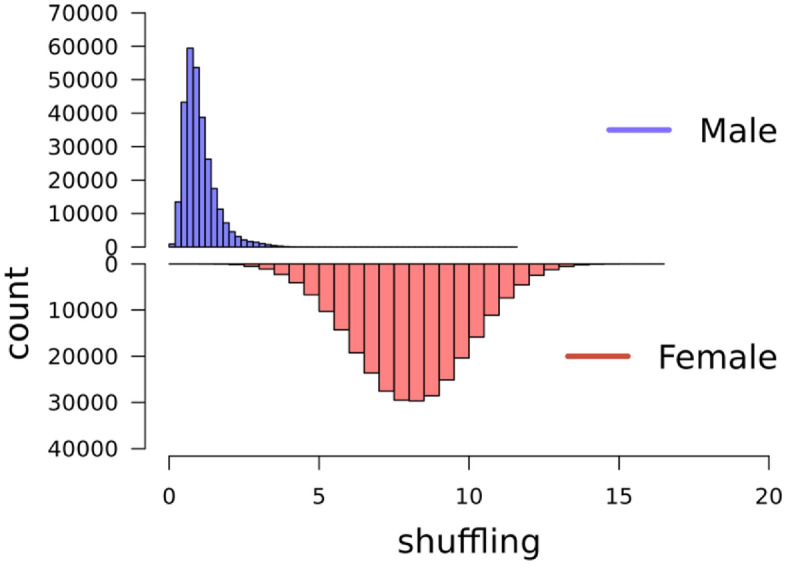
Meiotic recombination through chromosomal crossovers ensures proper segregation of homologous chromosomes during meiosis, while also breaking down linkage disequilibrium and shuffling alleles at loci located on the same chromosome. Rates of recombination can vary between species, but also between and within individuals, sex and chromosomes within species. Indeed, the Atlantic salmon genome is known to have clear sex differences in recombination with female biased heterochiasmy and markedly different landscapes of crossovers between males and females. In male meiosis, crossovers occur strictly in the telomeric regions, whereas in female meiosis crossovers tend to occur closer to the centromeres. However, little is known about the genetic control of these patterns and how this differs at the individual level. Here, we investigate genetic variation in individual measures of recombination in > 5000 large full-sib families of a Norwegian Atlantic salmon breeding population with high-density SNP genotypes. We show that females had 1.6 × higher crossover counts (CC) than males, with autosomal linkage maps spanning a total of 2174 cM in females and 1483 cM in males. However, because of the extreme telomeric bias of male crossovers, female recombination is much more important for generation of new haplotypes with 8 × higher intra-chromosomal genetic shuffling than males. CC was heritable in females (h = 0.11) and males (h = 0.10), and shuffling was also heritable in both sex but with a lower heritability in females (h = 0.06) than in males (h = 0.11). Inter-sex genetic correlations for both traits were close to zero, suggesting that rates and distribution of crossovers are genetically distinct traits in males and females, and that there is a potential for independent genetic change in both sexes in the Atlantic Salmon. Together, these findings give novel insights into the genetic architecture of recombination in salmonids and contribute to a better understanding of how rates and distribution of recombination may evolve in eukaryotes more broadly.
减数分裂重组通过染色体交叉确保同源染色体在减数分裂过程中的正确分离,同时打破连锁不平衡并在同一染色体上的基因座处混合等位基因。重组率在物种之间、甚至在个体之间、性别之间和同一物种的染色体之间都有所不同。事实上,大西洋鲑鱼基因组的重组具有明显的性别差异,表现为雌性偏斜异配性和雄性与雌性之间明显不同的交叉景观。在雄性减数分裂中,交叉仅严格发生在端粒区域,而在雌性减数分裂中,交叉倾向于发生在靠近着丝粒的区域。然而,对于这些模式的遗传控制以及个体水平上的差异知之甚少。在这里,我们调查了一个挪威大西洋鲑鱼繁殖群体的超过 5000 个大型全同胞家系中个体重组测量值的遗传变异,这些家系具有高密度 SNP 基因型。我们表明,雌性的交叉计数(CC)比雄性高 1.6 倍,雌性的常染色体连锁图谱总共跨越 2174 cM,而雄性的则跨越 1483 cM。然而,由于雄性交叉的极端端粒偏倚,雌性重组对于产生新的单倍型更为重要,其染色体内部遗传混合比雄性高 8 倍。CC 在雌性(h=0.11)和雄性(h=0.10)中是可遗传的,在两性中 shuffling 也是可遗传的,但在雌性中(h=0.06)比在雄性中(h=0.11)的遗传力低。两个性状的雌雄间遗传相关性接近零,表明交叉的速率和分布是雄性和雌性中遗传上不同的特征,并且大西洋鲑鱼中两性都有独立的遗传变化的潜力。总之,这些发现为鲑鱼科重组的遗传结构提供了新的见解,并有助于更好地理解重组的速率和分布在更广泛的真核生物中可能如何进化。