Emanuel Alan J, Do Michael Tri H
F.M. Kirby Neurobiology Center and Department of Neurology, Boston Children's Hospital and Harvard Medical School. Boston, MA, USA.
Present address: Department of Cell Biology, Emory University School of Medicine, Atlanta, GA, USA.
Front Ophthalmol (Lausanne). 2023;3. doi: 10.3389/fopht.2023.1174255. Epub 2023 Apr 26.
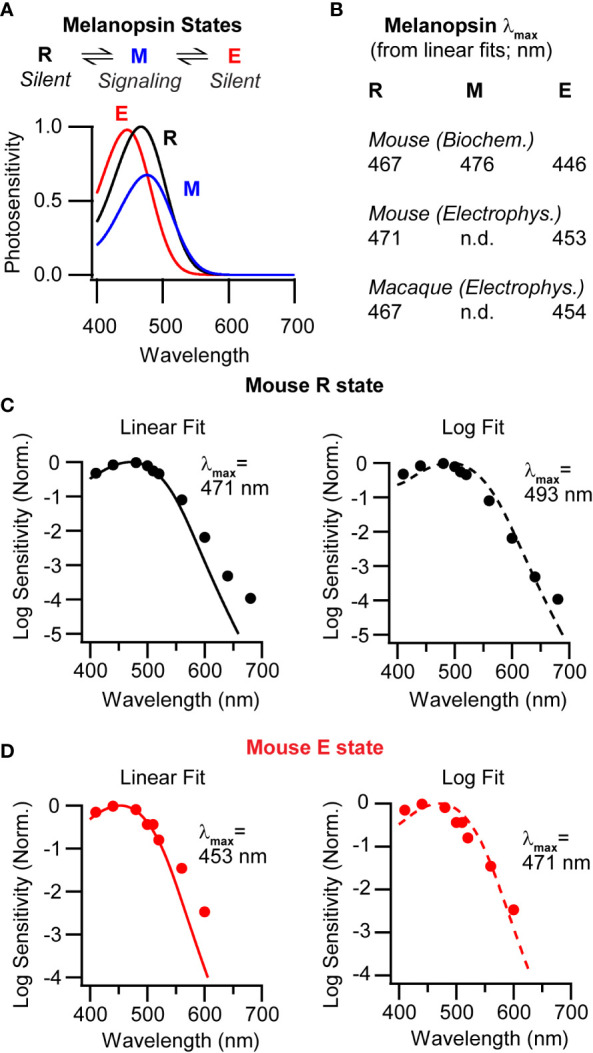
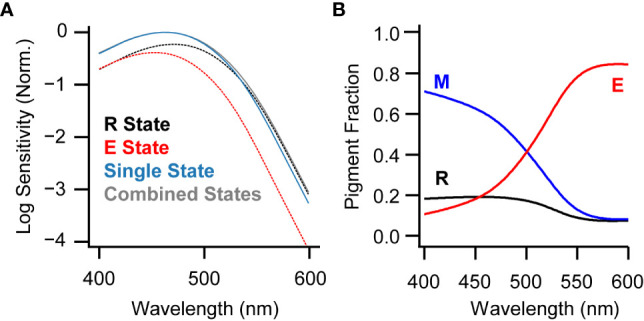
Melanopsin is a light-activated G protein coupled receptor that is expressed widely across phylogeny. In mammals, melanopsin is found in intrinsically photosensitive retinal ganglion cells (ipRGCs), which are especially important for "non-image" visual functions that include the regulation of circadian rhythms, sleep, and mood. Photochemical and electrophysiological experiments have provided evidence that melanopsin has at least two stable conformations and is thus multistable, unlike the monostable photopigments of the classic rod and cone photoreceptors. Estimates of melanopsin's properties vary, challenging efforts to understand how the molecule influences vision. This article seeks to reconcile disparate views of melanopsin and offer a practical guide to melanopsin's complexities.
黑视蛋白是一种光激活的G蛋白偶联受体,在整个系统发育过程中广泛表达。在哺乳动物中,黑视蛋白存在于内在光敏性视网膜神经节细胞(ipRGCs)中,这些细胞对于包括昼夜节律、睡眠和情绪调节在内的“非图像”视觉功能尤为重要。光化学和电生理实验提供了证据,表明黑视蛋白至少有两种稳定构象,因此是多稳态的,这与经典视杆和视锥光感受器的单稳态光色素不同。对黑视蛋白特性的估计各不相同,这给理解该分子如何影响视觉的研究带来了挑战。本文旨在调和对黑视蛋白的不同观点,并为黑视蛋白的复杂性提供实用指南。