Sanchez-Quintana Damian, Cook Andrew C, Macias Yolanda, Spicer Diane E, Anderson Robert H
Department of Human Anatomy and Cell Biology, Faculty of Medicine, University of Extremadura, 06006 Badajoz, Spain.
Institute of Cardiovascular Science, University College London, London WC1E 6BT, UK.
J Cardiovasc Dev Dis. 2023 Nov 19;10(11):471. doi: 10.3390/jcdd10110471.
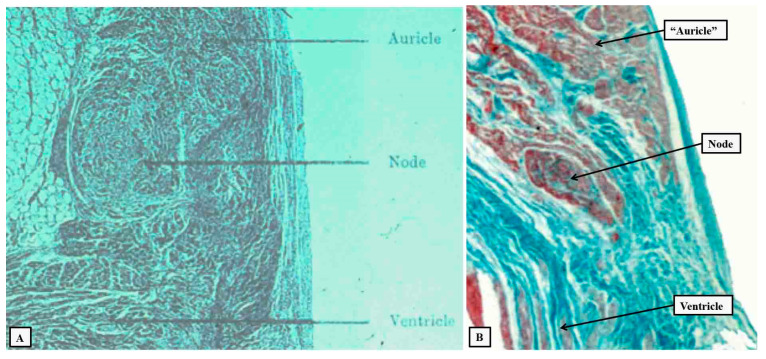
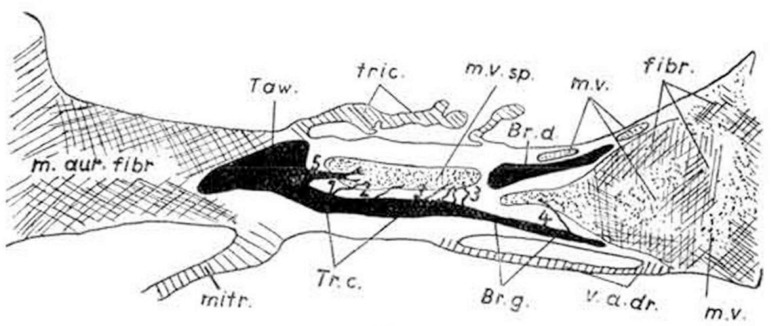
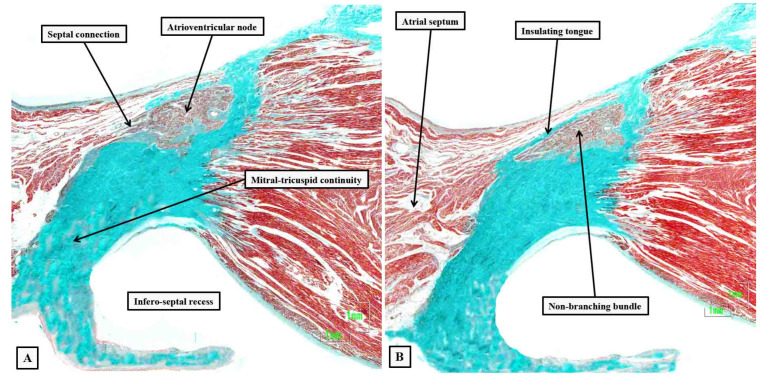
Although first described in the final decade of the 19th century, the axis responsible for atrioventricular conduction has long been the source of multiple controversies. Some of these continue to reverberate. When first described by His, for example, many doubted the existence of the bundle we now name in his honour, while Kent suggested that multiple pathways crossed the atrioventricular junctions in the normal heart. It was Tawara who clarified the situation, although many of his key definitions have not universally been accepted. In key studies in the third decade of the 20th century, Mahaim then suggested the presence of ubiquitous connections that provided "paraspecific" pathways for atrioventricular conduction. In this review, we show the validity of these original investigations, based on our own experience with a large number of datasets from human hearts prepared by serial histological sectioning. Using our own reconstructions, we show how the atrioventricular conduction axis can be placed back within the heart. We emphasise that newly emerging techniques will be key in providing the resolution to map cellular detail to the gross evidence provided by the serial sections.
尽管房室传导轴早在19世纪最后十年就被首次描述,但它长期以来一直是诸多争议的源头。其中一些争议至今仍在回响。例如,当希斯首次描述它时,许多人怀疑我们现在以他的名字命名的束的存在,而肯特则认为在正常心脏中多条路径穿过房室交界区。是塔瓦拉澄清了这种情况,尽管他的许多关键定义并未被普遍接受。在20世纪第三个十年的关键研究中,马海姆随后提出存在普遍存在的连接,这些连接为房室传导提供了“非特异性”路径。在这篇综述中,基于我们对通过连续组织切片制备的大量人类心脏数据集的经验,我们展示了这些原始研究的有效性。通过我们自己的重建,我们展示了房室传导轴如何能被放回心脏内部。我们强调,新出现的技术将是提供分辨率以将细胞细节映射到连续切片提供的大体证据的关键。