University of Montreal Research Centre (CRCHUM), Montreal, QC H2X 0A9, Canada.
Graduate School of Advanced Science and Engineering, Faculty of Science and Engineering, Waseda University, Tokyo 169-8050, Japan.
Curr Oncol. 2023 Oct 24;30(11):9406-9427. doi: 10.3390/curroncol30110681.
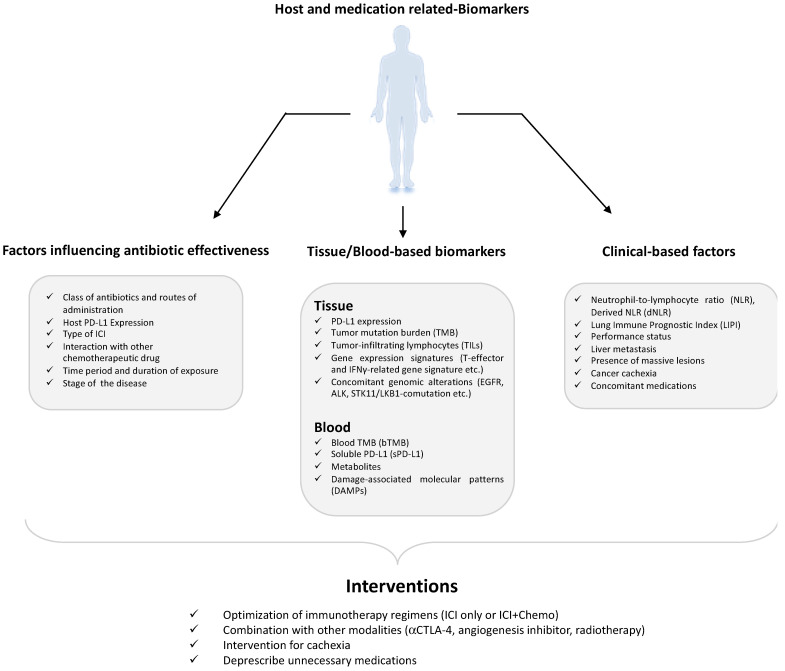
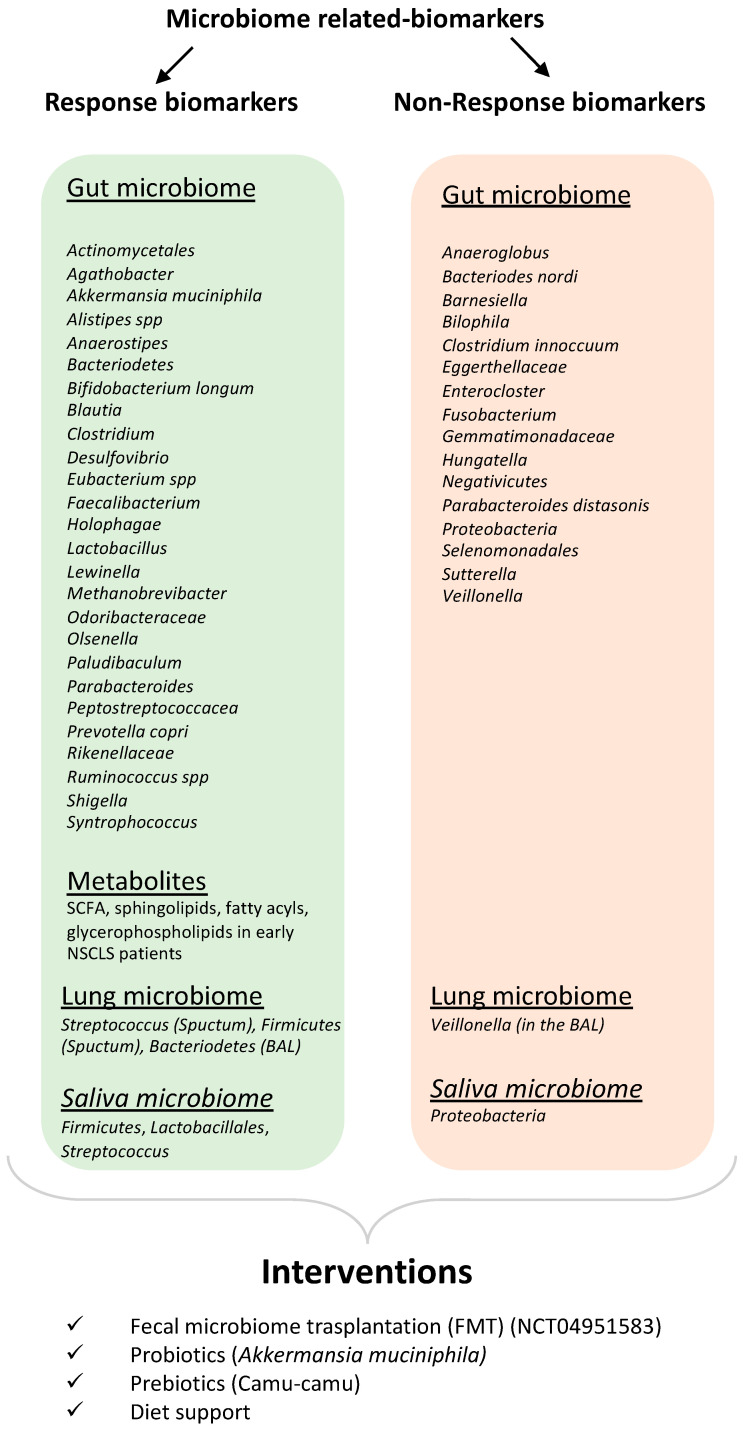
The gastrointestinal microbiome has been shown to play a key role in determining the responses to cancer immunotherapy, including immune checkpoint inhibitor (ICI) therapy and CAR-T. In patients with non-small cell lung cancer (NSCLC), increasing evidence suggests that a microbiome composition signature is associated with clinical response to ICIs as well as with the development of immune-related adverse events. In support of this, antibiotic (ATB)-related dysbiosis has been consistently linked with the deleterious impact of ICI response, shortening the overall survival (OS) among patients on ATBs prior to ICI initiation. In parallel, several preclinical experiments have unravelled various strategies using probiotics, prebiotics, diet, and fecal microbiota transplantation as new therapeutic tools to beneficially shift the microbiome and enhance ICI efficacy. These approaches are currently being evaluated in clinical trials and have achieved encouraging preliminary results. In this article, we reviewed the recent studies on the gut microbiome as a potential biomarker and an adjuvant therapy to ICIs in NSCLC patients.
肠道微生物组已被证明在决定癌症免疫治疗的反应中起着关键作用,包括免疫检查点抑制剂(ICI)治疗和 CAR-T。在非小细胞肺癌(NSCLC)患者中,越来越多的证据表明,微生物组组成特征与对 ICI 的临床反应以及免疫相关不良事件的发展相关。为此,抗生素(ATB)相关的生态失调一直与 ICI 反应的有害影响有关,在开始 ICI 之前使用 ATB 的患者的总生存期(OS)缩短。与此同时,几项临床前实验揭示了使用益生菌、益生元、饮食和粪便微生物群移植作为新的治疗工具来有益地改变微生物组并增强 ICI 疗效的各种策略。这些方法目前正在临床试验中进行评估,并取得了令人鼓舞的初步结果。本文综述了肠道微生物组作为 NSCLC 患者 ICI 的潜在生物标志物和辅助治疗的最新研究。