Zhang Yuzhi, Zhang Shujing, Nie Qingke, Shen Liang, Wang Wei
Key Laboratory of Structural Health Monitoring and Control, Shijiazhuang Tiedao University, 17 North 2nd Ring East Road, Shijiazhuang 050043, China.
School of Safety Engineering and Emergency Management, Shijiazhuang Tiedao University, 17 North 2nd Ring East Road, Shijiazhuang 050043, China.
Materials (Basel). 2023 Nov 16;16(22):7195. doi: 10.3390/ma16227195.
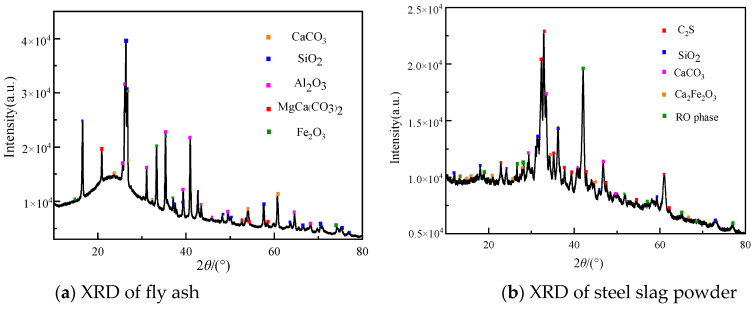
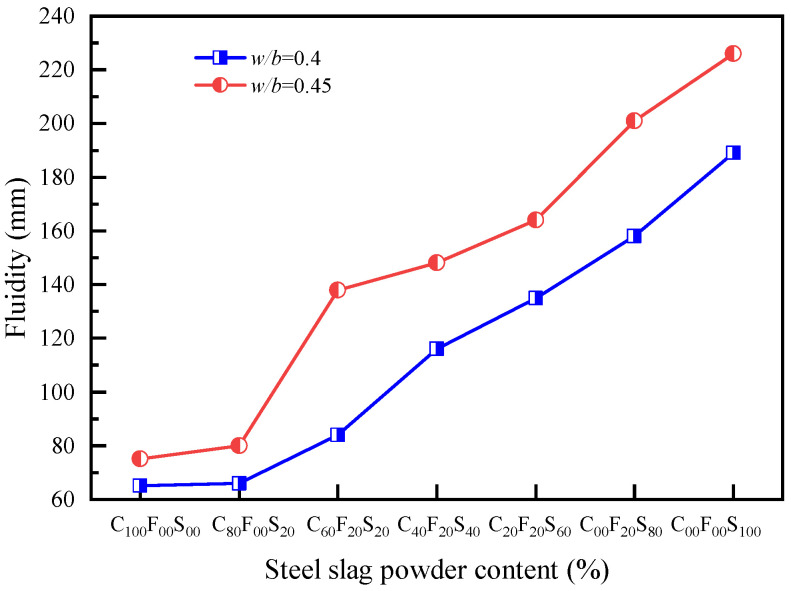
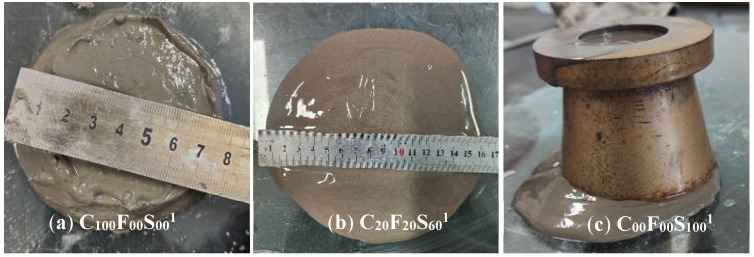
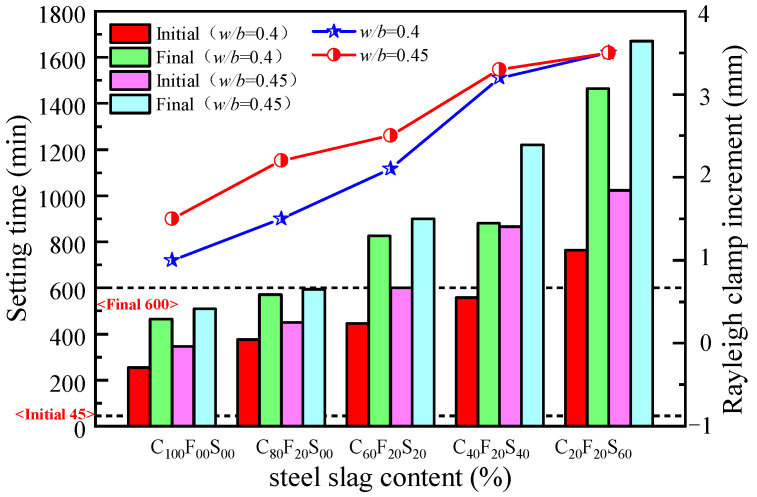
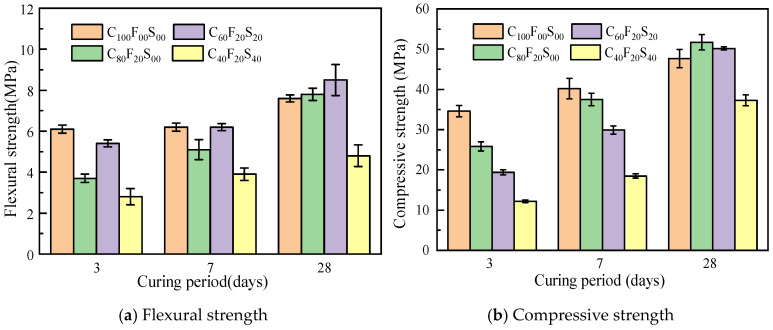
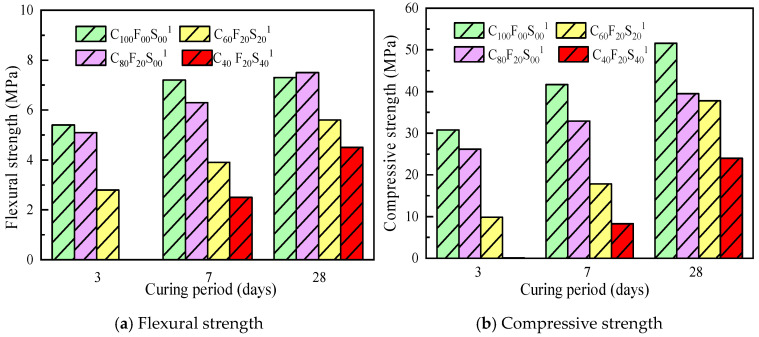
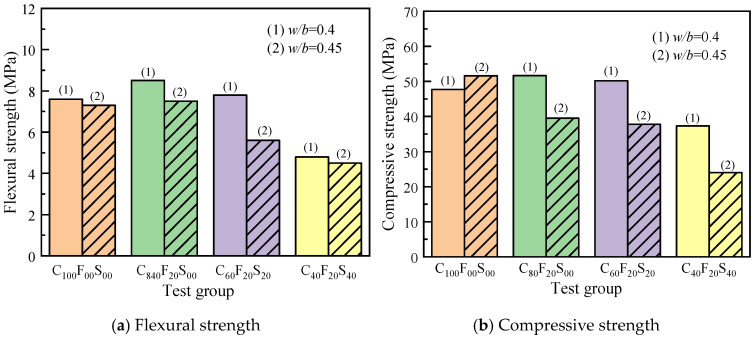
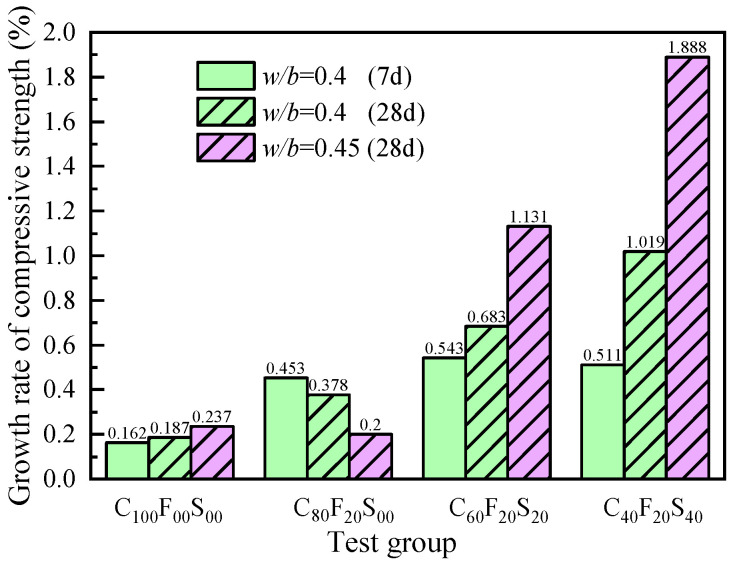
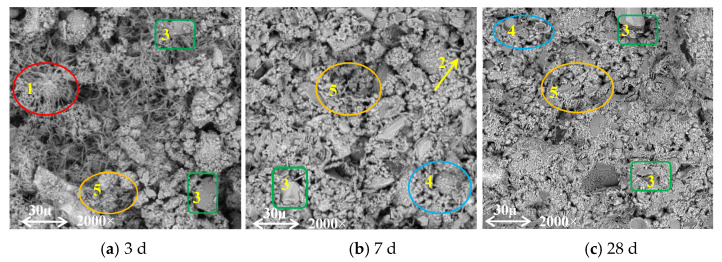
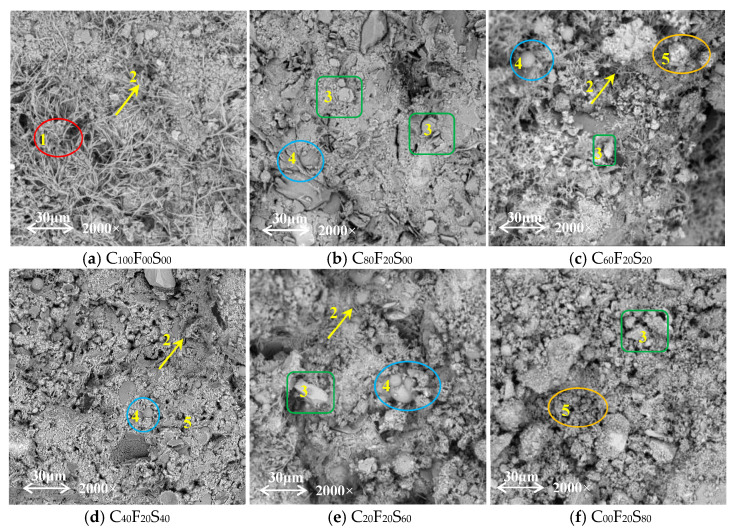
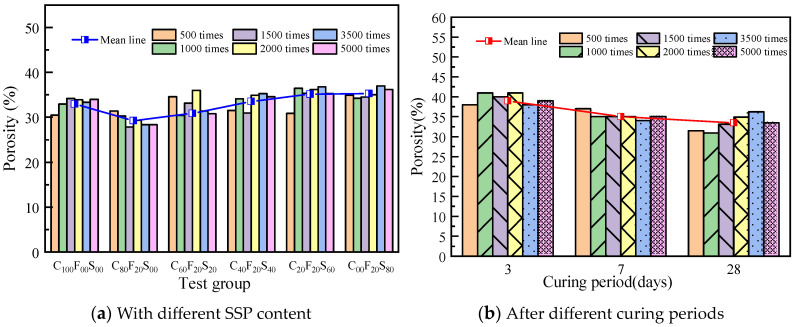
The objective of this study was to reduce the stockpile of steel slag, which is a solid waste generated in the steelmaking process, and promote the resource utilization of steel slag powder (SSP) in construction projects. Experimental research was conducted on SSP and fly ash (FA) as supplementary cementitious materials. Composite cement paste samples were prepared to investigate the effects of the water-to-binder ratio and cement-substitution rate on the macroscopic mechanical properties, including the setting time, fluidity, flexural strength, and compressive strength of the prepared paste. The mineral composition in the raw materials was measured using X-ray diffraction (XRD), and a micro-morphological and structural analysis of the hydrated cementitious material samples was performed using scanning electron microscopy (SEM); the SEM and Image Pro Plus (IPP) image analysis techniques were combined for a quantitative analysis of the microstructure. The results showed that the addition of FA and SSP delayed the hydration of cement, thereby improving the flowability of the composite paste. Under the same curing age and cement substitution rate, the sample strength decreased with increasing water-to-binder ratio. Under the same water-to-binder ratio and curing age, the variations in the flexural and compressive strengths of the SSP group samples were inconsistent in the early and later stages, and the sample group with 20% SSP exhibited optimal mechanical strength in the later stage. The microscopic results showed that the needle-like AFt crystals in the hydrated pores decreased in number with the increase in the SSP content. The hydration products of the FA-SSP admixture, such as C-S-H gel and RO phase, acted as pore fillers in alkaline environments. When the water-to-binder ratio was 0.4 and the FA-to-SSP ratio was 1:1 to replace 40% cement, the performance of the hardened cement paste was the best among all the test groups containing both FA and SSP. This study provides a theoretical basis for the practical application of SSP and FA as cementitious materials in construction-related fields.
本研究的目的是减少炼钢过程中产生的固体废弃物钢渣的堆存量,并促进钢渣粉(SSP)在建筑工程中的资源利用。对作为辅助胶凝材料的钢渣粉和粉煤灰(FA)进行了试验研究。制备了复合水泥浆体样品,以研究水胶比和水泥替代率对宏观力学性能的影响,包括所制备浆体的凝结时间、流动性、抗折强度和抗压强度。使用X射线衍射(XRD)测量原材料中的矿物成分,并使用扫描电子显微镜(SEM)对水化胶凝材料样品进行微观形态和结构分析;将SEM和图像分析软件(IPP)图像分析技术相结合,对微观结构进行定量分析。结果表明,粉煤灰和钢渣粉的加入延缓了水泥的水化,从而提高了复合浆体的流动性。在相同养护龄期和水泥替代率下,样品强度随水胶比的增加而降低。在相同水胶比和养护龄期下,钢渣粉组样品的抗折强度和抗压强度在早期和后期的变化不一致,20%钢渣粉的样品组在后期表现出最佳的力学强度。微观结果表明,随着钢渣粉含量的增加,水化孔隙中的针状AFt晶体数量减少。粉煤灰-钢渣粉掺合料的水化产物,如C-S-H凝胶和RO相,在碱性环境中起到了孔隙填充作用。当水胶比为0.4且粉煤灰与钢渣粉的比例为1:1以替代40%水泥时,在所有同时含有粉煤灰和钢渣粉的试验组中,硬化水泥浆体的性能最佳。本研究为钢渣粉和粉煤灰作为胶凝材料在建筑相关领域的实际应用提供了理论依据。