
用纳米颗粒/STING激动剂组合佐剂配制的甲型猪流感病毒裂解鼻内疫苗在常规猪中的效力表征
Characterization of the Efficacy of a Split Swine Influenza A Virus Nasal Vaccine Formulated with a Nanoparticle/STING Agonist Combination Adjuvant in Conventional Pigs.
作者信息
Patil Veerupaxagouda, Hernandez-Franco Juan F, Yadagiri Ganesh, Bugybayeva Dina, Dolatyabi Sara, Feliciano-Ruiz Ninoshkaly, Schrock Jennifer, Suresh Raksha, Hanson Juliette, Yassine Hadi, HogenEsch Harm, Renukaradhya Gourapura J
机构信息
Center for Food Animal Health, Department of Animal Sciences, The Ohio State University, 1680 Madison Avenue, Wooster, OH 44691, USA.
Department of Comparative Pathobiology, College of Veterinary Medicine, Purdue University, West Lafayette, IN 47907, USA.
出版信息
Vaccines (Basel). 2023 Nov 10;11(11):1707. doi: 10.3390/vaccines11111707.
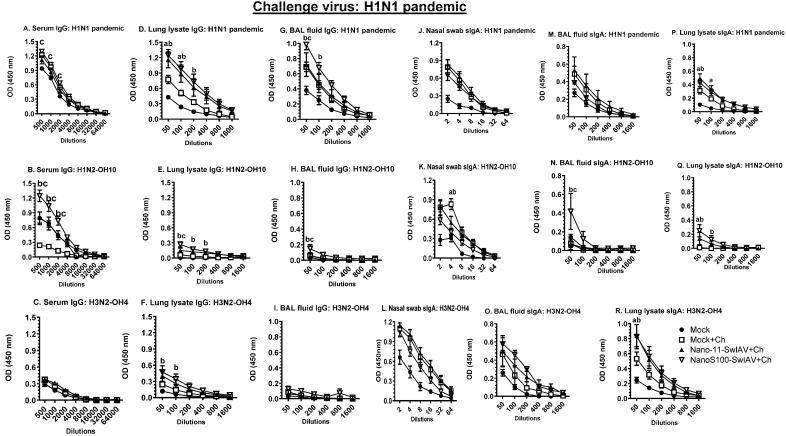
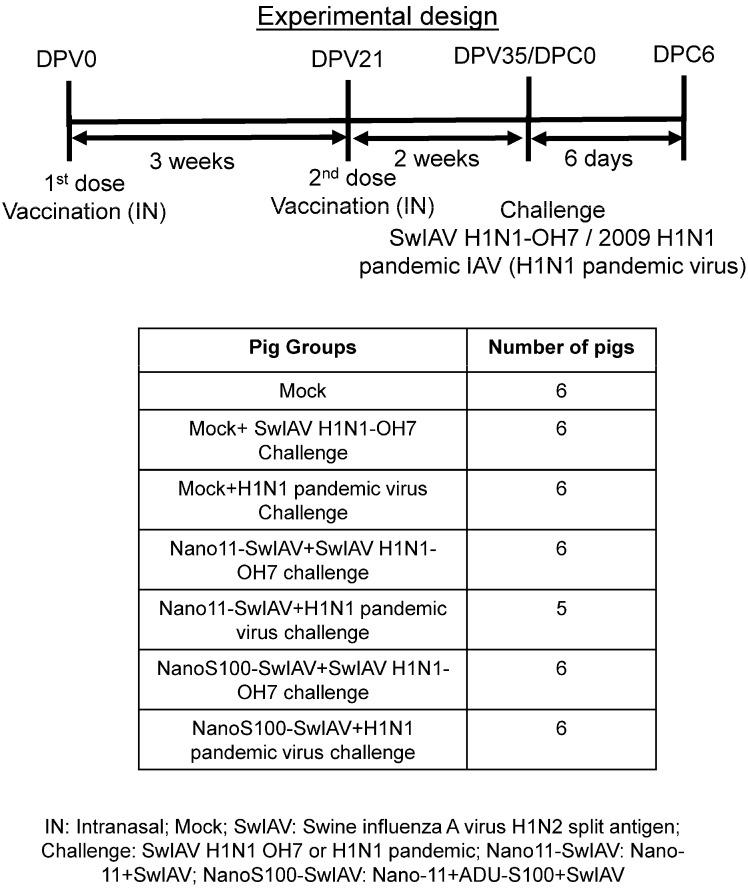
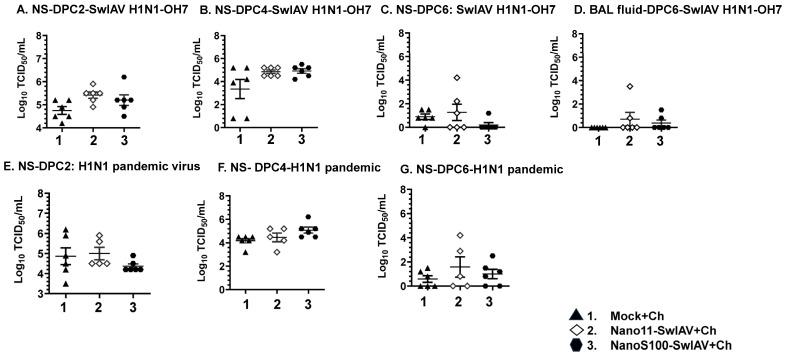
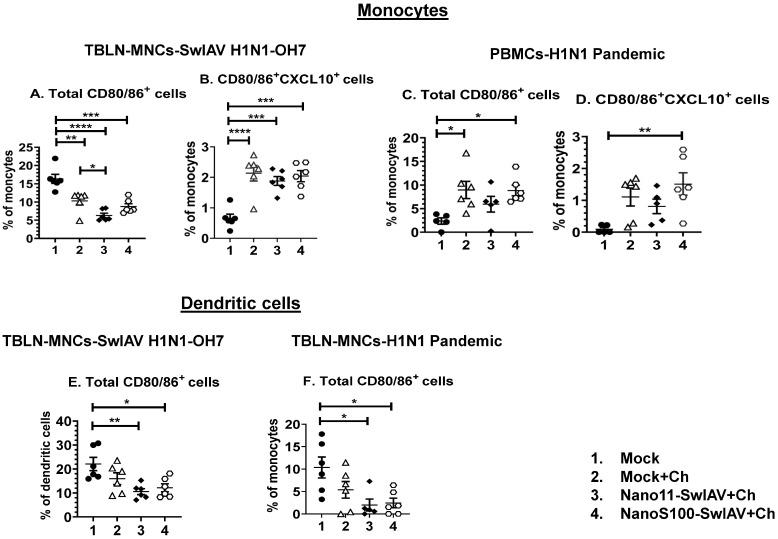
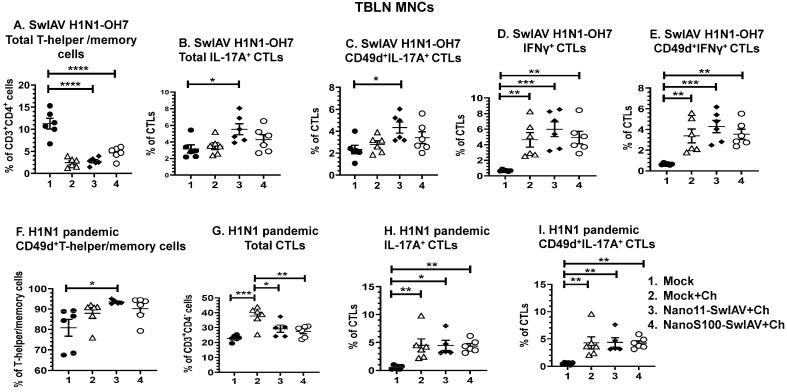
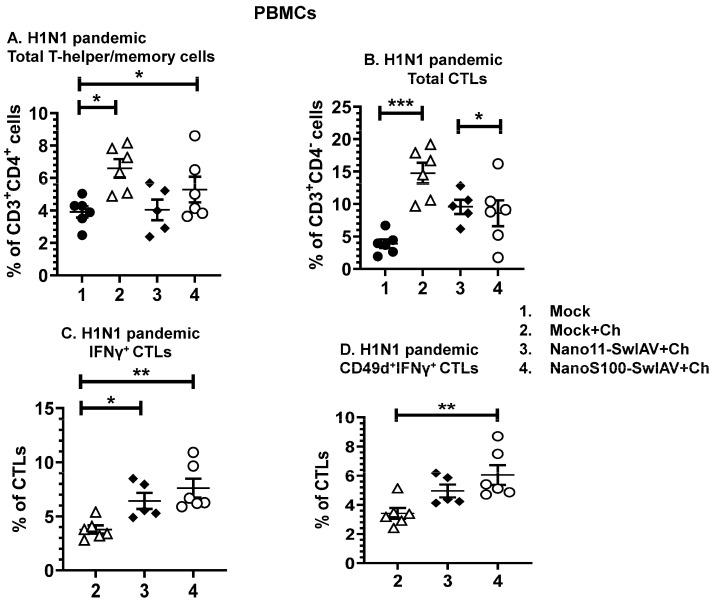
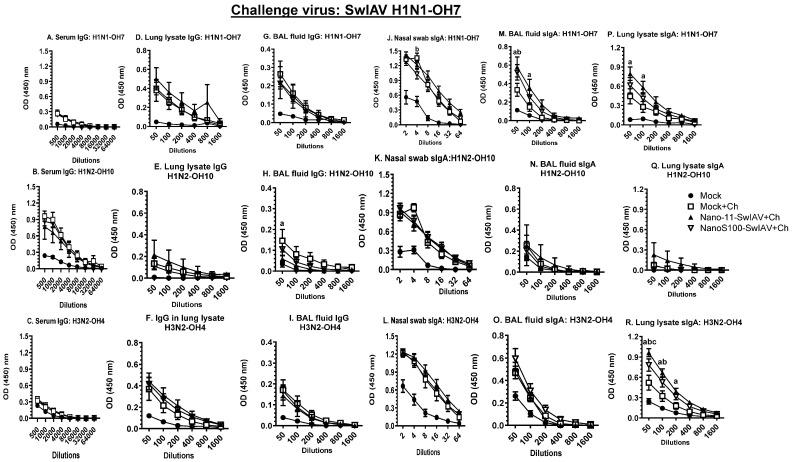
Swine influenza A viruses (SwIAVs) are pathogens of both veterinary and medical significance. Intranasal (IN) vaccination has the potential to reduce flu infection. We investigated the efficacy of split SwIAV H1N2 antigens adsorbed with a plant origin nanoparticle adjuvant [Nano11-SwIAV] or in combination with a STING agonist ADU-S100 [NanoS100-SwIAV]. Conventional pigs were vaccinated via IN and challenged with a heterologous SwIAV H1N1-OH7 or 2009 H1N1 pandemic virus. Immunologically, in NanoS100-SwIAV vaccinates, we observed enhanced frequencies of activated monocytes in the blood of the pandemic virus challenged animals and in tracheobronchial lymph nodes (TBLN) of H1N1-OH7 challenged animals. In both groups of the virus challenged pigs, increased frequencies of IL-17A and CD49dIL-17A cytotoxic lymphocytes were observed in Nano11-SwIAV vaccinates in the draining TBLN. Enhanced frequency of CD49dIFNγ CTLs in the TBLN and blood of both the Nano11-based SwIAV vaccinates was observed. Animals vaccinated with both Nano11-based vaccines had upregulated cross-reactive secretory IgA in the lungs and serum IgG against heterologous and heterosubtypic viruses. However, in NanoS100-SwIAV vaccinates, a slight early reduction in the H1N1 pandemic virus and a late reduction in the SwIAV H1N1-OH7 load in the nasal passages were detected. Hence, despite vast genetic differences between the vaccine and both the challenge viruses, IN vaccination with NanoS100-SwIAV induced antigen-specific moderate levels of cross-protective immune responses.
甲型猪流感病毒(SwIAVs)是具有兽医和医学重要性的病原体。鼻内(IN)接种疫苗有降低流感感染的潜力。我们研究了用植物源纳米颗粒佐剂吸附的裂解型SwIAV H1N2抗原[Nano11-SwIAV]或与STING激动剂ADU-S100联合使用[NanoS100-SwIAV]的效果。常规猪通过鼻内接种疫苗,并用异源SwIAV H1N1-OH7或2009 H1N1大流行病毒进行攻毒。在免疫方面,在接种NanoS100-SwIAV的猪中,我们观察到在感染大流行病毒的动物血液以及感染H1N1-OH7的动物气管支气管淋巴结(TBLN)中,活化单核细胞的频率增加。在两组受病毒攻击的猪中,在引流TBLN中接种Nano11-SwIAV的猪中观察到IL-17A和CD49dIL-17A细胞毒性淋巴细胞的频率增加。在基于Nano11的SwIAV疫苗接种猪的TBLN和血液中均观察到CD49dIFNγ CTL频率增加。接种两种基于Nano11的疫苗的动物肺部交叉反应性分泌型IgA和血清中针对异源和异亚型病毒的IgG均上调。然而,在接种NanoS100-SwIAV的猪中,检测到鼻道中H1N1大流行病毒的早期轻微减少以及SwIAV H1N1-OH7载量的后期减少。因此,尽管疫苗与两种攻毒病毒之间存在巨大的基因差异,但鼻内接种NanoS100-SwIAV可诱导抗原特异性中等水平的交叉保护性免疫反应。
 Zotero 插件