
与鼻内和肌肉内免疫相比,用靶向STING的纳米颗粒组合佐剂进行皮内流感疫苗接种可在猪体内诱导出更强的交叉保护性体液免疫。
Intradermal Vaccination against Influenza with a STING-Targeted Nanoparticle Combination Adjuvant Induces Superior Cross-Protective Humoral Immunity in Swine Compared with Intranasal and Intramuscular Immunization.
作者信息
Hernandez-Franco Juan F, Yadagiri Ganesh, Patil Veerupaxagouda, Bugybayeva Dina, Dolatyabi Sara, Dumkliang Ekachai, Singh Mithilesh, Suresh Raksha, Akter Fatema, Schrock Jennifer, Renukaradhya Gourapura J, HogenEsch Harm
机构信息
Department of Comparative Pathobiology, College of Veterinary Medicine, Purdue University, West Lafayette, IN 47907, USA.
Center for Food Animal Health, Department of Animal Sciences, The Ohio State University, Wooster, OH 44691, USA.
出版信息
Vaccines (Basel). 2023 Nov 7;11(11):1699. doi: 10.3390/vaccines11111699.
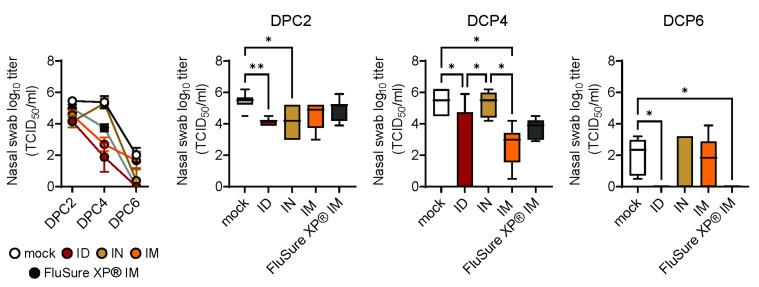
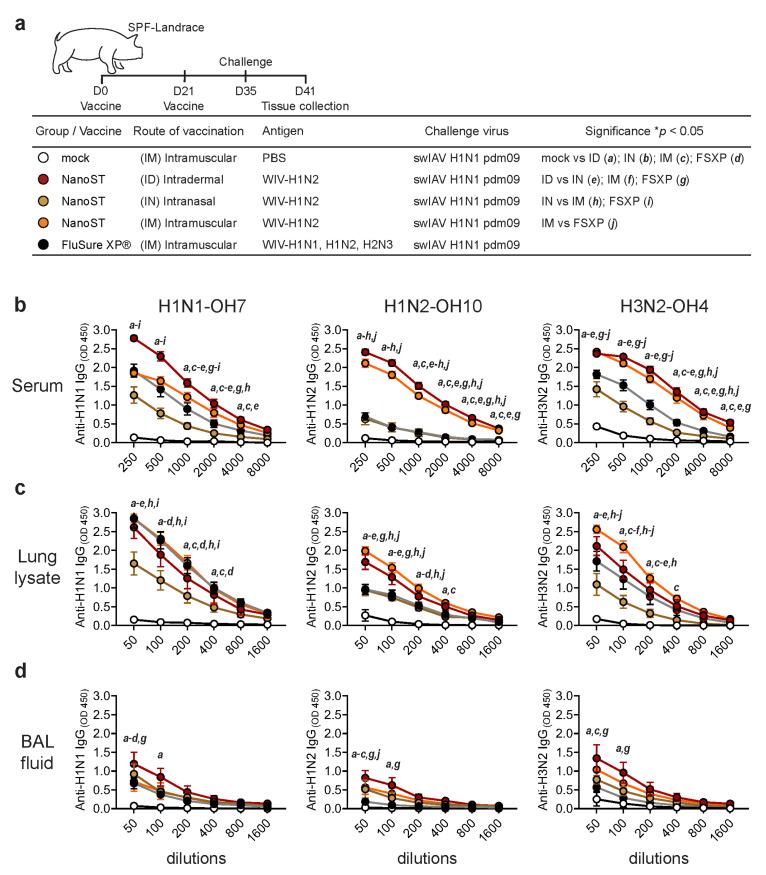
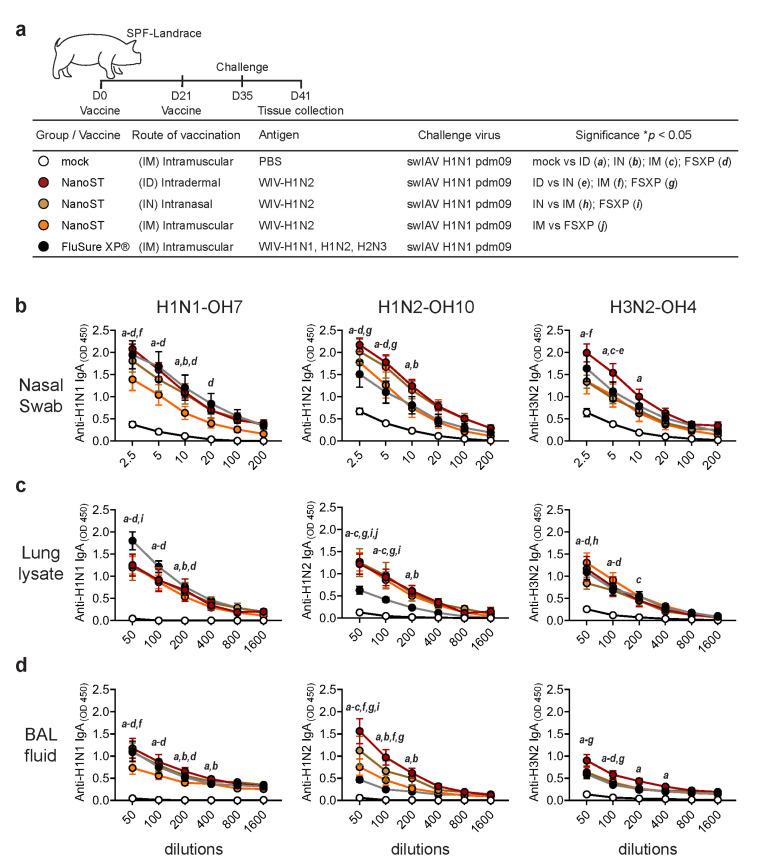
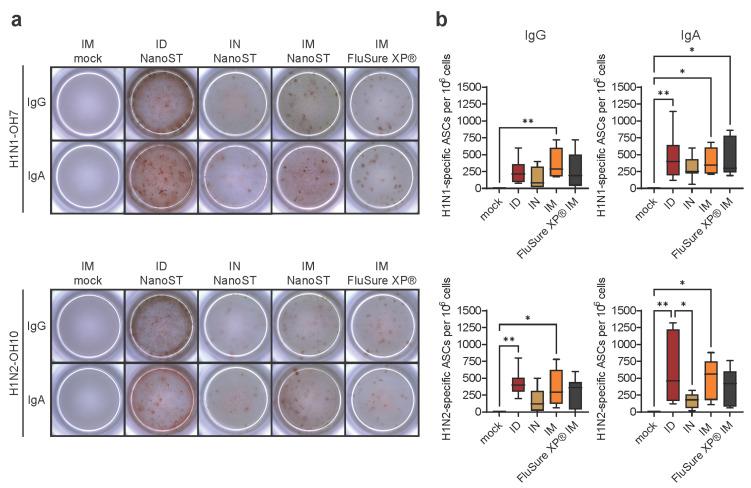
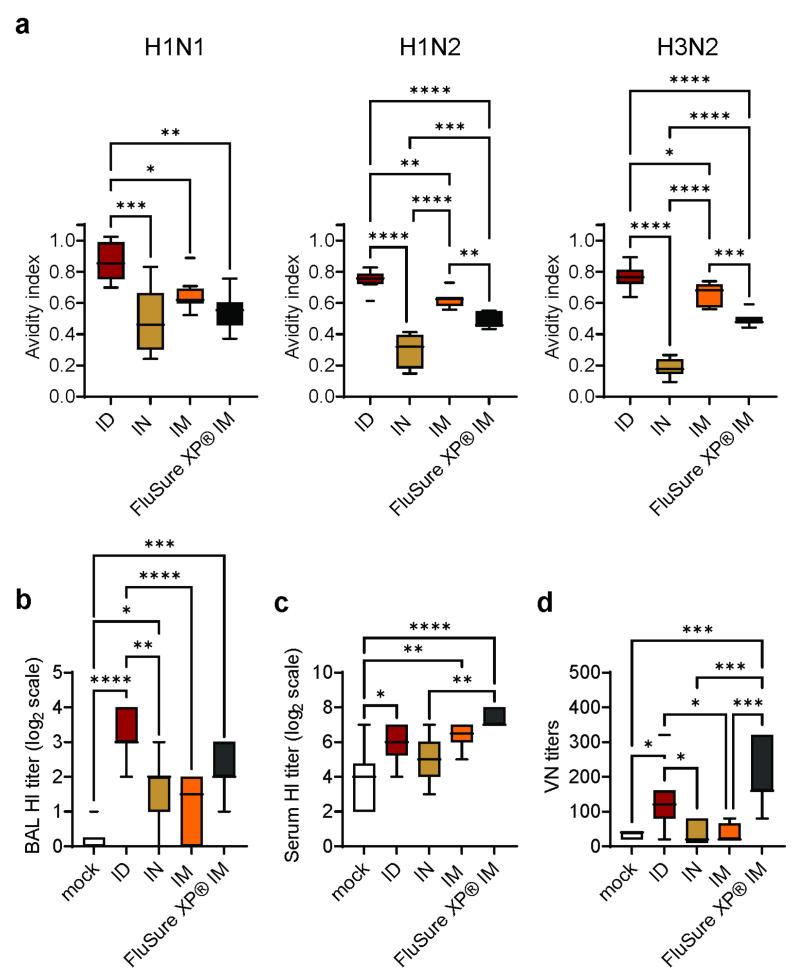
The development of cross-protective vaccines against the zoonotic swine influenza A virus (swIAV), a potential pandemic-causing agent, continues to be an urgent global health concern. Commercially available vaccines provide suboptimal cross-protection against circulating subtypes of swIAV, which can lead to worldwide economic losses and poor zoonosis deterrence. The limited efficacy of current swIAV vaccines demands innovative strategies for the development of next-generation vaccines. Considering that intramuscular injection is the standard route of vaccine administration in both human and veterinary medicine, the exploration of alternative strategies, such as intradermal vaccination, presents a promising avenue for vaccinology. This investigation demonstrates the first evaluation of a direct comparison between a commercially available multivalent swIAV vaccine and monovalent whole inactivated H1N2 swine influenza vaccine, delivered by intradermal, intranasal, and intramuscular routes. The monovalent vaccines were adjuvanted with NanoST, a cationic phytoglycogen-based nanoparticle that is combined with the STING agonist ADU-S100. Upon heterologous challenge, intradermal vaccination generated a stronger cross-reactive nasal and serum antibody response in pigs compared with intranasal and intramuscular vaccination. Antibodies induced by intradermal immunization also had higher avidity compared with the other routes of vaccination. Bone marrow from intradermally and intramuscularly immunized pigs had both IgG and IgA virus-specific antibody-secreting cells. These studies reveal that NanoST is a promising adjuvant system for the intradermal administration of STING-targeted influenza vaccines.
针对人畜共患甲型猪流感病毒(swIAV)开发交叉保护疫苗仍然是全球紧迫的卫生问题,swIAV是一种可能引发大流行的病原体。市售疫苗对swIAV流行亚型的交叉保护效果欠佳,这可能导致全球经济损失,并难以有效预防人畜共患病。当前swIAV疫苗的疗效有限,因此需要创新策略来开发下一代疫苗。鉴于肌肉注射是人类和兽医学中疫苗接种的标准途径,探索替代策略,如皮内接种疫苗,为疫苗学提供了一条有前景的途径。本研究首次对市售多价swIAV疫苗与单价全灭活H1N2猪流感疫苗通过皮内、鼻内和肌肉途径接种进行了直接比较评估。单价疫苗用NanoST佐剂,NanoST是一种基于阳离子植物糖原的纳米颗粒,与STING激动剂ADU-S100结合。在异源攻击后,与鼻内和肌肉接种相比,皮内接种在猪体内产生了更强的交叉反应性鼻内和血清抗体反应。与其他接种途径相比,皮内免疫诱导的抗体也具有更高的亲和力。皮内和肌肉免疫猪的骨髓中都有IgG和IgA病毒特异性抗体分泌细胞。这些研究表明,NanoST是一种有前景的佐剂系统,可用于皮内接种靶向STING的流感疫苗。
 Zotero 插件