Department of Health Management, School of Public Health, Shanghai University of Traditional Chinese Medicine, Shanghai, China.
Shanghai Collaborative Innovation Centre of Health Service in Traditional Chinese Medicine, Shanghai University of Traditional Chinese Medicine, Shanghai, China.
Lipids Health Dis. 2023 Nov 25;22(1):205. doi: 10.1186/s12944-023-01966-1.
Non-alcoholic fatty liver disease (NAFLD) is a common chronic liver condition that affects a quarter of the global adult population. To date, only a few NAFLD risk prediction models have been developed for Chinese older adults aged ≥ 60 years. This study presented the development of a risk prediction model for NAFLD in Chinese individuals aged ≥ 60 years and proposed personalised health interventions based on key risk factors to reduce NAFLD incidence among the population.
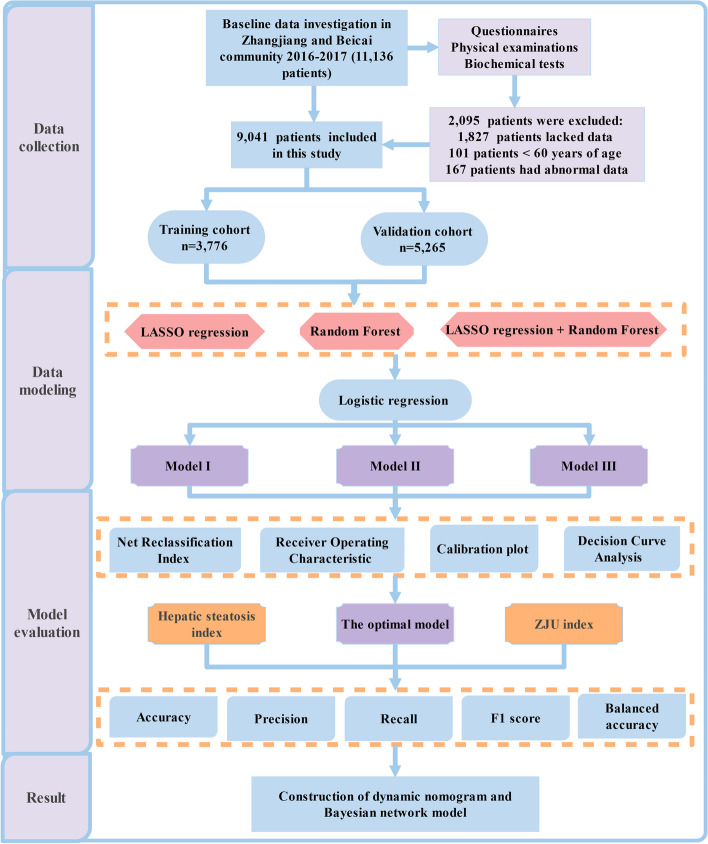
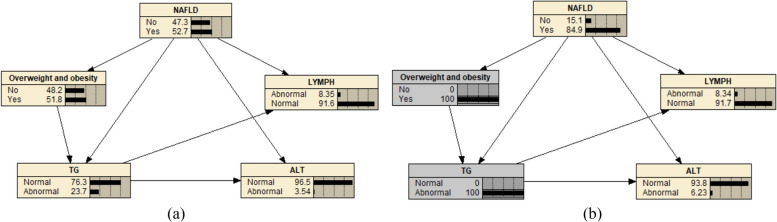
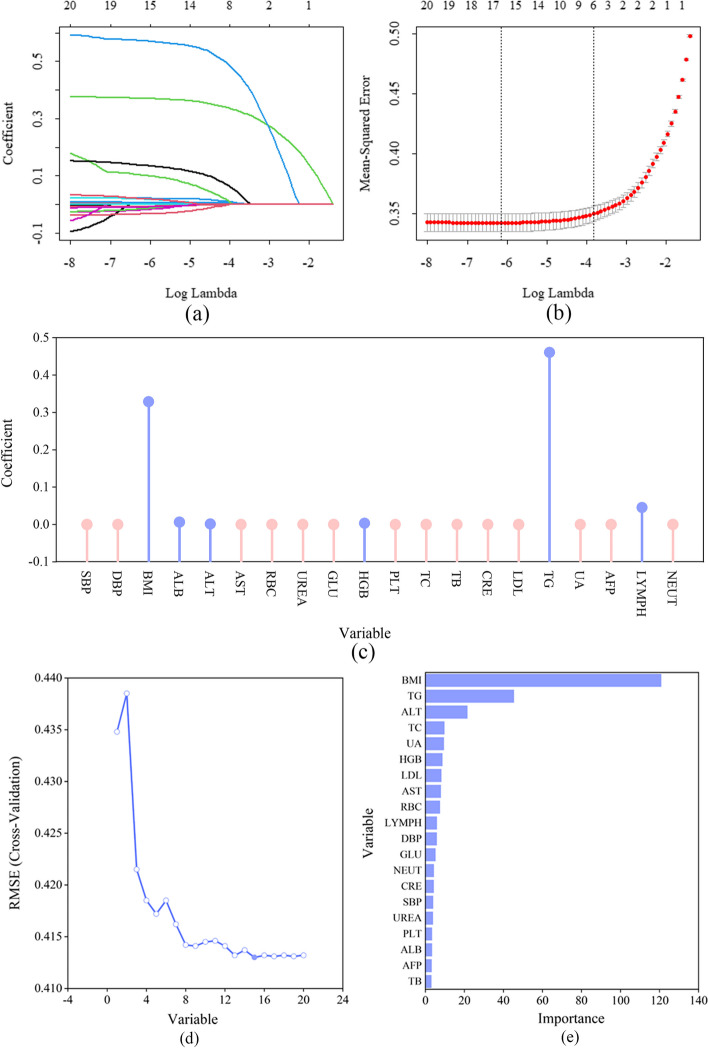
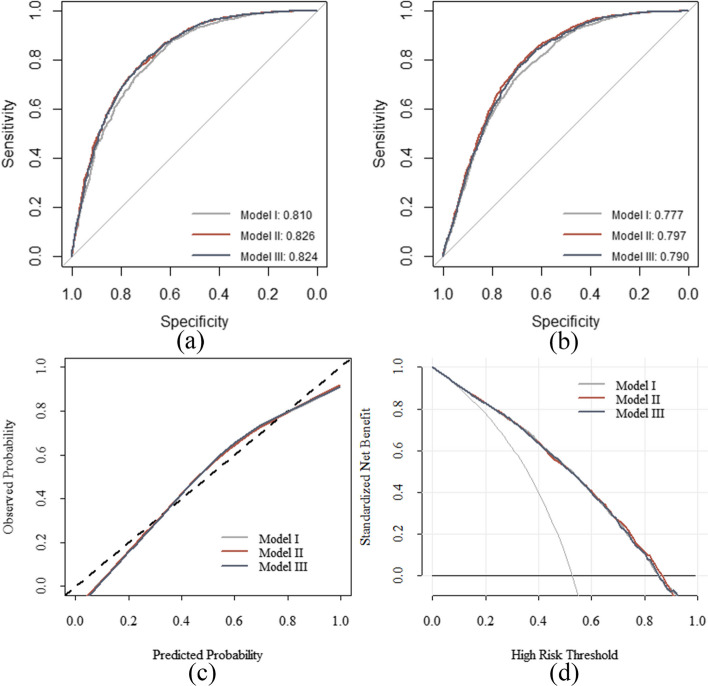
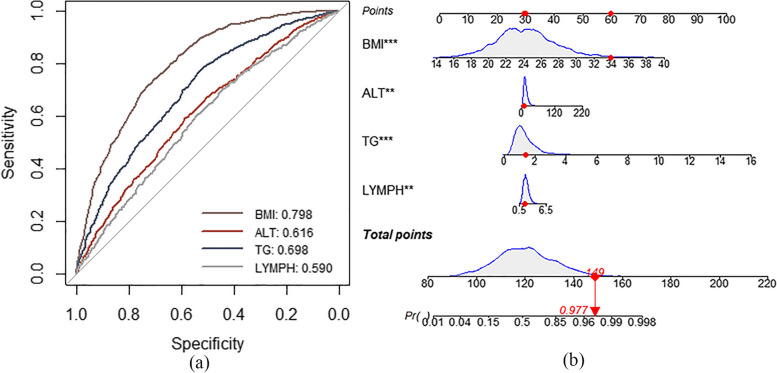
A cross-sectional survey was carried out among 9,041 community residents in Shanghai. Three NAFLD risk prediction models (I, II, and III) were constructed using multivariate logistic regression analysis based on the least absolute shrinkage and selection operator regression analysis, and random forest model to select individual characteristics, respectively. To determine the optimal model, the three models' discrimination, calibration, clinical application, and prediction capability were evaluated using the receiver operating characteristic (ROC) curve, calibration plot, decision curve analysis, and net reclassification index (NRI), respectively. To evaluate the optimal model's effectiveness, the previously published NAFLD risk prediction models (Hepatic steatosis index [HSI] and ZJU index) were evaluated using the following five indicators: accuracy, precision, recall, F1-score, and balanced accuracy. A dynamic nomogram was constructed for the optimal model, and a Bayesian network model for predicting NAFLD risk in older adults was visually displayed using Netica software.
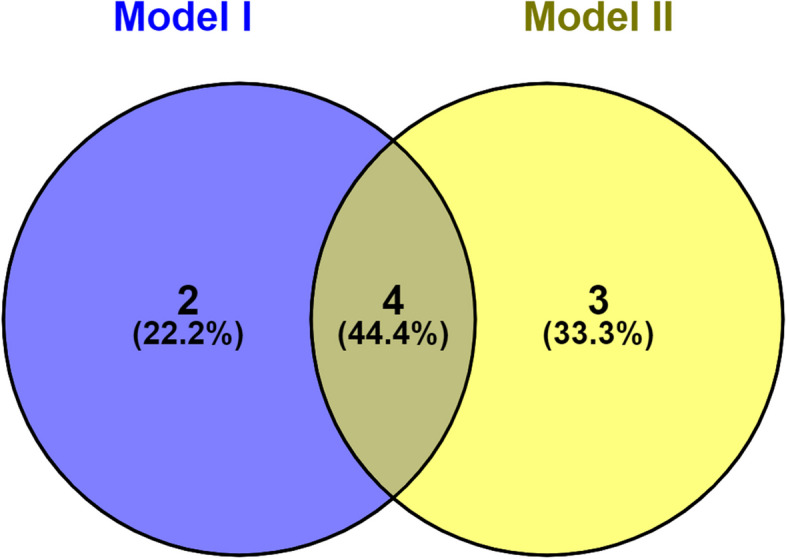
The area under the ROC curve of Models I, II, and III in the training dataset was 0.810, 0.826, and 0.825, respectively, and that of the testing data was 0.777, 0.797, and 0.790, respectively. No significant difference was found in the accuracy or NRI between the models; therefore, Model III with the fewest variables was determined as the optimal model. Compared with the HSI and ZJU index, Model III had the highest accuracy (0.716), precision (0.808), recall (0.605), F1 score (0.692), and balanced accuracy (0.723). The risk threshold for Model III was 20%-80%. Model III included body mass index, alanine aminotransferase level, triglyceride level, and lymphocyte count.
A dynamic nomogram and Bayesian network model were developed to identify NAFLD risk in older Chinese adults, providing personalized health management strategies and reducing NAFLD incidence.
非酒精性脂肪性肝病(NAFLD)是一种常见的慢性肝脏疾病,影响全球四分之一的成年人口。迄今为止,只有少数 NAFLD 风险预测模型针对年龄≥60 岁的中国老年人开发。本研究旨在为年龄≥60 岁的中国个体建立一个 NAFLD 风险预测模型,并基于关键风险因素提出个性化健康干预措施,以降低人群中 NAFLD 的发病率。
在上海的 9041 名社区居民中进行了一项横断面调查。使用多元逻辑回归分析基于最小绝对收缩和选择算子回归分析以及随机森林模型分别选择个体特征,构建了三个 NAFLD 风险预测模型(I、II 和 III)。为了确定最佳模型,使用接收者操作特征(ROC)曲线、校准图、决策曲线分析和净重新分类指数(NRI)分别评估了三个模型的区分度、校准度、临床应用和预测能力。为了评估最佳模型的效果,使用以下五个指标评估了先前发表的 NAFLD 风险预测模型(肝脂肪变性指数[HSI]和 ZJU 指数):准确性、精密度、召回率、F1 分数和平衡准确性。为最佳模型构建了一个动态列线图,并使用 Netica 软件通过贝叶斯网络模型直观地显示了预测老年人 NAFLD 风险的模型。
在训练数据集中,模型 I、II 和 III 的 ROC 曲线下面积分别为 0.810、0.826 和 0.825,在测试数据集中分别为 0.777、0.797 和 0.790。模型之间在准确性或 NRI 方面没有发现显著差异,因此确定具有最少变量的模型 III 为最佳模型。与 HSI 和 ZJU 指数相比,模型 III 具有最高的准确性(0.716)、精密度(0.808)、召回率(0.605)、F1 分数(0.692)和平衡准确性(0.723)。模型 III 的风险阈值为 20%-80%。模型 III 包含体重指数、丙氨酸氨基转移酶水平、甘油三酯水平和淋巴细胞计数。
开发了一个动态列线图和贝叶斯网络模型来识别中国老年人群中 NAFLD 的风险,提供个性化的健康管理策略并降低 NAFLD 的发病率。