Seoul National University Bundang Hospital, Department of Pediatrics, Seongnam, Gyeonggi-do, South Korea.
Seoul National University College of Medicine, Seoul, South Korea.
J Pediatr (Rio J). 2024 Mar-Apr;100(2):204-211. doi: 10.1016/j.jped.2023.10.005. Epub 2023 Nov 24.
This study aimed to evaluate the diagnostic utility, disease activity, and phenotypic association of serum anti-Saccharomyces cerevisiae antibody (ASCA), perinuclear anti-neutrophil cytoplasmic antibody (pANCA), PR3-ANCA, and MPO-ANCA in pediatric patients with inflammatory bowel disease (IBD).
Pediatric patients diagnosed with IBD were recruited and classified as Crohn's disease (CD), ulcerative colitis (UC), and IBD-unclassified (IBD-U) through full investigation. The Paris classification was used to evaluate disease phenotypes of pediatric CD and UC.
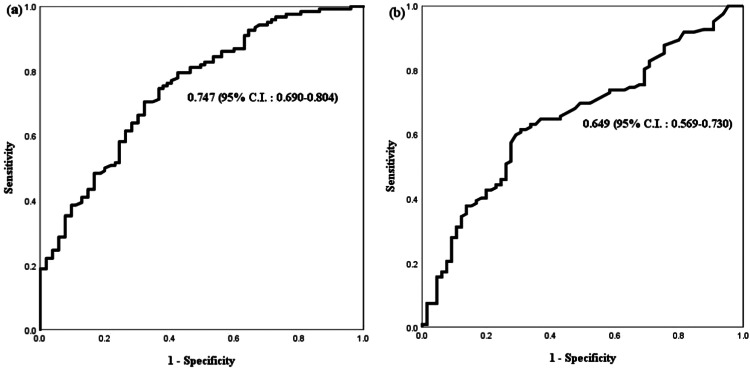
In all, 229 pediatric patients with IBD (CD 147, UC 53, IBD-U 29) were included. The ASCA IgG seropositivity significantly differed among the three groups (CD 75.4%, UC 17.5%, and IBD-U 60.0%; p < 0.001). PR3-ANCA positive rates were the highest in UC (24.0%), followed by IBD-U (17.6%), and none in CD (p = 0.002); pANCA-positive rates were higher in IBD-U (33.6%), followed by UC (28.0%) than in CD (1.4%) (p < 0.001). Regarding disease phenotype, perianal disease revealed higher serum ASCA IgG titers (median 36.7 U/mL in P1 vs. 25.2 U/mL in P0, p = 0.019). Serum ASCA IgG and IgA cutoff values to distinguish CD were 32.7 (U/mL) and 11.9 (U/mL), respectively, with a specificity of 80.0%.
Serological biomarkers of ASCA IgG and IgA were effective for differentiating CD in pediatric IBD patients, and serum pANCA and PR3-ANCA, but not MPO-ANCA, were effective in distinguishing UC and IBD-U. Furthermore, measuring serological titers of ASCA IgG and IgA may help differentiate CD and evaluate the disease activity and phenotype of pediatric IBD in practice.
本研究旨在评估血清抗酿酒酵母抗体(ASCA)、核周抗中性粒细胞胞质抗体(pANCA)、PR3-ANCA 和 MPO-ANCA 在儿科炎症性肠病(IBD)患者中的诊断效用、疾病活动度和表型相关性。
招募诊断为 IBD 的儿科患者,并通过全面调查将其分为克罗恩病(CD)、溃疡性结肠炎(UC)和 IBD 未分类(IBD-U)。采用巴黎分类评估儿科 CD 和 UC 的疾病表型。
共纳入 229 例 IBD 儿科患者(CD147 例、UC53 例、IBD-U29 例)。三组间 ASCA IgG 血清阳性率差异有统计学意义(CD75.4%、UC17.5%、IBD-U60.0%;p<0.001)。UC 中 PR3-ANCA 阳性率最高(24.0%),其次是 IBD-U(17.6%),CD 中均为阴性(p=0.002);IBD-U 中 pANCA 阳性率较高(33.6%),其次是 UC(28.0%),而 CD 中较低(1.4%)(p<0.001)。关于疾病表型,肛周疾病显示出更高的血清 ASCA IgG 滴度(P1 中位数 36.7 U/mL 与 P0 中位数 25.2 U/mL,p=0.019)。区分 CD 的血清 ASCA IgG 和 IgA 截断值分别为 32.7(U/mL)和 11.9(U/mL),特异性为 80.0%。
血清 ASCA IgG 和 IgA 等生物标志物可有效区分儿科 IBD 患者的 CD,血清 pANCA 和 PR3-ANCA(而非 MPO-ANCA)可有效区分 UC 和 IBD-U。此外,测量 ASCA IgG 和 IgA 的血清滴度可能有助于区分 CD,并在实践中评估儿科 IBD 的疾病活动度和表型。