School of Basic Medical Sciences, Chengdu University of Traditional Chinese Medicine, Chengdu, 611137, China.
Department of Geriatrics, Hospital of Chengdu University of Traditional Chinese Medicine, Chengdu, 610072, China.
Mol Biomed. 2024 Oct 10;5(1):42. doi: 10.1186/s43556-024-00207-w.
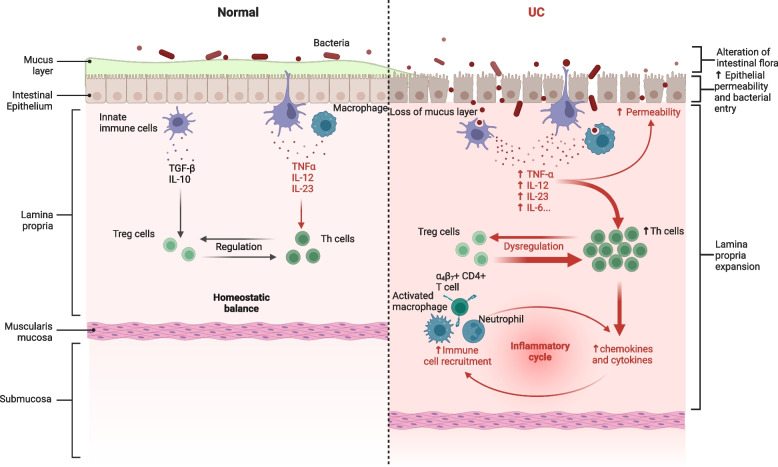
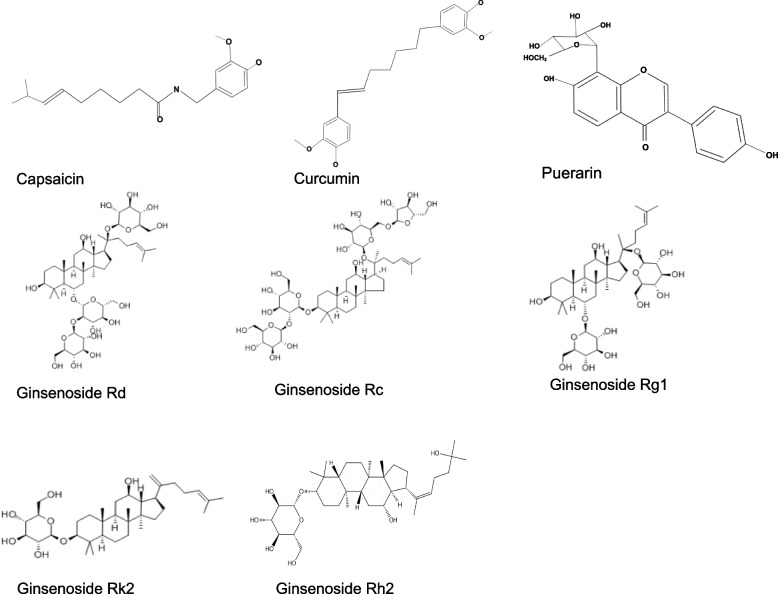
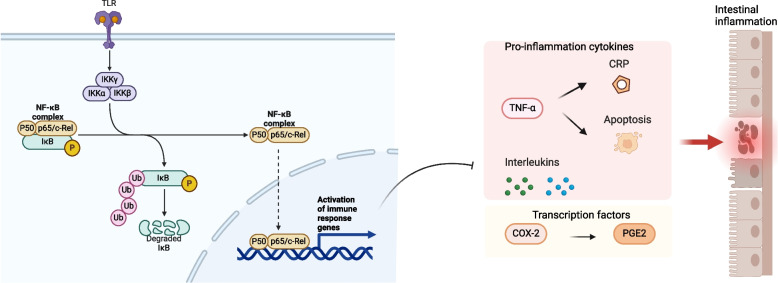
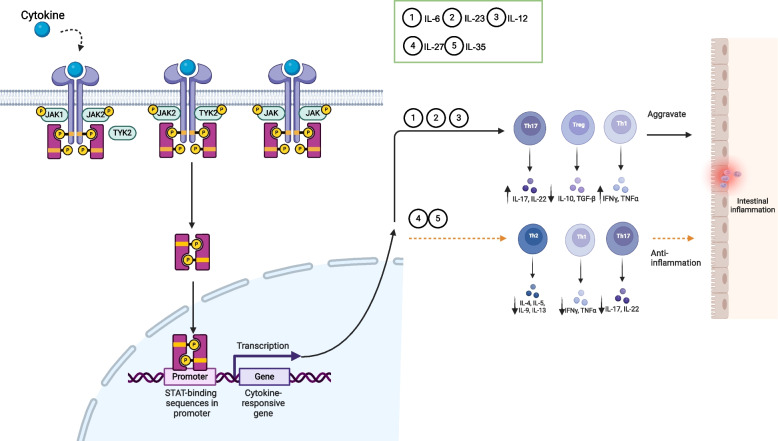
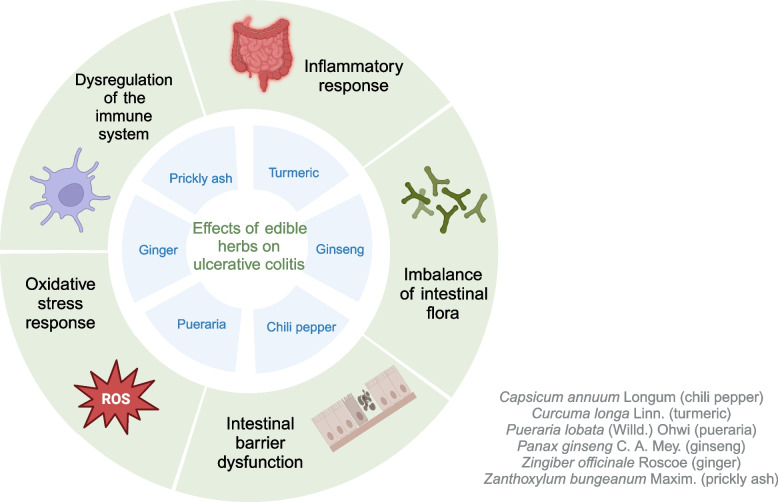
Ulcerative colitis (UC) is a chronic inflammatory bowel disease characterized by abdominal pain, diarrhea, rectal bleeding, and weight loss. The pathogenesis and treatment of UC remain key areas of research interest. Various factors, including genetic predisposition, immune dysregulation, and alterations in the gut microbiota, are believed to contribute to the pathogenesis of UC. Current treatments for UC include 5-aminosalicylic acids, corticosteroids, immunosuppressants, and biologics. However, study reported that the one-year clinical remission rate is only around 40%. It is necessary to prompt the exploration of new treatment modalities. Biologic therapies, such as anti-TNF-α monoclonal antibody and JAK inhibitor, primarily consist of small molecules targeting specific pathways, effectively inducing and maintaining remission. Given the significant role of the gut microbiota, research into intestinal microecologics, such as probiotics and prebiotics, and fecal microbiota transplantation (FMT) shows promising potential in UC treatment. Additionally, medicinal herbs, such as chili pepper and turmeric, used in complementary therapy have shown promising results in UC management. This article reviews recent findings on the mechanisms of UC, including genetic susceptibility, immune cell dynamics and cytokine regulation, and gut microbiota alterations. It also discusses current applications of biologic therapy, herbal therapy, microecologics, and FMT, along with their prospects and challenges.
溃疡性结肠炎(UC)是一种慢性炎症性肠病,其特征为腹痛、腹泻、直肠出血和体重减轻。UC 的发病机制和治疗仍然是研究的重点领域。各种因素,包括遗传易感性、免疫失调和肠道微生物群的改变,被认为有助于 UC 的发病机制。目前 UC 的治疗方法包括 5-氨基水杨酸、皮质类固醇、免疫抑制剂和生物制剂。然而,研究报告称,一年的临床缓解率仅约为 40%。有必要促使探索新的治疗方法。生物疗法,如抗 TNF-α 单克隆抗体和 JAK 抑制剂,主要由针对特定途径的小分子组成,能有效诱导和维持缓解。鉴于肠道微生物群的重要作用,对肠道微生态,如益生菌和益生元,以及粪便微生物移植(FMT)的研究在 UC 治疗中显示出有前景的潜力。此外,辣椒和姜黄等草药在补充治疗中用于 UC 管理也显示出良好的效果。本文综述了 UC 发病机制的最新研究结果,包括遗传易感性、免疫细胞动力学和细胞因子调节以及肠道微生物群的改变。本文还讨论了生物疗法、草药疗法、微生态和 FMT 的当前应用,以及它们的前景和挑战。