Institute of Biomedicine, University of Eastern Finland, Kuopio, Finland.
Nucleic Acids Res. 2024 Jan 25;52(2):625-642. doi: 10.1093/nar/gkad1126.
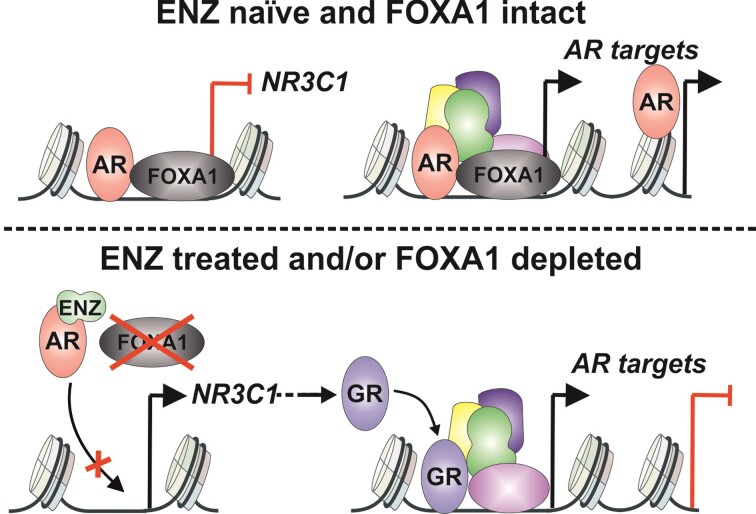
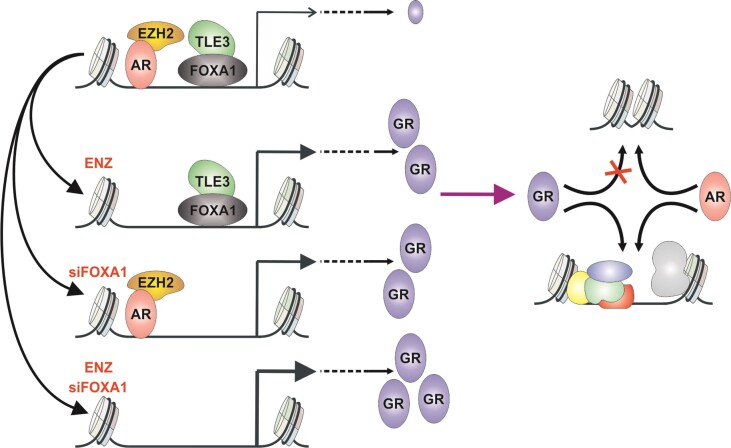
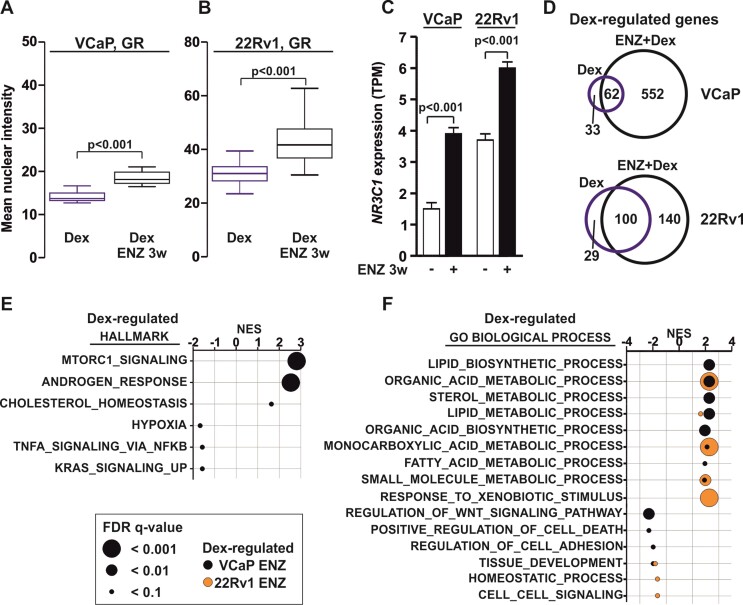
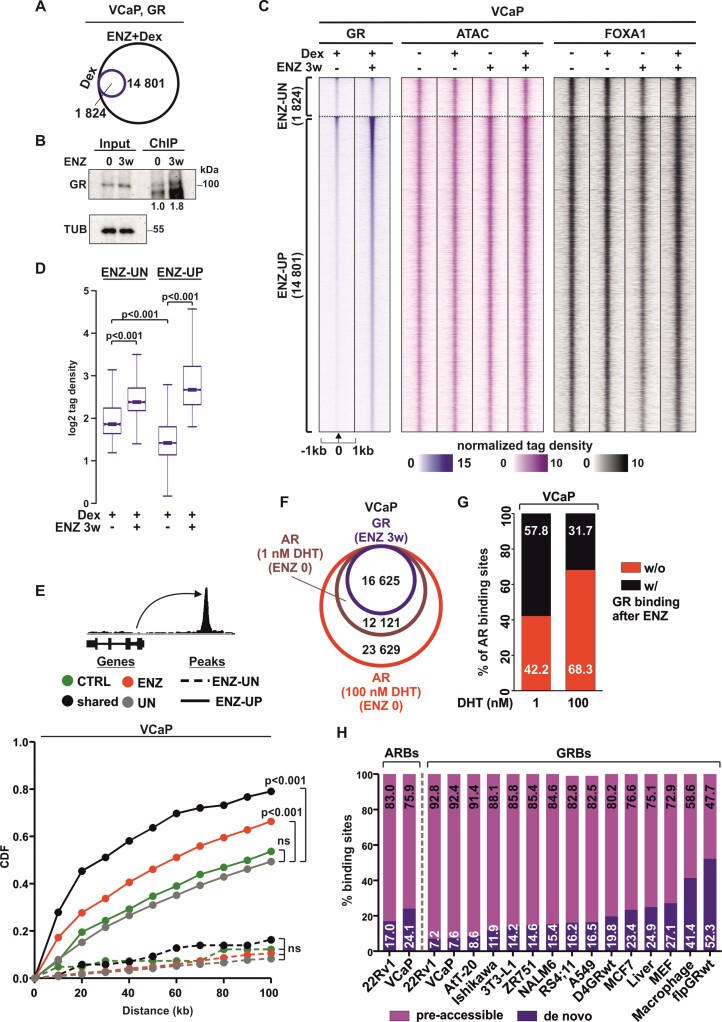
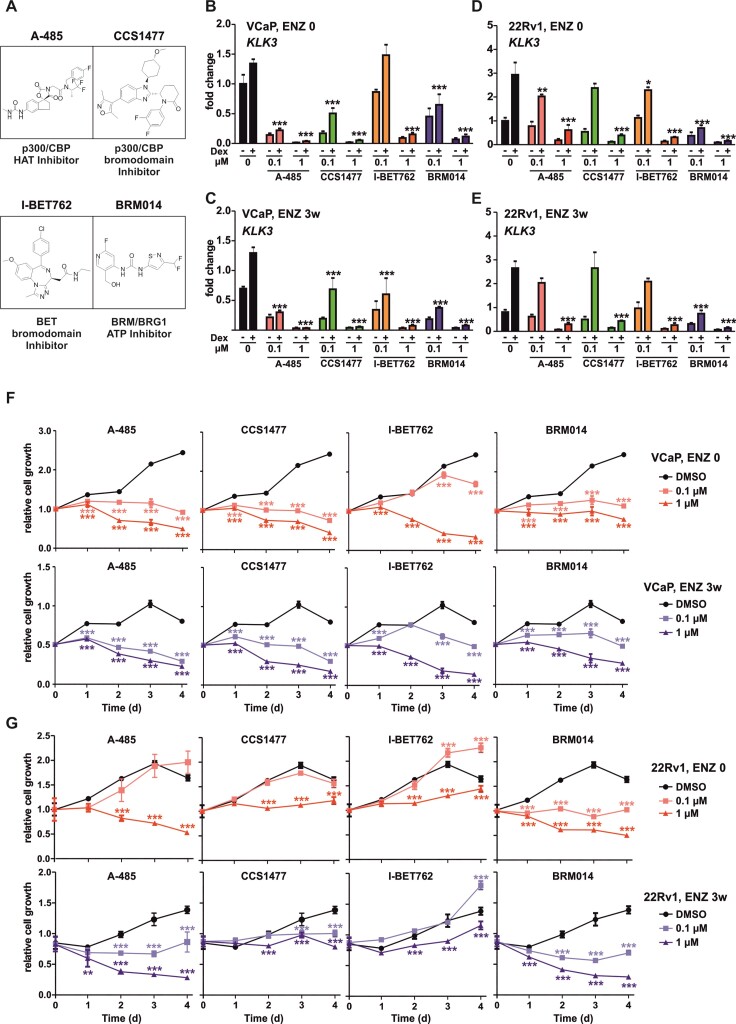
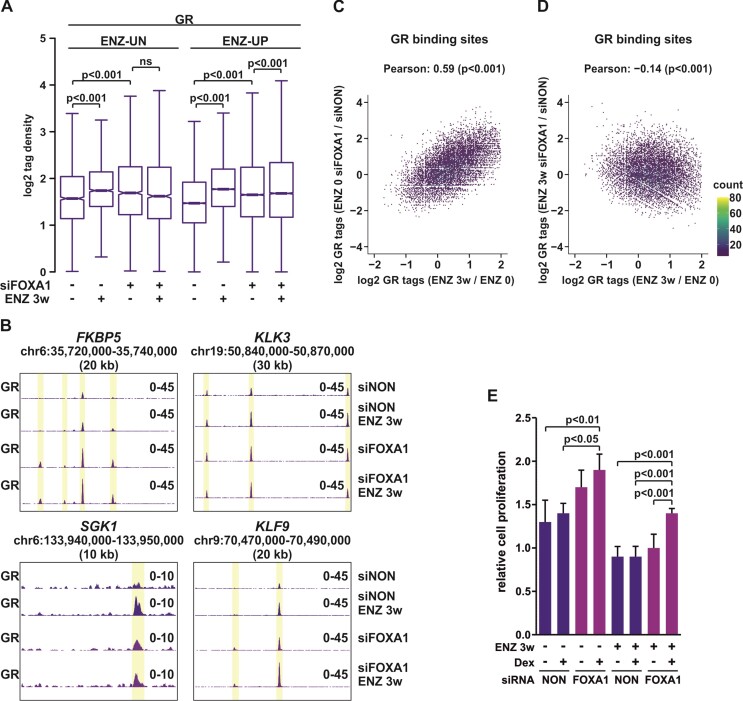
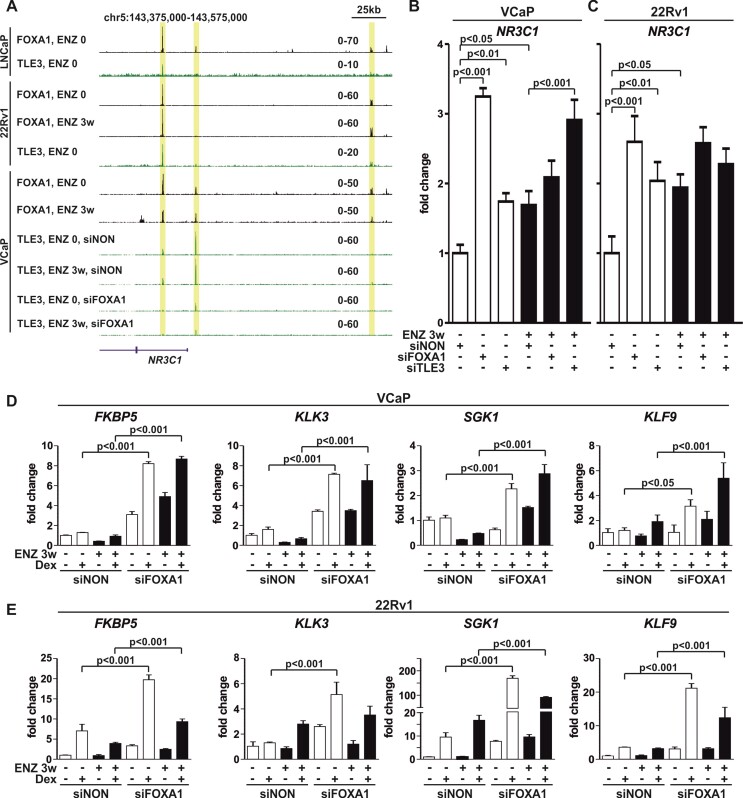
Treatment of prostate cancer relies predominantly on the inhibition of androgen receptor (AR) signaling. Despite the initial effectiveness of the antiandrogen therapies, the cancer often develops resistance to the AR blockade. One mechanism of the resistance is glucocorticoid receptor (GR)-mediated replacement of AR function. Nevertheless, the mechanistic ways and means how the GR-mediated antiandrogen resistance occurs have remained elusive. Here, we have discovered several crucial features of GR action in prostate cancer cells through genome-wide techniques. We detected that the replacement of AR by GR in enzalutamide-exposed prostate cancer cells occurs almost exclusively at pre-accessible chromatin sites displaying FOXA1 occupancy. Counterintuitively to the classical pioneer factor model, silencing of FOXA1 potentiated the chromatin binding and transcriptional activity of GR. This was attributed to FOXA1-mediated repression of the NR3C1 (gene encoding GR) expression via the corepressor TLE3. Moreover, the small-molecule inhibition of coactivator p300's enzymatic activity efficiently restricted GR-mediated gene regulation and cell proliferation. Overall, we identified chromatin pre-accessibility and FOXA1-mediated repression as important regulators of GR action in prostate cancer, pointing out new avenues to oppose steroid receptor-mediated antiandrogen resistance.
前列腺癌的治疗主要依赖于雄激素受体 (AR) 信号的抑制。尽管抗雄激素治疗最初有效,但癌症常常会对 AR 阻断产生耐药性。耐药性的一种机制是糖皮质激素受体 (GR) 介导的 AR 功能替代。然而,GR 介导的抗雄激素耐药性发生的机制仍不清楚。在这里,我们通过全基因组技术发现了 GR 在前列腺癌细胞中作用的几个关键特征。我们检测到,在恩扎卢胺暴露的前列腺癌细胞中,AR 被 GR 替代几乎只发生在具有 FOXA1 占据的可接近染色质位点。与经典的先驱因子模型相反,FOXA1 的沉默增强了 GR 的染色质结合和转录活性。这归因于 FOXA1 通过核心抑制因子 TLE3 介导的 NR3C1(编码 GR 的基因)表达的抑制。此外,小分子抑制共激活因子 p300 的酶活性可有效限制 GR 介导的基因调控和细胞增殖。总的来说,我们确定了染色质的可接近性和 FOXA1 介导的抑制作用是 GR 在前列腺癌中作用的重要调节剂,为对抗类固醇受体介导的抗雄激素耐药性指出了新的途径。