Pandkar Madhura R, Sinha Sommya, Samaiya Atul, Shukla Sanjeev
Department of Biological Sciences, Indian Institute of Science Education and Research Bhopal, Bhopal, Madhya Pradesh 462066, India. Electronic address: https://twitter.com/https://twitter.com/MadhuraPandkar.
Department of Biological Sciences, Indian Institute of Science Education and Research Bhopal, Bhopal, Madhya Pradesh 462066, India. Electronic address: https://twitter.com/https://twitter.com/sinha_sommya.
Transl Oncol. 2023 Nov;37:101758. doi: 10.1016/j.tranon.2023.101758. Epub 2023 Aug 10.
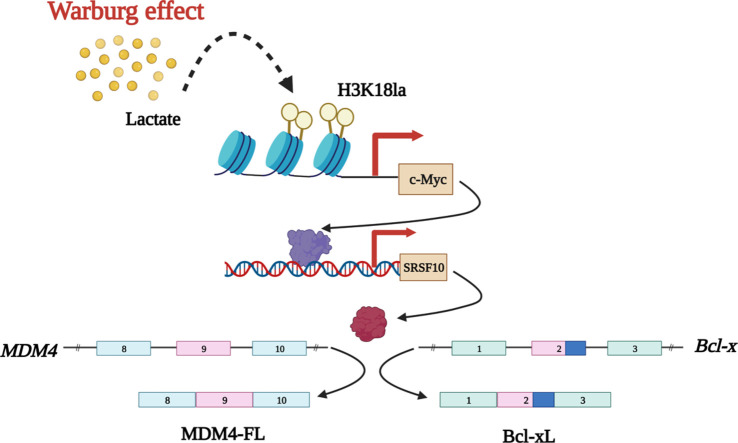
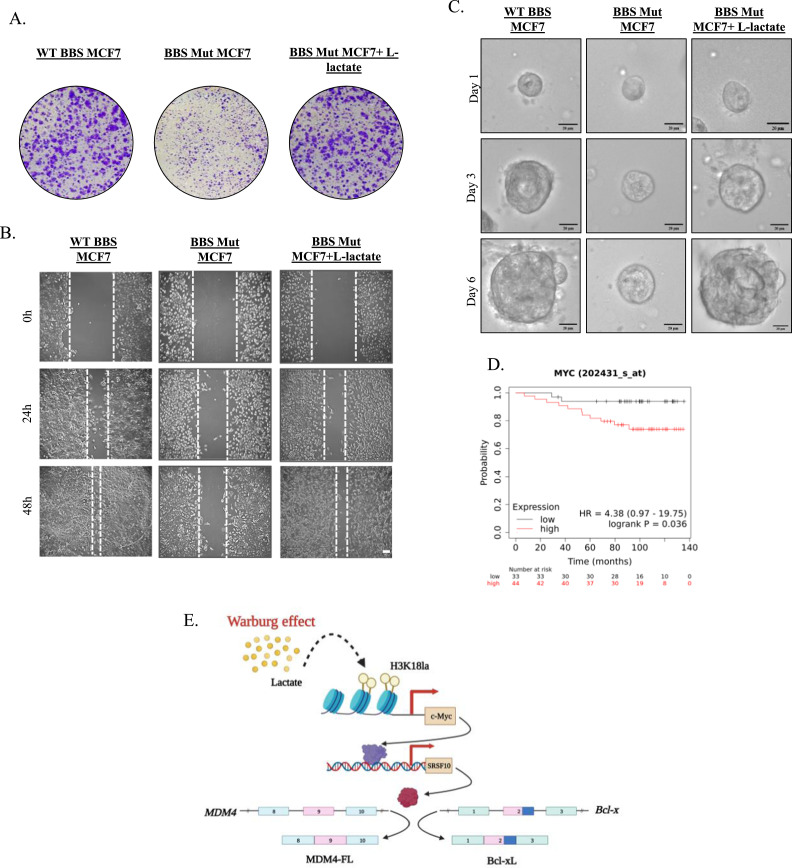
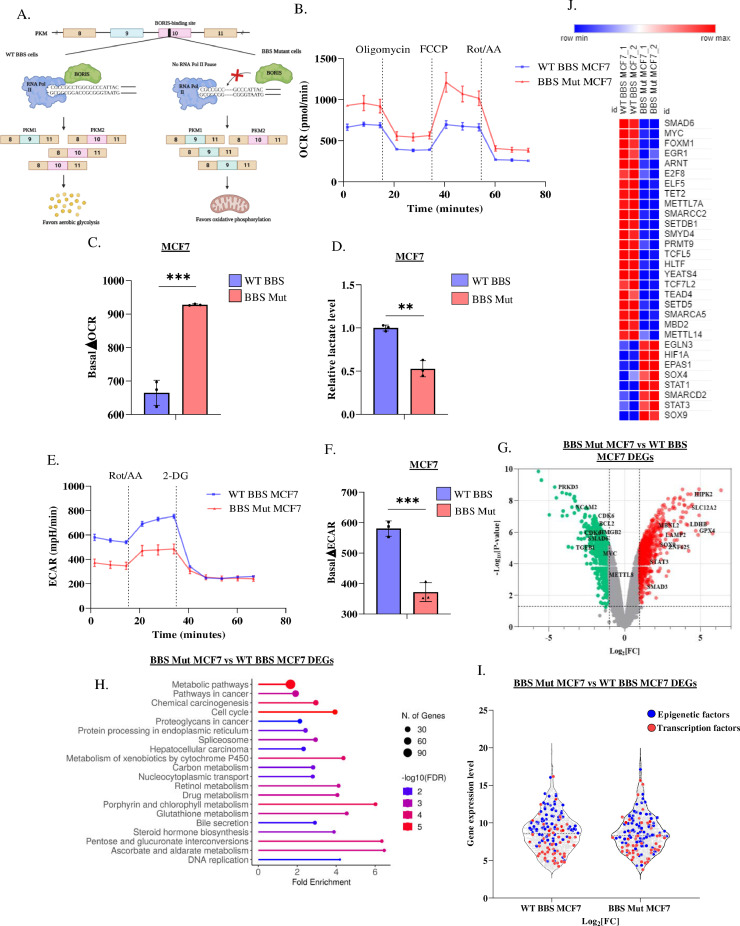
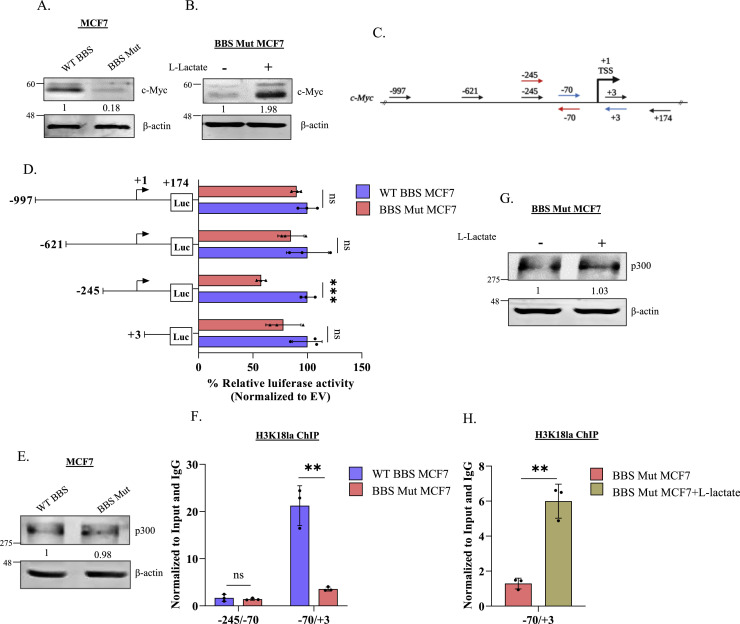
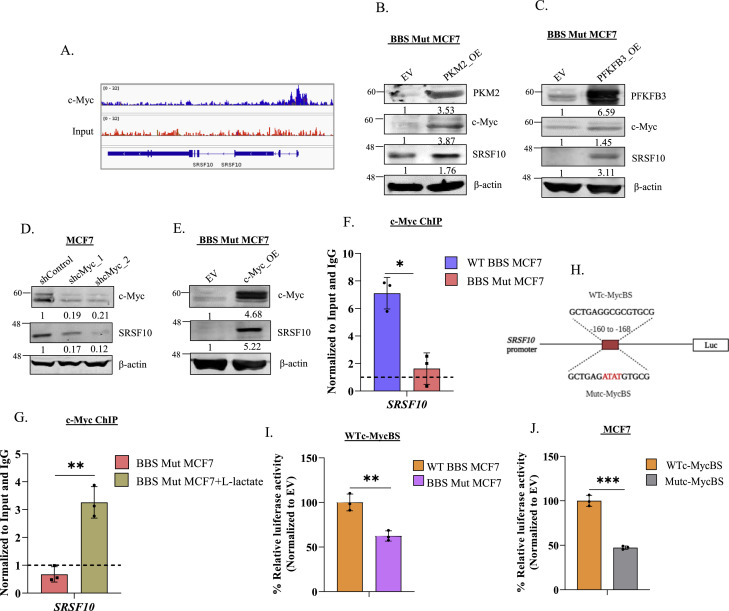
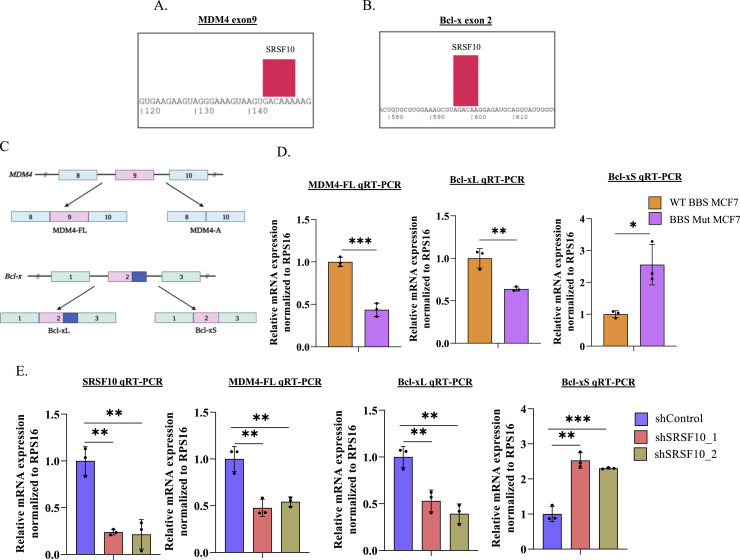
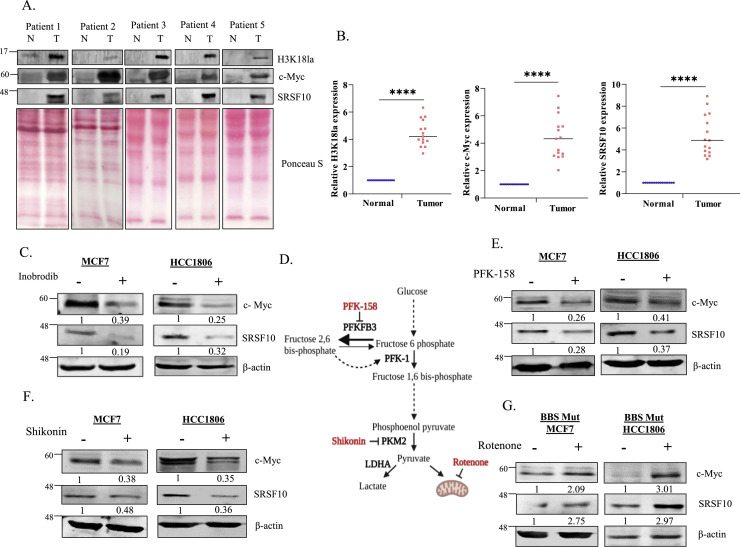
Due to the enhanced glycolytic rate, cancer cells generate lactate copiously, subsequently promoting the lactylation of histones. While previous studies have explored the impact of histone lactylation in modulating gene expression, the precise role of this epigenetic modification in regulating oncogenes is largely unchartered. In this study, using breast cancer cell lines and their mutants exhibiting lactate-deficient metabolome, we have identified that an enhanced rate of aerobic glycolysis supports c-Myc expression via promoter-level histone lactylation. Interestingly, c-Myc further transcriptionally upregulates serine/arginine splicing factor 10 (SRSF10) to drive alternative splicing of MDM4 and Bcl-x in breast cancer cells. Moreover, our results reveal that restricting the activity of critical glycolytic enzymes affects the c-Myc-SRSF10 axis to subside the proliferation of breast cancer cells. Our findings provide novel insights into the mechanisms by which aerobic glycolysis influences alternative splicing processes that collectively contribute to breast tumorigenesis. Furthermore, we also envisage that chemotherapeutic interventions attenuating glycolytic rate can restrict breast cancer progression by impeding the c-Myc-SRSF10 axis.
由于糖酵解速率增强,癌细胞大量产生乳酸,随后促进组蛋白的乳酸化。虽然先前的研究探讨了组蛋白乳酸化在调节基因表达中的作用,但这种表观遗传修饰在调节癌基因中的精确作用在很大程度上仍不清楚。在本研究中,我们使用乳腺癌细胞系及其表现出乳酸缺乏代谢组的突变体,确定有氧糖酵解速率的提高通过启动子水平的组蛋白乳酸化来支持c-Myc的表达。有趣的是,c-Myc进一步转录上调丝氨酸/精氨酸剪接因子10(SRSF10),以驱动乳腺癌细胞中MDM4和Bcl-x的可变剪接。此外,我们的结果表明,限制关键糖酵解酶的活性会影响c-Myc-SRSF10轴,从而抑制乳腺癌细胞的增殖。我们的发现为有氧糖酵解影响可变剪接过程进而共同促进乳腺肿瘤发生的机制提供了新的见解。此外,我们还设想,降低糖酵解速率的化疗干预可以通过阻碍c-Myc-SRSF10轴来限制乳腺癌的进展。