Children Growth Research Center, Research Institute for Prevention of Non-Communicable disease, Qazvin University of Medical Science, Qazvin,Iran.
Khatam Pathobiology and Genetic Lab, Qazvin, Iran.
Asian Pac J Cancer Prev. 2023 Nov 1;24(11):3715-3727. doi: 10.31557/APJCP.2023.24.11.3715.
In this research we evaluated molecular mechanism of effect of metformin in radio sensitivity of breast cancer cells.
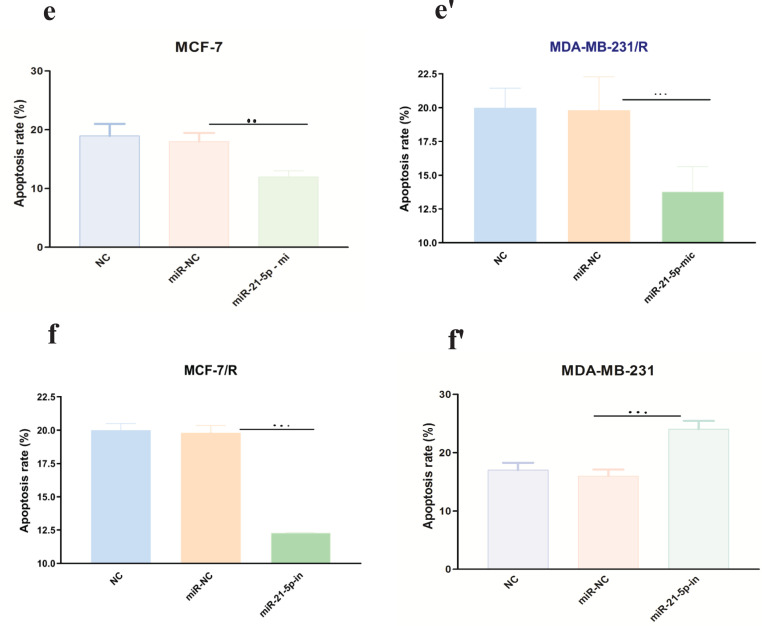
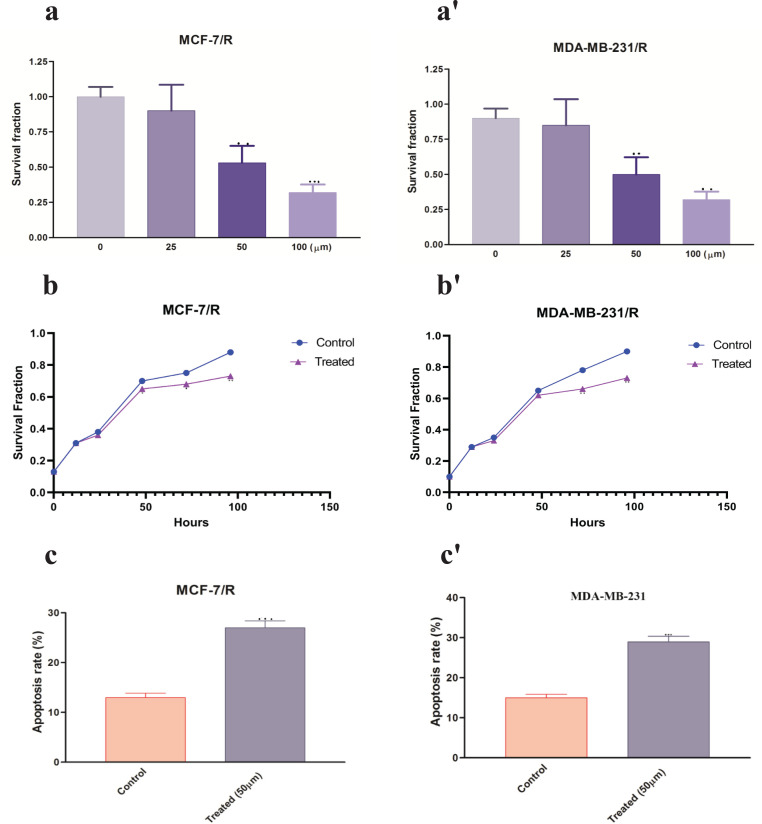
This research was done in cellular and molecular research center of Qazvin university of Medical science in 1399 to 1401. Studied samples were two breast cancer cell lines (MCF-7 and MDA-MB-231) they are derived from primary and secondary tumors resected from a single patient. We exposed them to cumulative 50 Gy radiation and constructed radio resistant cell lines. Then resistant cell lines were treated with 50µm of metformin. Our studied groups were resistant cells treated and un treated with metformin. Then, the expression rate of miR-21-5p and SESN1 gene in resistant and control cells was checked by Quantitative Real-time PCR(qRTPCR). After the cell lines were treated with different concentrations of metformin at different intervals, the rate of cell proliferation and cell death was checked by CCK-8 assay and flow cytometry. The Western blot method was also used to confirm the expression of some genes.
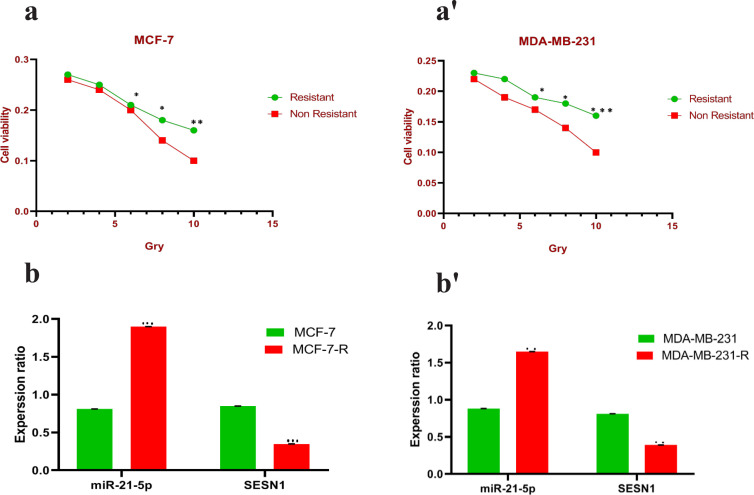
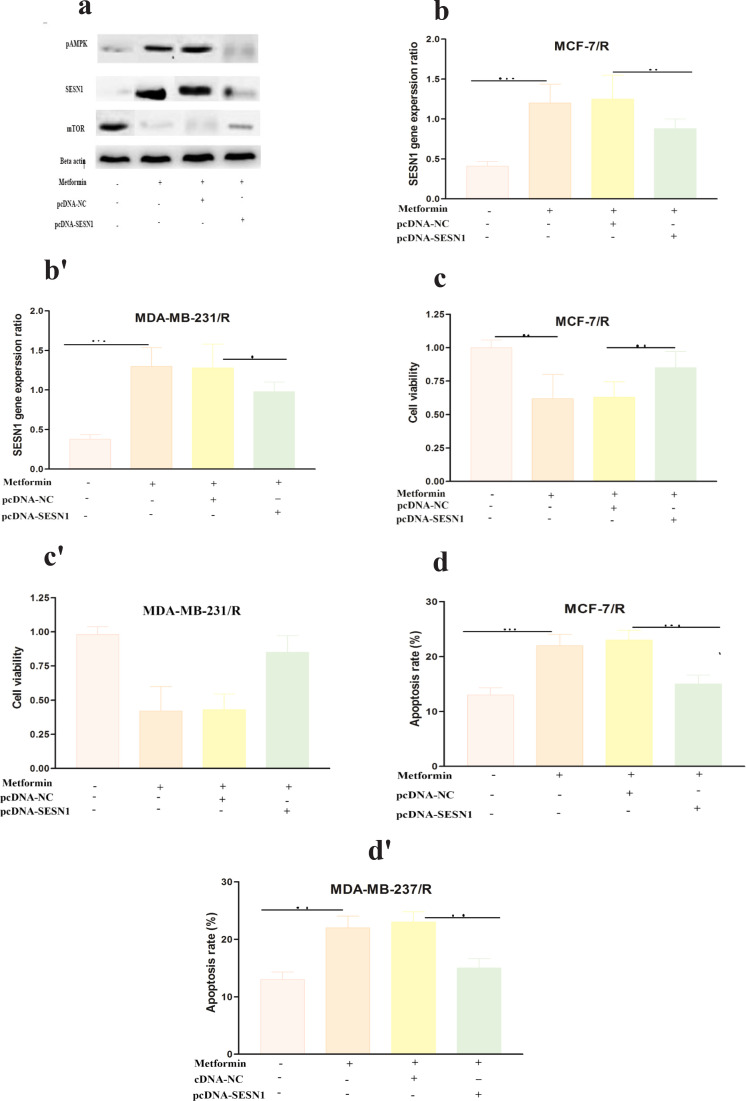
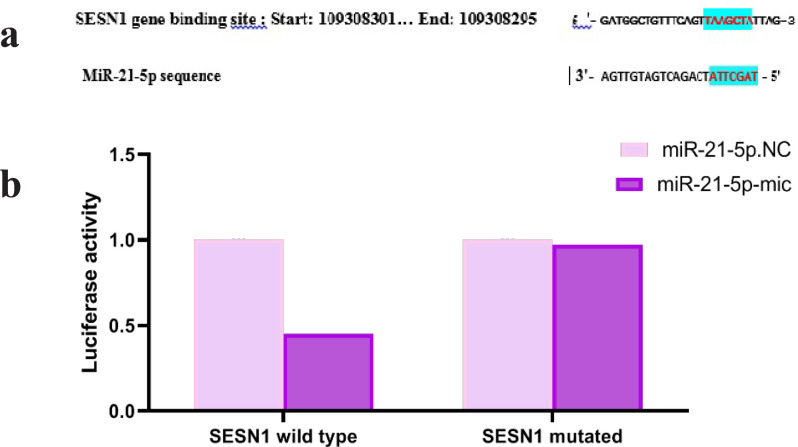
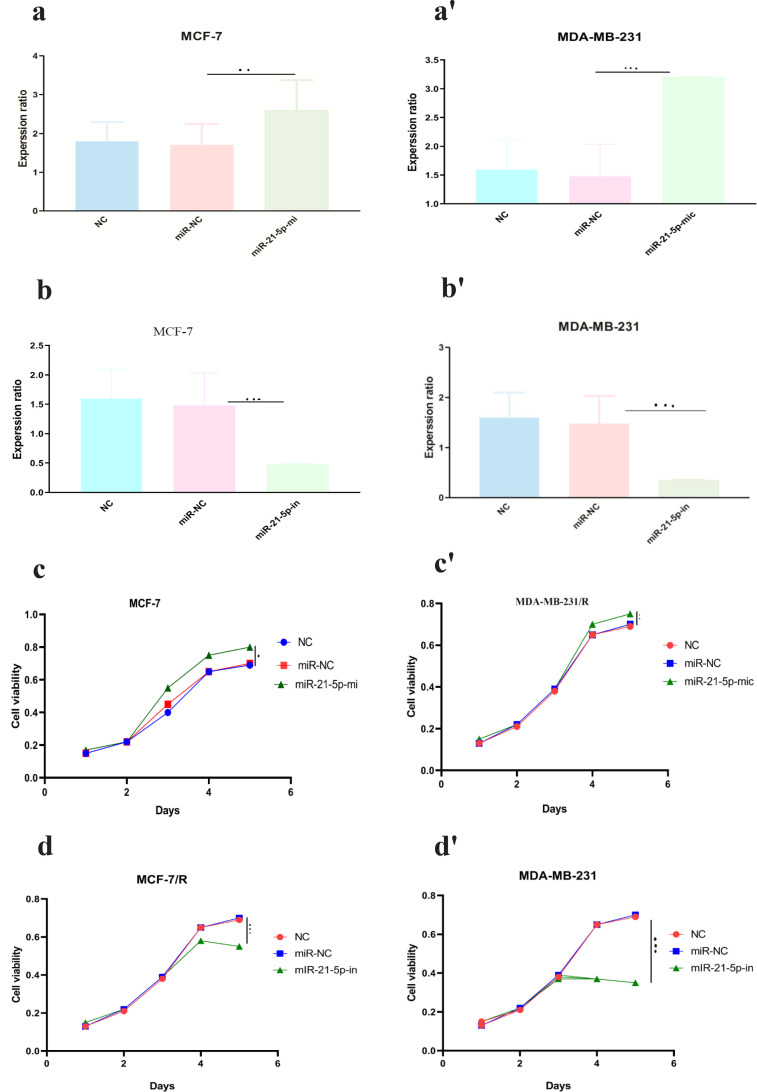
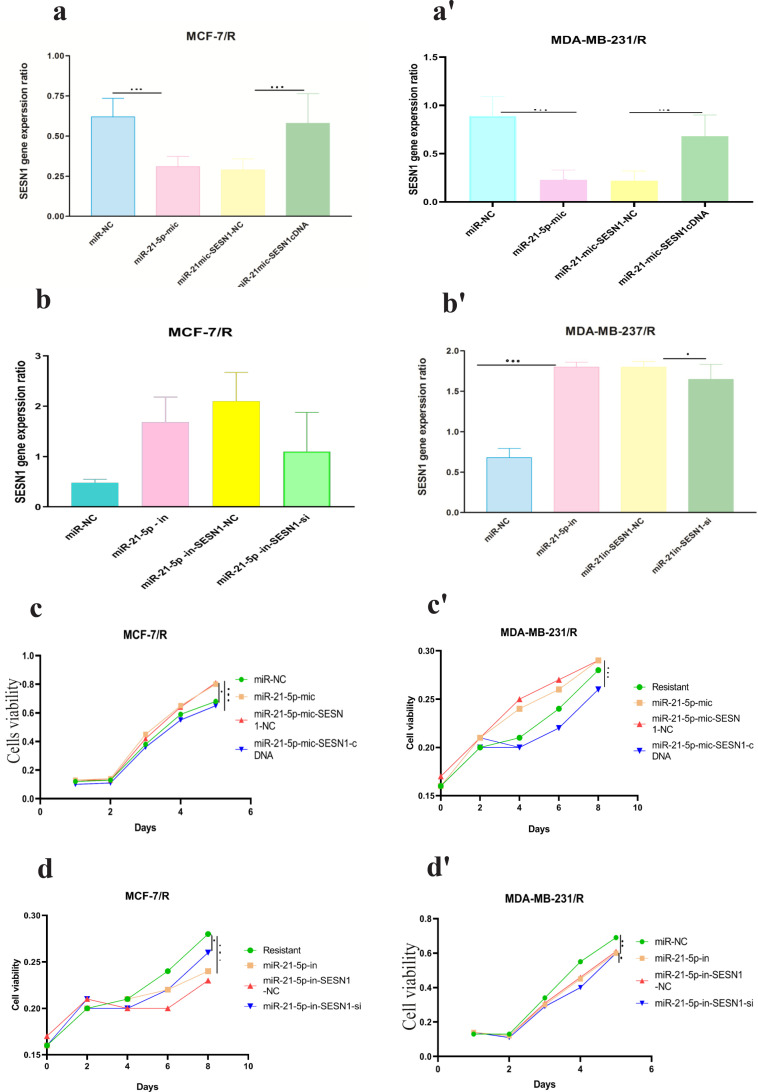
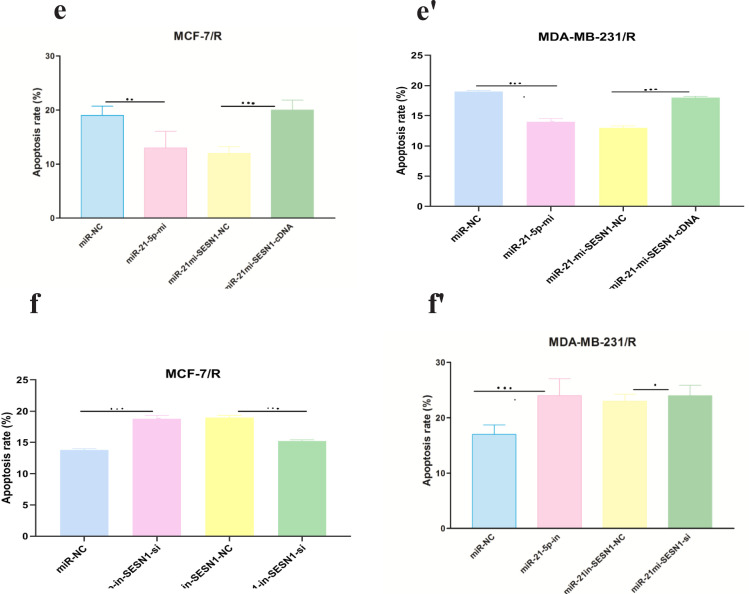
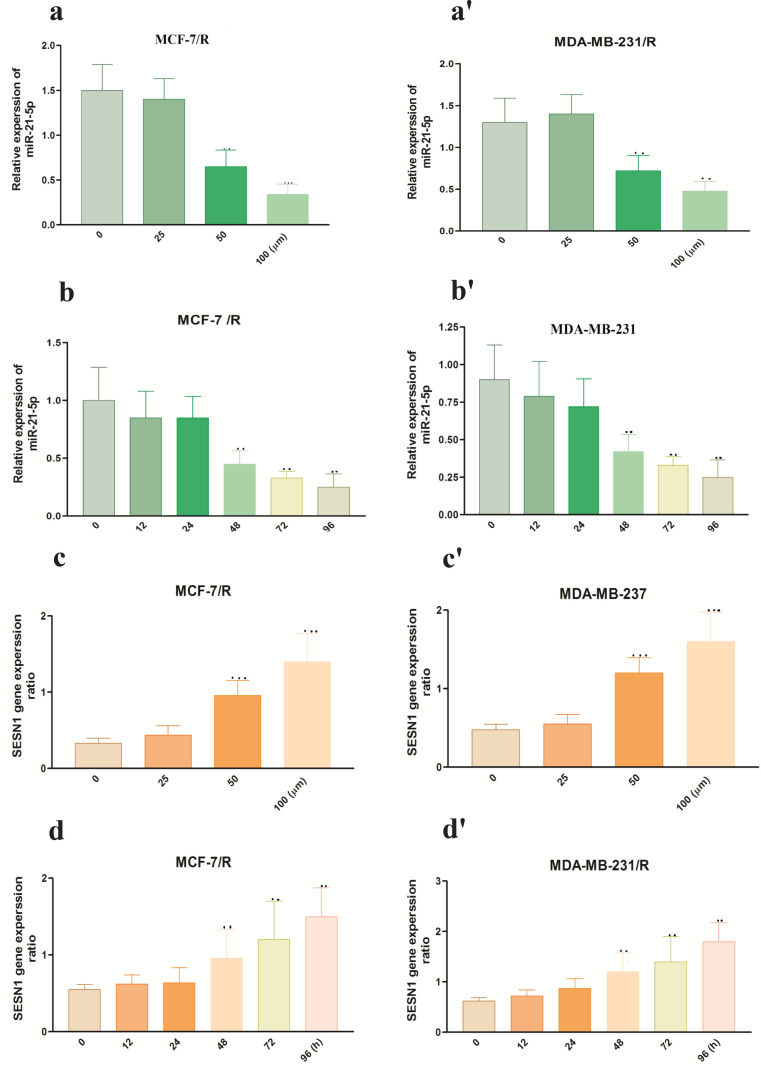
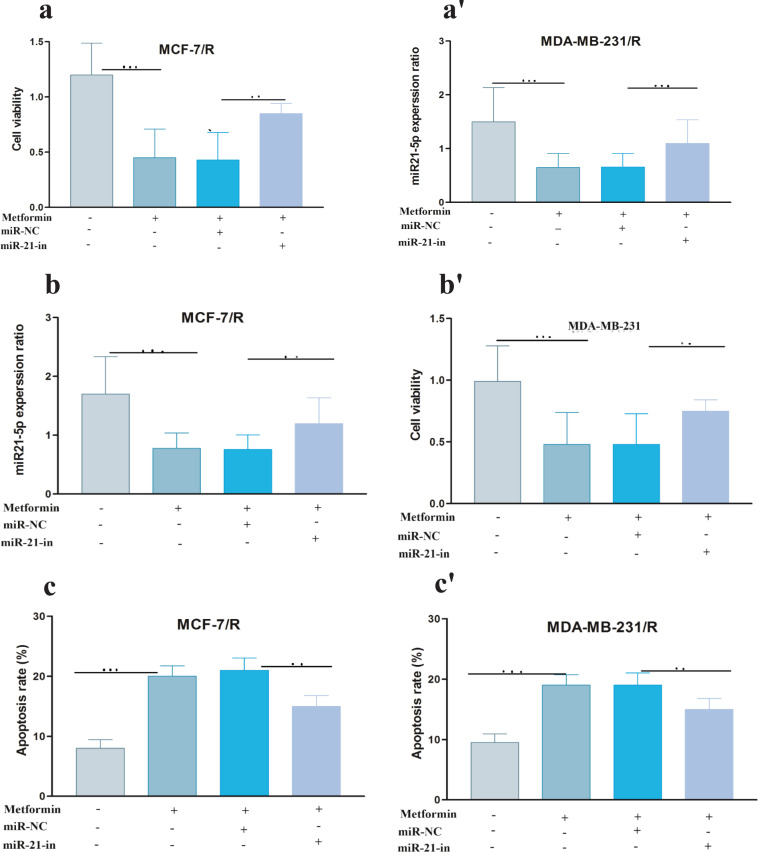
Our results showed that the expression of miR-21-5p was upregulated in radiation-resistant cancer cells (1.8±0.65) (P<0.0001) MCF-7 cell line and (1.6±0.42)(P<0.001) MBA-MD-231 cell line, while the expression of SESN1 was down regulated (0.46±0.12) (P<0.0001) MCF-7 cell line and (0.42±0.22) (P<0.001) MBA-MD-231 cell line. Metformin enhanced the radio sensitivity of breast cancer cells in a dose and time-dependent manner. Also, metformin treatment decreased the expression of miR-21-5p (0.47±0.32) (P<0.0001) MCF-7 Cell line and (0.45±0.21)(P<0.001) MBA-MD-231 cell line and increased the expression of SESN1 (1.65±0.72)(P<0.0001)MCF-7 cell line and (1.73±0.52)(P<0.0001) MBA-MD-231 cell line. The function of metformin was reversed by miR-21-5p inhibitors or the transfection of SESN1 overexpressing plasmids.
In conclusion, based on this research results, metformin enhanced the radio sensitivity of breast cancer cells via modulating the expression of miR-21-5p and SESN1.
本研究旨在评估二甲双胍在乳腺癌细胞放射敏感性中的作用的分子机制。
这项研究于 1399 年至 1401 年在 Qazvin 医科大学细胞和分子研究中心进行。研究样本为两种乳腺癌细胞系(MCF-7 和 MDA-MB-231),它们源自同一患者切除的原发性和继发性肿瘤。我们使它们暴露于累积 50Gy 的辐射下,并构建了耐药细胞系。然后用 50µM 的二甲双胍处理耐药细胞系。我们的研究组为用和未用二甲双胍处理的耐药细胞。然后,通过定量实时 PCR(qRT-PCR)检查耐药和对照细胞中 miR-21-5p 和 SESN1 基因的表达率。在用不同浓度的二甲双胍处理细胞系不同时间后,通过 CCK-8 测定法和流式细胞术检查细胞增殖和细胞死亡的速率。还使用 Western blot 法确认一些基因的表达。
我们的结果表明,miR-21-5p 的表达在辐射耐药癌细胞中上调(1.8±0.65)(P<0.0001)MCF-7 细胞系和(1.6±0.42)(P<0.001)MBA-MD-231 细胞系,而 SESN1 的表达下调(0.46±0.12)(P<0.0001)MCF-7 细胞系和(0.42±0.22)(P<0.001)MBA-MD-231 细胞系。二甲双胍以剂量和时间依赖性方式增强乳腺癌细胞的放射敏感性。此外,二甲双胍处理降低了 miR-21-5p 的表达(0.47±0.32)(P<0.0001)MCF-7 细胞系和(0.45±0.21)(P<0.001)MBA-MD-231 细胞系,并增加 SESN1 的表达(1.65±0.72)(P<0.0001)MCF-7 细胞系和(1.73±0.52)(P<0.0001)MBA-MD-231 细胞系。miR-21-5p 抑制剂或 SESN1 过表达质粒的转染逆转了二甲双胍的作用。
总之,基于本研究结果,二甲双胍通过调节 miR-21-5p 和 SESN1 的表达增强了乳腺癌细胞的放射敏感性。