Singh Swati, Chakrabortty Gopal, Raha Roy Sudipta
Department of Chemistry, Indian Institute of Technology Delhi Hauz Khas New Delhi 110016 India
Chem Sci. 2023 Oct 17;14(44):12541-12547. doi: 10.1039/d3sc04447e. eCollection 2023 Nov 15.
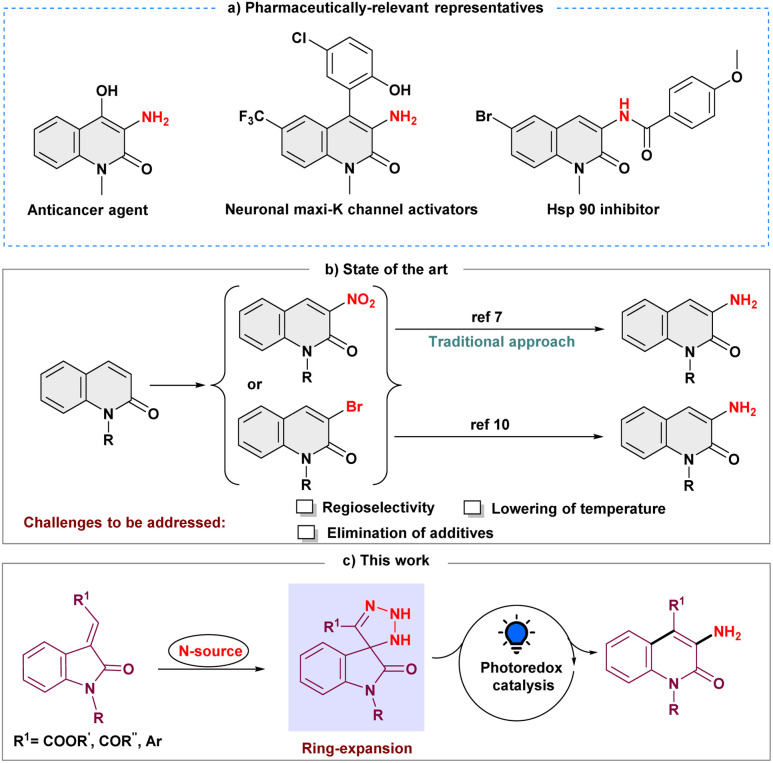
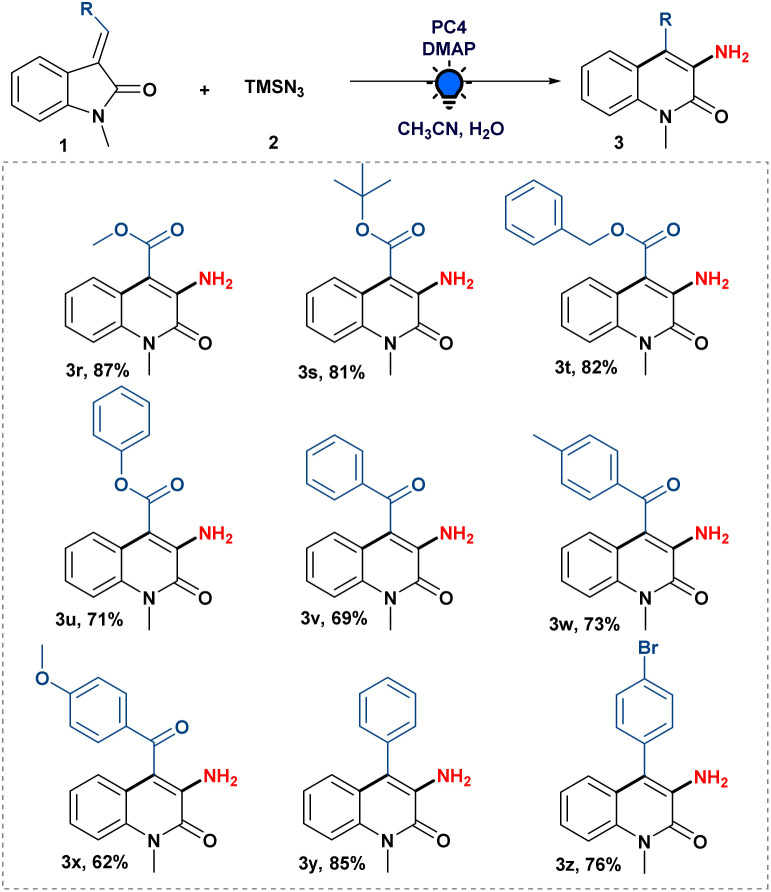
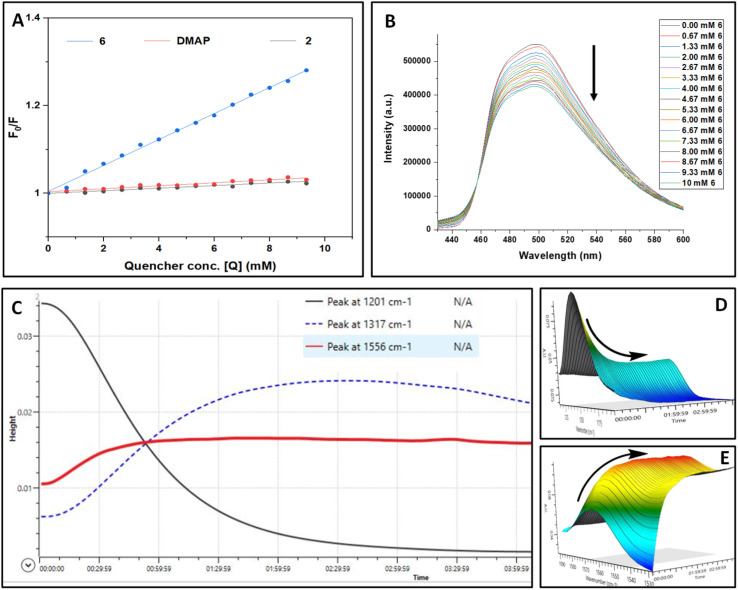
The addition of an amine group to a heteroaromatic system is a challenging synthetic process, yet it is an essential one in the development of many bioactive molecules. Here, we report an alternative method for the synthesis of 3-amino quinolin-2(1)-one that overcomes the limitations of traditional methods by editing the molecular skeleton a cascade C-N bond formation and denitrogenation process. We used TMSN as an aminating agent and a wide variety of 3-ylideneoxindoles as synthetic precursors for the quinolin-2(1)-one backbone, which demonstrates remarkable tolerance of sensitive functional groups. The control experiments showed that the triazoline intermediate plays a significant role in the formation of the product. The spectroscopic investigation further defined the potential reaction pathways.
在杂芳环体系中引入胺基是一个具有挑战性的合成过程,但在许多生物活性分子的开发中却是必不可少的一步。在此,我们报道了一种合成3-氨基喹啉-2(1)-酮的替代方法,该方法通过编辑分子骨架——级联C-N键形成和脱氮过程,克服了传统方法的局限性。我们使用TMSN作为胺化剂,并使用多种3-亚烷基氧化吲哚作为喹啉-2(1)-酮骨架的合成前体,这表明该方法对敏感官能团具有显著的耐受性。对照实验表明,三唑啉中间体在产物形成中起重要作用。光谱研究进一步确定了潜在的反应途径。