Wayamba University of Sri Lanka, Kuliyapitiya, Sri Lanka.
Directorate of Non-Communicable Diseases, Ministry of Health, Colombo, Sri Lanka.
BMC Pulm Med. 2023 Dec 6;23(1):491. doi: 10.1186/s12890-023-02773-1.
Asthma patients experience higher rates of hospitalizations due to exacerbations leaving a considerable clinical and economic burden on the healthcare system. The use of a simple, risk prediction tool offers a low-cost mechanism to identify these high-risk asthma patients for specialized care. The study aimed to develop and validate a risk prediction model to identify high-risk asthma patients for hospitalization due to exacerbations.
Hospital-based, case-control study was carried out among 466 asthma patients aged ≥ 20 years recruited from four tertiary care hospitals in a district of Sri Lanka to identify risk factors for asthma-related hospitalizations. Patients (n = 116) hospitalized due to an exacerbation with respiratory rate > 30/min, pulse rate > 120 bpm, O2 saturation (on air) < 90% on admission, selected consecutively from medical wards; controls (n = 350;1:3 ratio) randomly selected from asthma/medical clinics. Data was collected via a pre-tested Interviewer-Administered Questionnaire (IAQ). Logistic Regression (LR) analyses were performed to develop the model with consensus from an expert panel. A second case-control study was carried out to assess the criterion validity of the new model recruiting 158 cases and 101 controls from the same hospitals. Data was collected using an IAQ based on the newly developed risk prediction model.
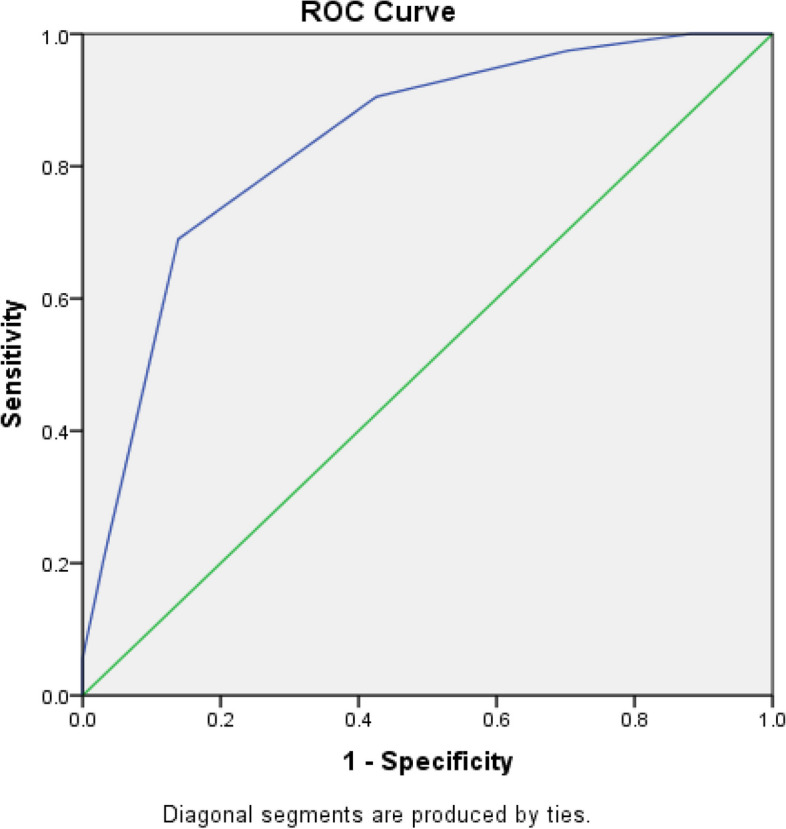
The developed model consisted of ten predictors with an Area Under the Curve (AUC) of 0.83 (95% CI: 0.78 to 0.88, P < 0.001), sensitivity 69.0%, specificity 86.1%, positive predictive value (PPV) 88.6%, negative predictive value (NPV) 63.9%. Positive and negative likelihood ratios were 4.9 and 0.3, respectively.
The newly developed model was proven valid to identify adult asthma patients who are at risk of hospitalization due to exacerbations. It is recommended as a simple, low-cost tool for identifying and prioritizing high-risk asthma patients for specialized care.
哮喘患者因病情加重而住院的比率较高,这给医疗系统带来了相当大的临床和经济负担。使用简单的风险预测工具可以低成本地识别这些高危哮喘患者,以便为他们提供专门的护理。本研究旨在开发和验证一种风险预测模型,以识别因病情加重而住院的高危哮喘患者。
在斯里兰卡一个地区的四家三级保健医院开展了一项基于医院的病例对照研究,共纳入 466 名年龄≥20 岁的哮喘患者,以确定与哮喘相关的住院治疗的危险因素。从内科病房连续选择因病情加重而导致呼吸频率>30/min、脉搏率>120 bpm、入院时血氧饱和度(空气)<90%的住院患者(n=116)作为病例;从哮喘/内科诊所随机选择 350 名患者(1:3 比例)作为对照。通过预测试的访谈者管理问卷(IAQ)收集数据。使用逻辑回归(LR)分析来开发模型,并由专家小组达成共识。在同一家医院开展了第二项病例对照研究,纳入了 158 例病例和 101 例对照,以评估新模型的标准效度。使用基于新开发的风险预测模型的 IAQ 收集数据。
所开发的模型由十个预测因子组成,曲线下面积(AUC)为 0.83(95%置信区间:0.78 至 0.88,P<0.001),敏感性为 69.0%,特异性为 86.1%,阳性预测值(PPV)为 88.6%,阴性预测值(NPV)为 63.9%。阳性和阴性似然比分别为 4.9 和 0.3。
新开发的模型已被证明可有效识别因病情加重而住院的成年哮喘患者。建议将其作为一种简单、低成本的工具,用于识别和优先考虑高危哮喘患者,以便为他们提供专门的护理。