Xie Jindong, Deng Wei, Deng Xinpei, Liang Jie-Ying, Tang Yuhui, Huang Jun, Tang Hailin, Zou Yutian, Zhou Huamao, Xie Xiaoming
State Key Laboratory of Oncology in South China, Guangdong Provincial Clinical Research Center for Cancer, Sun Yat-sen University Cancer Center, 651 East Dongfeng Road, Guangzhou, 510060, China.
Guangdong Provincial Key Laboratory of Malignant Tumor Epigenetics and Gene Regulation, Department of Medical Oncology, Sun Yat-sen Memorial Hospital, Sun Yat-sen University, Guangzhou, 510000, China.
Cancer Cell Int. 2023 Dec 6;23(1):311. doi: 10.1186/s12935-023-03166-4.
Histone chaperones (HCs) are crucial for governing genome stability and gene expression in multiple cancers. However, the functioning of HCs in the tumor microenvironment (TME) is still not clearly understood.
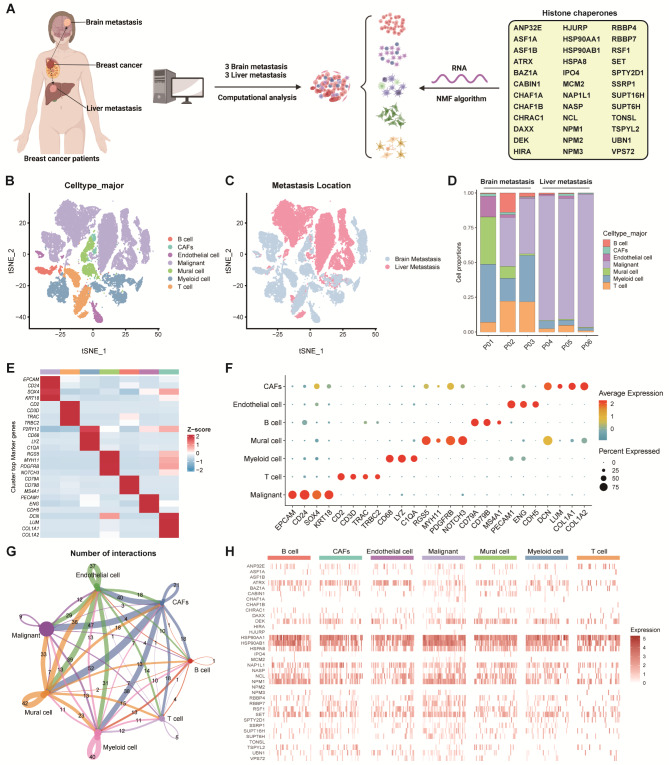
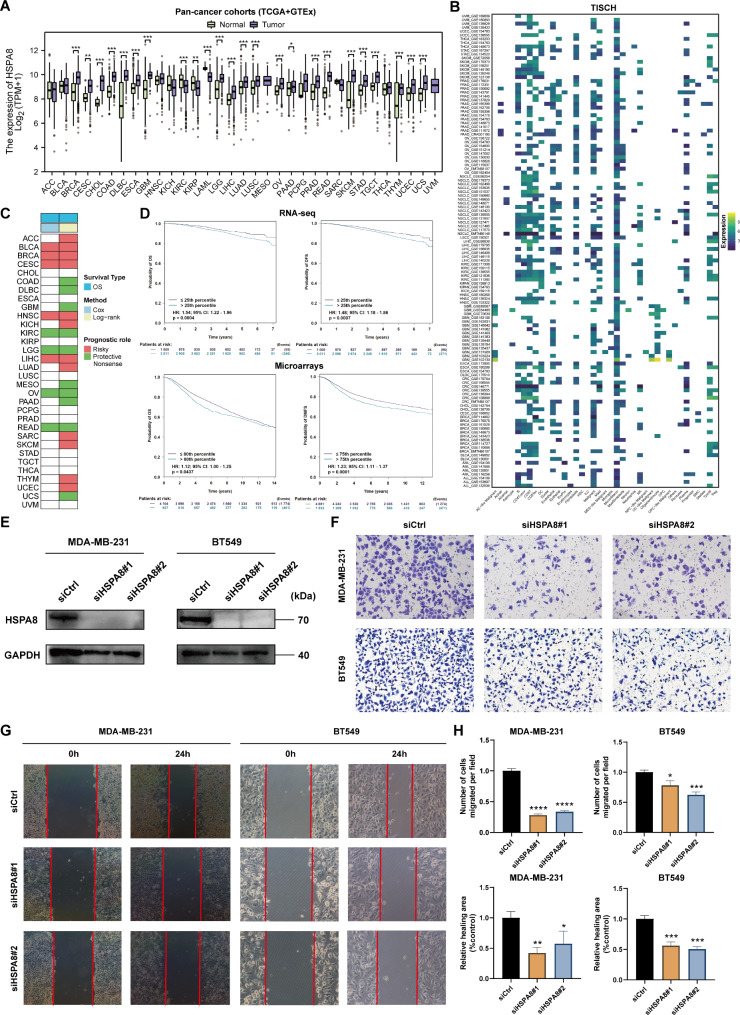
Self-tested single-cell RNA-seq data derived from 6 breast cancer (BC) patients with brain and liver metastases were reanalyzed by nonnegative matrix factorization (NMF) algorithm for 36 HCs. TME subclusters were observed with BC and immunotherapy public cohorts to assess their prognosis and immune response. The biological effect of HSPA8, one of the HCs, was verified by transwell assay and wound-healing assays.
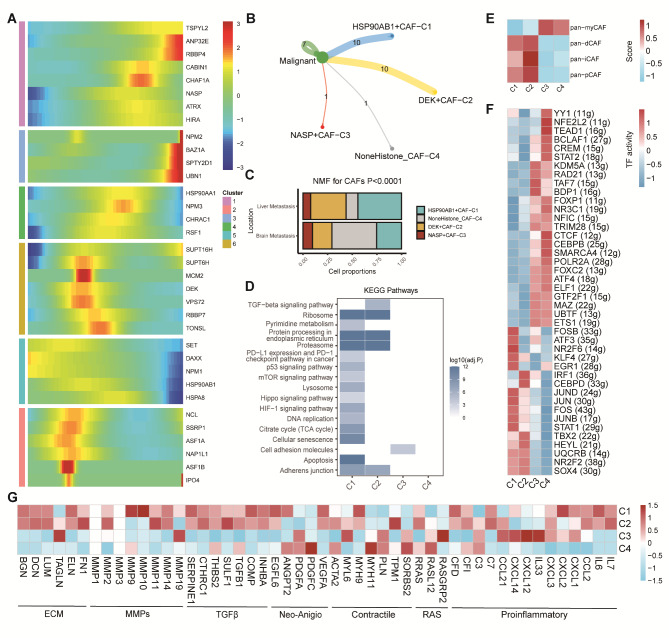
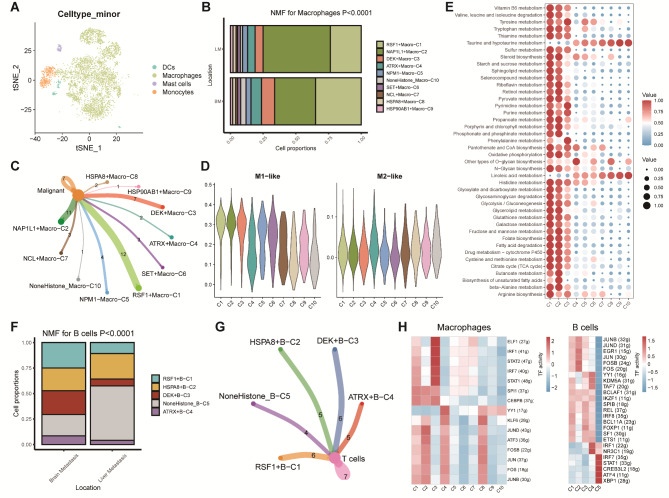
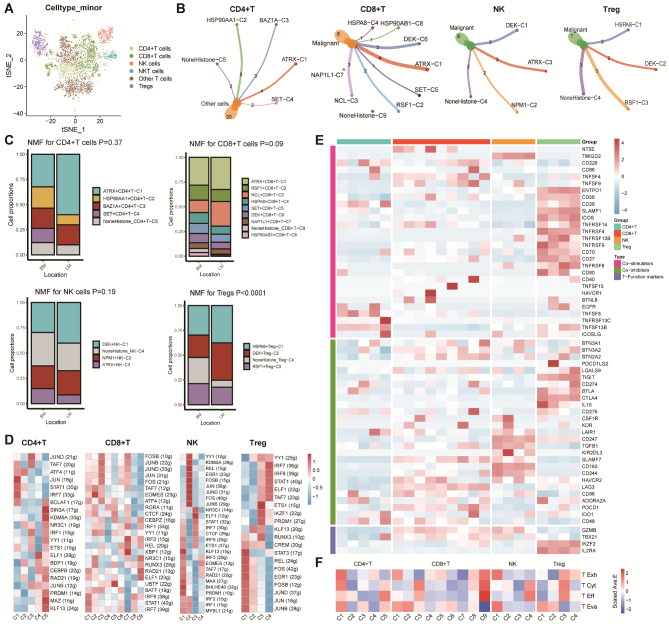
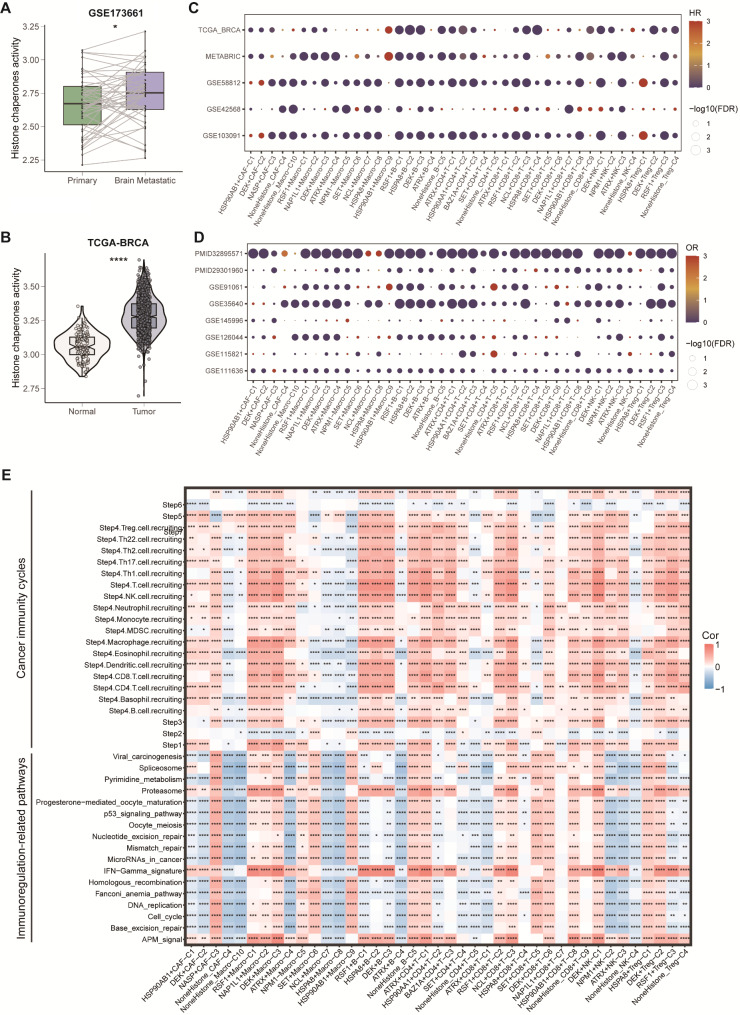
Cells including fibroblasts, macrophages, B cells, and T cells, were classified into various subclusters based on marker genes. Additionally, it showed that HCs might be strongly associated with biological and clinical features of BC metastases, along with the pseudotime trajectory of each TME cell type. Besides, the results of bulk-seq analysis revealed that TME cell subclusters mediated by HCs distinguished significant prognostic value for BC patients and were relevant to patients' immunotherapy responses, especially for B cells and macrophages. In particular, CellChat analysis exhibited that HCs-related TME cell subclusters revealed extensive and diverse interactions with malignant cells. Finally, transwell and wound-healing assays exhibited that HSPA8 deficiency inhibited BC cell migration and invasion.
Collectively, our study first dissected HCs-guided intercellular communication of TME that contribute to BC metastases.
组蛋白伴侣(HCs)对于维持多种癌症中的基因组稳定性和基因表达至关重要。然而,HCs在肿瘤微环境(TME)中的功能仍未完全明确。
通过非负矩阵分解(NMF)算法,对来自6例伴有脑和肝转移的乳腺癌(BC)患者的自测单细胞RNA测序数据进行重新分析,以研究36种HCs。利用BC和免疫治疗公共队列观察TME亚群,以评估其预后和免疫反应。通过Transwell实验和伤口愈合实验验证了其中一种HCs,即HSPA8的生物学效应。
根据标记基因,将包括成纤维细胞、巨噬细胞、B细胞和T细胞在内的细胞分为不同的亚群。此外,研究表明HCs可能与BC转移的生物学和临床特征密切相关,同时也与每种TME细胞类型的伪时间轨迹有关。此外,批量测序分析结果显示,由HCs介导的TME细胞亚群对BC患者具有显著的预后价值,并且与患者的免疫治疗反应相关,尤其是对于B细胞和巨噬细胞。特别是,CellChat分析表明,与HCs相关的TME细胞亚群与恶性细胞之间存在广泛而多样的相互作用。最后,Transwell实验和伤口愈合实验表明,HSPA8缺陷抑制了BC细胞的迁移和侵袭。
总体而言,我们的研究首次剖析了HCs引导的TME细胞间通讯对BC转移的作用。