Department of Breast Surgery, Breast Disease Center, The First Affiliated Hospital, Sun Yat-sen University, Guangzhou, China.
State Key Laboratory of Oncology in South China, Collaborative Innovation Center for Cancer Medicine, Sun Yat-sen University Cancer Center, Guangzhou, China.
Clin Transl Med. 2023 Feb;13(2):e1189. doi: 10.1002/ctm2.1189.
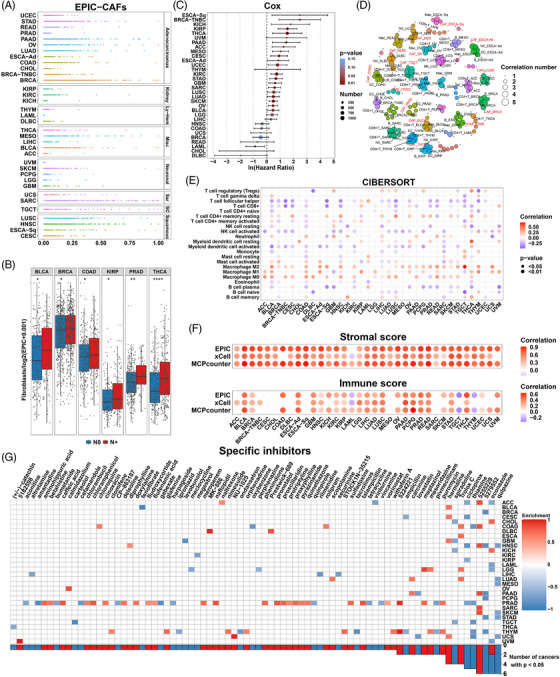
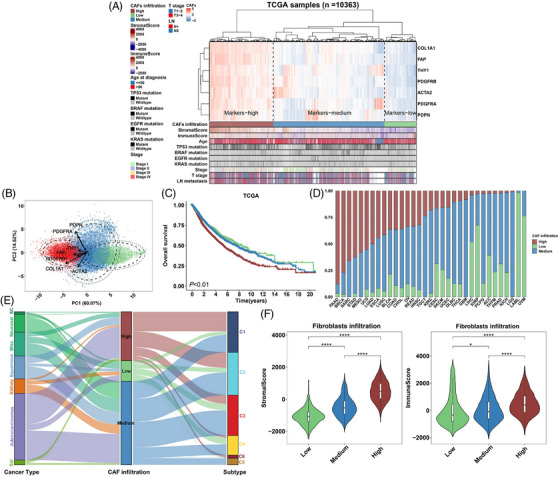
Cancer-associated fibroblasts (CAFs) are correlated with the immunotherapy response. However, the culprits that link CAFs to immunotherapy resistance are still rarely investigated in real-world studies.
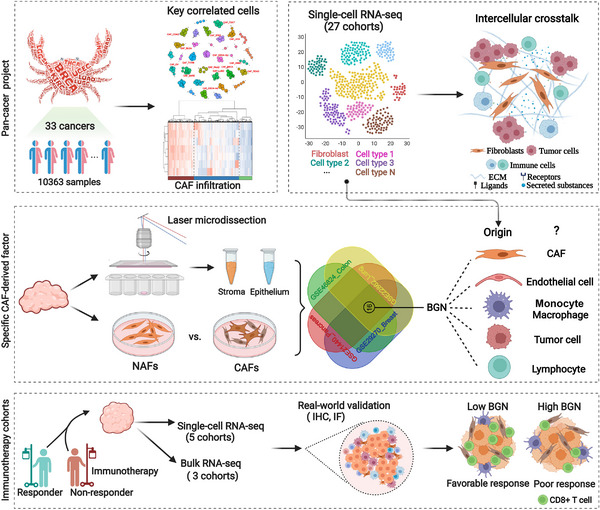
This study aims to systematically assess the landscape of fibroblasts in cancer patients by combining single-cell and bulk profiling data from pan-cancer cohorts. We further sought to decipher the expression, survival predictive value and association with immunotherapy response of biglycan (BGN), a proteoglycan in the extracellular matrix, in multiple cohorts.
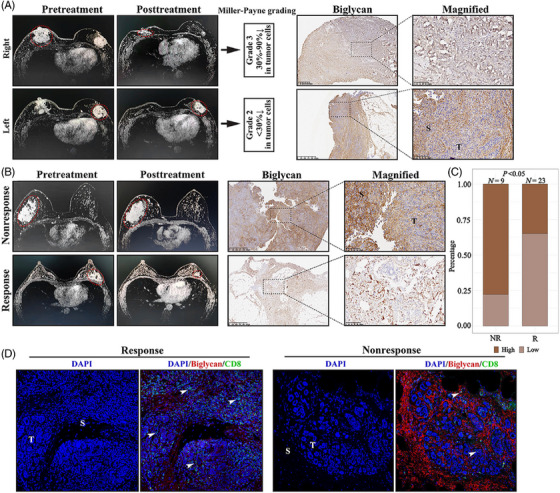
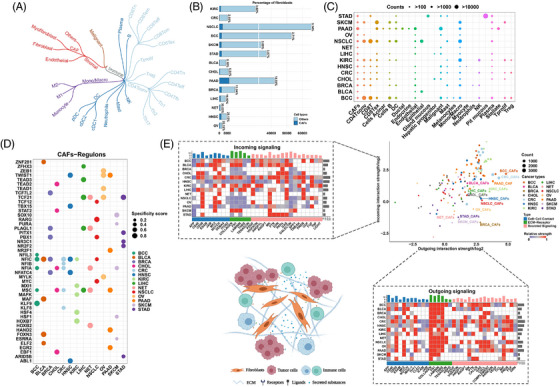
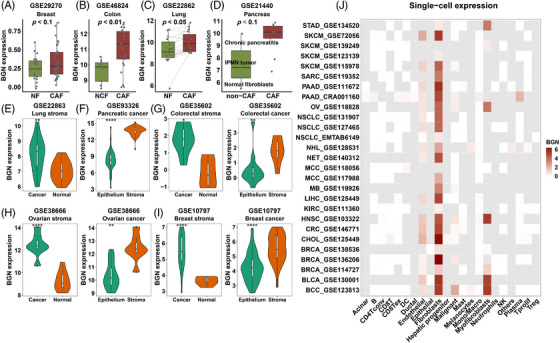
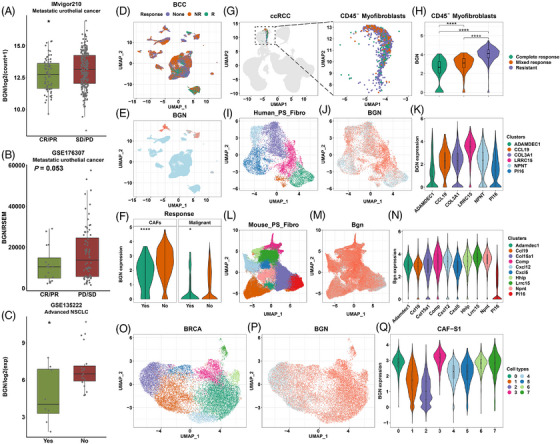
Pan-cancer tumor bulks and 27 single-cell RNA sequencing cohorts were enrolled to investigate the correlations and crosstalk between CAFs and tumor or immune cells. Specific secreting factors of CAFs were then identified by expression profiling at tissue microdissection, isolated primary fibroblasts and single-cell level. The role of BGN was further dissected in additional three bulk and five single-cell profiling datasets from immunotherapy cohorts and validated in real-world patients who have received PD-1 blockade using immunohistochemistry and immunofluorescence.
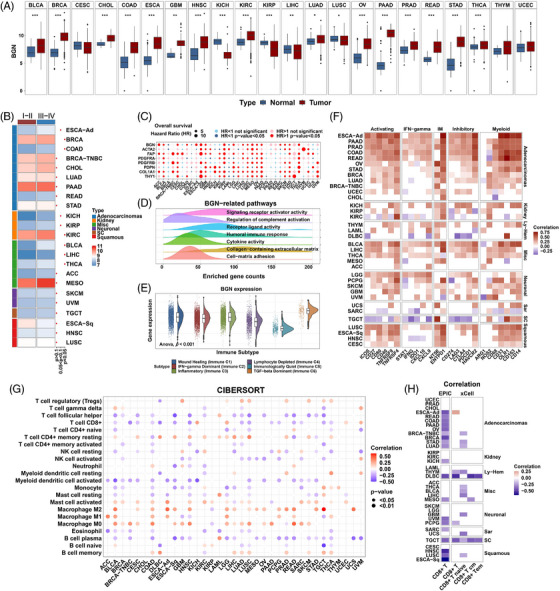
CAFs were closely correlated with immune components. Frequent crosstalk between CAFs and other cells was revealed by the CellChat analysis. Single-cell regulatory network inference and clustering identified common and distinct regulators for CAFs across cancers. The BGN was determined to be a specific secreting factor of CAFs. The BGN served as an unfavourable indicator for overall survival and immunotherapy response. In the real-world immunotherapy cohort, patients with high BGN levels presented a higher proportion of poor response compared with those with low BGN (46.7% vs. 11.8%) and a lower level of infiltrating CD8+ T cells was also observed.
We highlighted the importance of CAFs in the tumor microenvironment and revealed that the BGN, which is mainly derived from CAFs, may be applicable in clinical practice and serve as a therapeutic target in immunotherapy resistance.
癌症相关成纤维细胞(CAFs)与免疫治疗反应相关。然而,在真实世界研究中,将 CAFs 与免疫治疗耐药联系起来的罪魁祸首仍很少被研究。
本研究旨在通过结合泛癌队列的单细胞和批量分析数据,系统评估癌症患者中成纤维细胞的图谱。我们进一步试图在多个队列中解析核心蛋白聚糖(BGN)的表达、生存预测价值及其与免疫治疗反应的关联,BGN 是细胞外基质中的一种蛋白聚糖。
纳入泛癌肿瘤批量和 27 个单细胞 RNA 测序队列,以研究 CAFs 与肿瘤或免疫细胞之间的相关性和串扰。然后通过组织微切割、分离的原代成纤维细胞和单细胞水平的表达谱来鉴定 CAFs 的特定分泌因子。在来自免疫治疗队列的另外三个批量和五个单细胞分析数据集以及使用免疫组化和免疫荧光法在接受 PD-1 阻断治疗的真实世界患者中进一步研究了 BGN 的作用,并进行了验证。
CAFs 与免疫成分密切相关。通过 CellChat 分析揭示了 CAFs 与其他细胞之间频繁的串扰。单细胞调控网络推断和聚类确定了 CAFs 在不同癌症中的常见和独特调控因子。BGN 被确定为 CAFs 的特定分泌因子。BGN 是总生存期和免疫治疗反应的不利指标。在真实世界的免疫治疗队列中,与 BGN 水平低的患者相比,BGN 水平高的患者表现出较差反应的比例更高(46.7% vs. 11.8%),并且观察到浸润性 CD8+T 细胞的水平也较低。
我们强调了 CAFs 在肿瘤微环境中的重要性,并揭示了主要来源于 CAFs 的 BGN 可能适用于临床实践,并可作为免疫治疗耐药的治疗靶点。